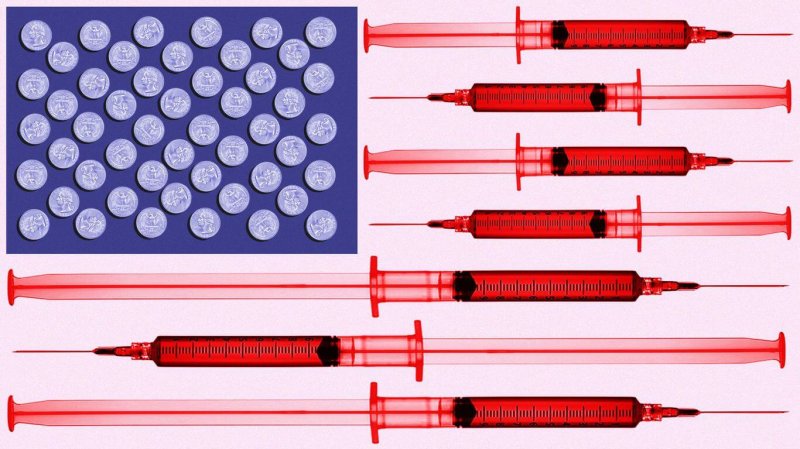
Rural America is a hotbed of anti-COVID vaccine sentiment

Credit: Sarah Grillo/Axios

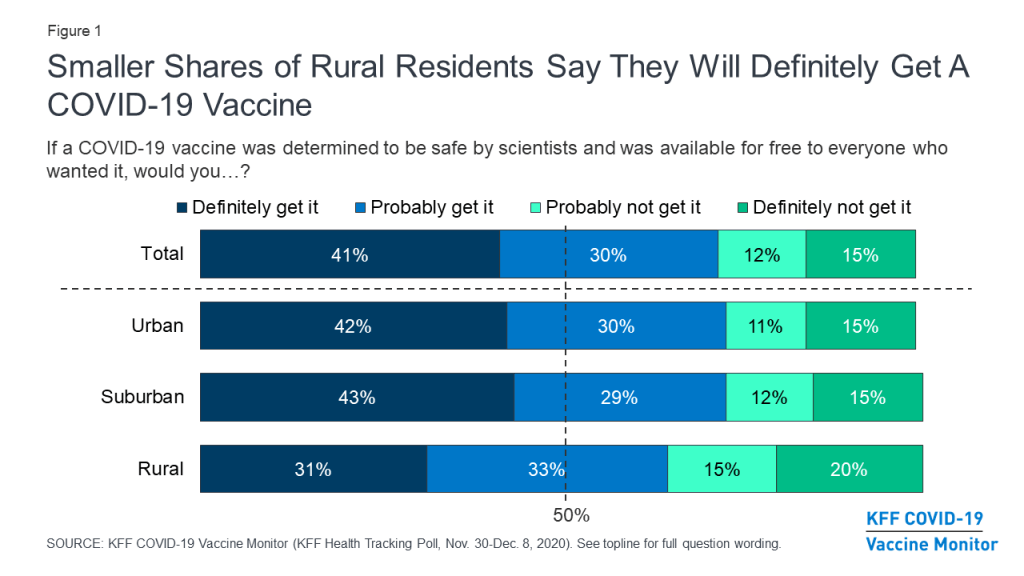
There are many factors that are associated with an individual’s willingness to get the coronavirus vaccine including their age, level of education, and – notably – their political party identification. For example, the KFF COVID-19 Vaccine Monitor finds that Republicans are much less likely to say they will get a coronavirus vaccine compared to their independent and Democratic counterparts. Yet, even when we control for these factors, individuals living in rural areas are still more likely to be vaccine hesitant.

So if partisan identification and demographics don’t completely explain the greater hesitancy, what else is driving attitudes about getting a vaccine among rural residents? While rural residents are just as likely as those living in urban and suburban communities to know someone who has tested positive or died from coronavirus, four in ten rural residents (39%) say they are not worried they or someone in their family will get sick from the coronavirus, compared to 23% of urban residents and three in ten suburban residents (30%).

Follow the latest news and policy debates on sustainable agriculture, biomedicine, and other ‘disruptive’ innovations. Subscribe to our newsletter.

Vaccine hesitancy among rural residents is more than just partisanship and is strongly connected to their views of the severity of the coronavirus and the reasons for getting vaccinated. Effective messages need to be delivered by trusted messengers and take into account these strongly held beliefs in order to have successful vaccine uptake in rural America.

Read the original post

{{ reviewsTotal }}{{ options.labels.singularReviewCountLabel }}
{{ reviewsTotal }}{{ options.labels.pluralReviewCountLabel }}
{{ options.labels.noReviewsLabel }}
{{ options.labels.newReviewButton }}
{{ userData.canReview.message }}

Related Articles

Infographic: Global regulatory and health research agencies on whether glyphosate causes cancer

Infographic: Global regulatory and health research agencies on whether glyphosate causes cancer

Does glyphosate—the world's most heavily-used herbicide—pose serious harm to humans? Is it carcinogenic? Those issues are of both legal and ...

Most Popular

organic scaled
Facts & Fallacies podcast: Organic food cuts pesticide exposure? A response to Dr. Rhonda Patrick
ChatGPT-Image-Mar-10-2026-01_39_01-PM
Viewpoint—“Miracle molecule” debunked: Why acemannan supplements don’t work
Screenshot 2026-07-22 at 10.25
Science brain drain escalates as Trump purge extends to USDA
kratom
Viewpoint: Kratom ‘supplement’ crisis: DEA sits on its hands while patient addictions to this ineffective drug  rise
close up arabica coffee farmer s hands picking beans plant his farm colombia
Viewpoint: Why do so many ‘mainstream’ and ‘respected’ media outlets exaggerate climate change threats?
using genetics to reverse aging
Is the longevity obsession a new form of ageism?
Screenshot-2026-07-01-at-2.49.48-PM
Dr. TikTok and male fertility: Viral claims tout GLP-1 drugs as fertility boosters. What does the science say?
How to Include More Strawberries in Your Diet
Strawberries are berries—and 35 other surprising food and drink myths
ChatGPT-Image-Jul-22-2026-09_13_07-AM
Viewpoint—The Strategic Litigation boom: Understanding the tightening coalition among NGOs, foundations, journalists, and tort lawyers
ChatGPT-Image-May-22-2026-10_26_09-AM
Trump-RFK, Jr. National Science Board firings: Accountability vs. partisan meddling
Screenshot-2026-07-07-at-12.55.44-PM
Viewpoint: Yes, we can adapt to a changing climate without devastating the environment and the economy
ChatGPT-Image-Jun-25-2026-02_53_56-PM
Embryo gene editing is on the horizon, stirring mixed emotions
ChatGPT-Image-Jun-25-2026-12_23_17-PM
No, Bill Gates did not secretly engineer ticks to promote veganism
glp menu logo outlined

Get news on human & agricultural genetics and biotechnology delivered to your inbox.