A protein inherited from Neanderthals may offer limited protection against COVID-19

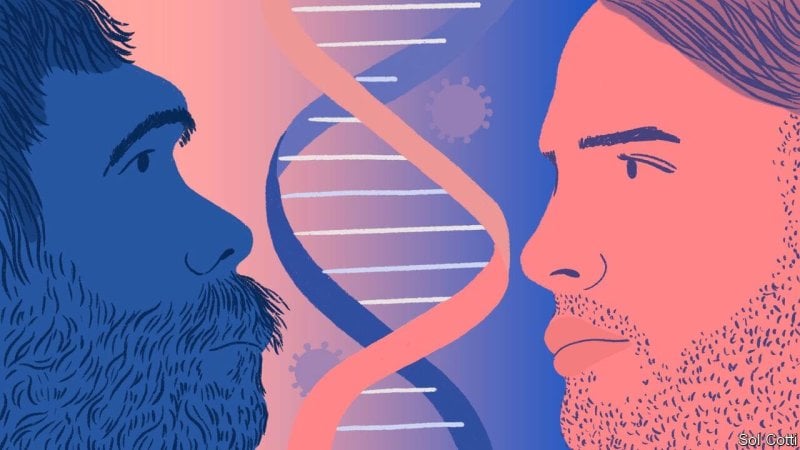
Credit: Sol Cott
Credit: Sol Cott

Recent advances in proteomic technology – that is, the capacity to isolate and measure hundreds of circulating proteins at once – combined with genetic analyses through Mendelian randomization (MR) makes possible the delicate work of untangling which proteins affected COVID-19 adverse outcomes, rather than vice versa.

From genetic determinants of 931 circulating proteins, Dr. Sirui Zhou, a post-doctoral fellow at the LDI and first author on the paper, found that increase in OAS1 levels was associated with reduced COVID-19 death or ventilation, hospitalization, and susceptibility in up to 14,134 COVID-19 cases and 1.2 million controls. 

Mis- and disinformation are distorting science and public policy. Subscribe to our Daily and Weekly Digests for incisive coverage of ‘disruptive’ innovations in AI, agricultural biotechnology, food, chemicals, nuclear energy, vaccines, and other disruptive innovations.

“The protective effect was particularly large,” points out Dr. Zhou, “such that we observed a 50% decrease in the odds of very severe COVID-19 per standard deviation increase in OAS1 circulating levels. Interestingly, for non-African peoples, this protective effect is likely inherited from a Neanderthal derived form of OAS1 called p46.”
This form of OAS1 likely emerged in people of European ancestry through interbreeding with Neanderthals tens of thousands of years ago. Evolutionary pressure slowly increased the prevalence of this form of OAS1, such that it is now detectable in more than thirty-percent of people of European descent. It is likely that the form of the protein has served as protection against earlier pandemics.


Read the original post

Related Articles

Infographic: Global regulatory and health research agencies on whether glyphosate causes cancer

Infographic: Global regulatory and health research agencies on whether glyphosate causes cancer

Does glyphosate—the world's most heavily-used herbicide—pose serious harm to humans? Is it carcinogenic? Those issues are of both legal and ...

Most Popular

ChatGPT-Image-Sep-17-2026-12_28_43-PM
Vitamin D, omega-3 fish oil and glucosamine supplements could cause brain damage 
ChatGPT-Image-Mar-10-2026-01_39_01-PM
Viewpoint—“Miracle molecule” debunked: Why acemannan supplements don’t work
ChatGPT-Image-Sep-17-2026-10_17_15-AM
Viewpoint: Why are the less intelligent more likely to be conservative—and smarter people more socially liberal?
Screenshot-2026-09-10-at-12.20.19-PM
'Jet fuel didn't melt the steel': 9/11 conspiracy theories debunked
Screenshot-2026-08-12-at-11.31.46-AM
AI is helping develop new vaccines
Screenshot-2026-09-16-at-12.07.47-PM
The heated debate over trans athletes in the WNBA
Screenshot-2026-09-17-at-10.24.54-AM
Viewpoint: Dubious environmental fears: Why the AI buildout is critical to America’s ecological future
ChatGPT-Image-Sep-9-2026-02_48_24-PM
Viewpoint: Trump-RFK Jr. report on “Gender Ideology & Left-wing Ideology’ targets LGBTQ community—and science
Screenshot 2026-09-11 at 12.39
Child-monitoring apps: When the cure is worse than the harm—and how the technology could be tweaked
ChatGPT-Image-Sep-15-2026-12_15_00-PM
Viewpoint: Women, depression and empathy: Explaining the gender gap in views about child-murderer Lindsay Clancy
Screenshot-2026-09-11-at-2.26.23-PM
Newly approved GMO chestnut trees planted across from the White House are stirring debate
Screenshot-2026-09-10-at-11.50.46-AM
Did COVID vaccines kill 2,500 service members? RFK Jr. hires an investigator who compares vaccine promoters to Nazi doctors
glp menu logo outlined

Get news on human & agricultural genetics and biotechnology delivered to your inbox.