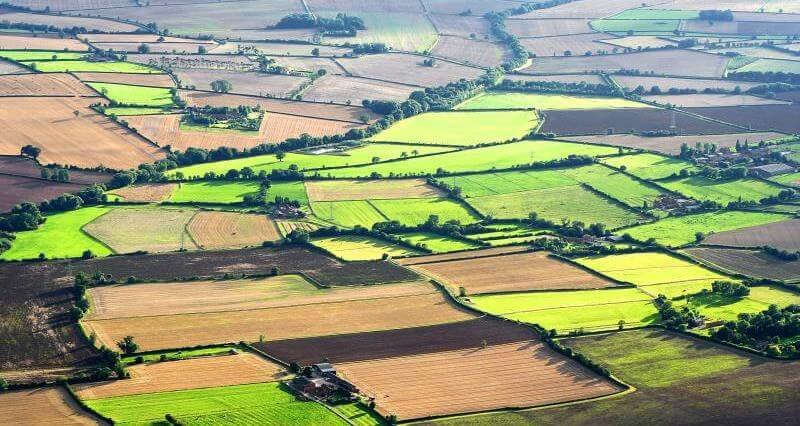

Using existing research on the relationship between R&D and productivity and SIMPLE, a global economic model of agriculture, we find that doubling agricultural R&D between 2020 and 2030, compared to a business-as-usual scenario, would reduce global agricultural land use by about 63 thousand square miles, about the size of Iowa, and reduce the level of emissions from fertilizer and fuel use per unit of food produced about 12 percentage points. We project these changes would reduce greenhouse gas emissions (GHG) by over 100 million tons — equivalent to ⅙ of current US agriculture emissions — while also reducing global food prices about 8 percentage points more than under business-as-usual.
These benefits of R&D have multiple mechanisms. Research can reduce emissions both from farm inputs like fertilizers as well as from land-use change. Advances in crop breeding, farm equipment, and other agricultural areas have helped farmers grow more food with less fertilizer and land, and thus less land-use conversion and greenhouse gas emissions. Because of such innovations, the carbon intensity of agriculture fell more than 10 percent between 1990 and 2015.
Since the US is a major global food producer, these benefits will spill over. Productivity gains give the US a larger share of global food production by increasing farmers’ international competitiveness. This reduces global environmental impacts since US farming is typically more resource-efficient than farming elsewhere.



Ultimately, our analysis finds that increasing US public agricultural R&D funding would help address climate change, land-use conversion and habitat loss, and food insecurity. In contrast, we show that another proposal that would reduce emissions — preventing expansion of farmland and taxing farm inputs — would also risk increasing food prices and thus food insecurity.