‘Lucy the Human Chimp’: Meet the chimpanzee raised with people and Janice, her caretaker, who tried to integrate her back into the wild

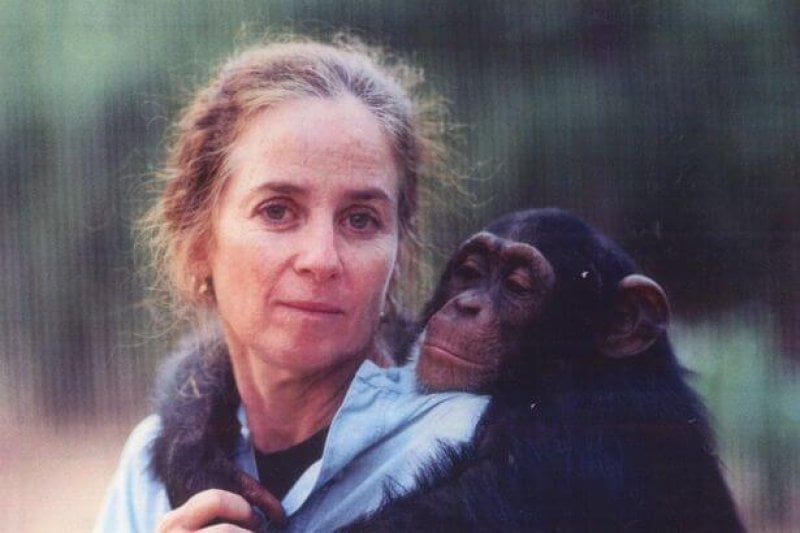
Janis Carter and Lucy. Credit: Warner/HBO Max

Lucy the Human Chimp, a new television documentary from HBO and Channel 4, explores… the story of one unique relationship: that between Lucy, a chimpanzee raised as a human, and Janis Carter, a graduate student hired to clean her cage. Through the late 1960s, Lucy was the subject of a high-profile study by psychologists Maurice and Jane Temerlin, ostensibly to explore the limits of nature versus nurture.

The Temerlins brought Lucy up in their home more or less as though she was a human child, to the point of teaching her to dress herself, eat with silverware and even fix a gin and tonic. 

[su_panel color=”#3A3A3A” border=”1px solid #3A3A3A” radius=”2″ text_align=”left”]Lucy the Human Chimp airs on HBO Max April 29.[/su_panel]

After a frosty start – Carter remembers the chimp as “arrogant, and very condescending” about her poor comprehension of sign language – the two forged a close bond. But the adolescent chimp increasingly posed a threat to her human family, and was confined to a cage.

In 1977, the Temerlins decided to take 12-year-old Lucy to Gambia to be taught how to live in the wild; Carter went along to help. 

Follow the latest news and policy debates on sustainable agriculture, biomedicine, and other ‘disruptive’ innovations. Subscribe to our newsletter.

Just as Lucy was raised a human, Carter lived as a chimp. But, after the best part of a decade, she had to extract herself and return to her own kind, she says: “I couldn’t live in both worlds.”


Read the original post

{{ reviewsTotal }}{{ options.labels.singularReviewCountLabel }}
{{ reviewsTotal }}{{ options.labels.pluralReviewCountLabel }}
{{ options.labels.newReviewButton }}
{{ userData.canReview.message }}

Related Articles

Infographic: Global regulatory and health research agencies on whether glyphosate causes cancer

Infographic: Global regulatory and health research agencies on whether glyphosate causes cancer

Does glyphosate—the world's most heavily-used herbicide—pose serious harm to humans? Is it carcinogenic? Those issues are of both legal and ...

Most Popular

Screenshot-2026-04-13-at-1.39.26-PM
Viewpoint: ‘Safer for children?’ Stonyfield yogurt under fire for deceptive organic marketing
Screenshot-2026-04-22-at-10.46.29-AM
Viewpoint: How to counter science disinformation? Science journalist offers 12 practical tips
ChatGPT-Image-May-7-2026-12_16_37-PM-2
Viewpoint: Are cancer rates ‘skyrocketing’ as RFK, Jr. and MAHA claim? The evidence says mostly the opposite
Picture1-14
When superbugs threaten vulnerable children: Can AI help solve antibiotic resistance?
ChatGPT-Image-May-12-2026-08_39_41-PM
GLP podcast: Big Pharma, Big Ag, Big Food—health harming industries or life-saving innovators?
Screenshot-2026-04-23-at-11.00.36-AM
Regulators' dilemma: Thalidomide, Metformin, and the cost of getting drug approvals wrong
Picture1-1
Cooling the planet with balloons: Could a geoengineering gamble slow global warming?
png-pill-omega-Supp-fish-oil
Millions take omega-3 fish oil for brain health. New research suggests it may do the opposite.
bigstock opioids on chalkboard with rol
GLP podcast: 'Safe injection sites': enabling drug addiction or saving lives?
glp menu logo outlined

Get news on human & agricultural genetics and biotechnology delivered to your inbox.