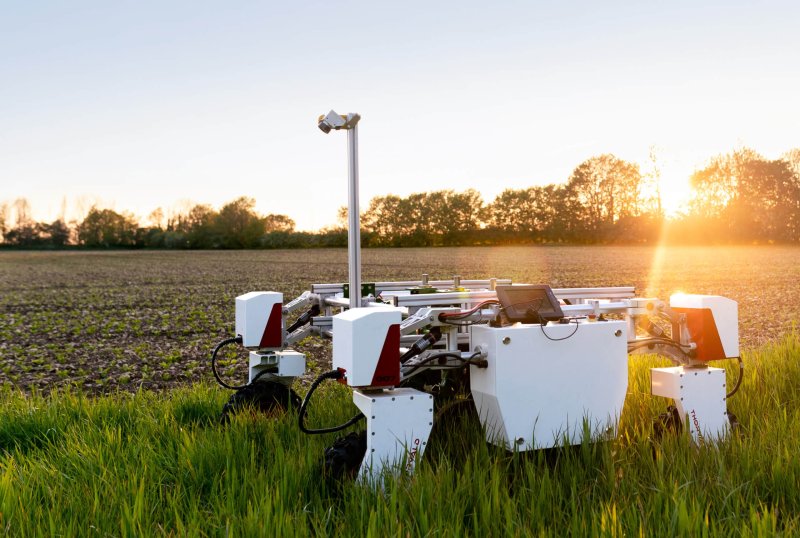
Robotic farming: How artificial intelligence (AI) is taking precision farming to another level

Credit: ThisisEngineering RAEng/Unsplash

Labor costs, climate change and growing food demand are ushering in an era of machine modernization across the nationโ€™s agricultural landscape.

โ€ฆ

It all contributes to whatโ€™s known as precision agriculture, where farmers use less to grow more or adopt new gadgets to increase crop production while cutting down on waste. The field is increasing in popularity. The market for advanced farming tools was estimated to be about $7 billion in 2020, and itโ€™s projected to reach $12.8 billion over the next four years, according to the research firm MarketsandMarkets.

Part of the projected rise stems from farms wanting greater efficiency in the face of labor issues. The number of people working as farmers, ranchers and other agricultural professionals is expected to drop 6 percent by 2029, according to the Bureau of Labor Statistics. The industry has already faced decades of job declines in the United States, even as agricultural production rises to feed a growing population.
Follow the latest news and policy debates on sustainable agriculture, biomedicine, and other ‘disruptive’ innovations. Subscribe to our newsletter.

Itโ€™s true that AI-powered farm machines may one day be able to perform most tasks that require people today. But for the time being, humans have a leg up in some areas, such as handling delicate objects. Robots tend to have dexterity problems, which can cause them to hold objects like fruit and vegetables too aggressively.


Read the original post

{{ reviewsTotal }}{{ options.labels.singularReviewCountLabel }}
{{ reviewsTotal }}{{ options.labels.pluralReviewCountLabel }}
{{ options.labels.newReviewButton }}
{{ userData.canReview.message }}

Related Articles

Infographic: Global regulatory and health research agencies on whether glyphosate causes cancer

Infographic: Global regulatory and health research agencies on whether glyphosate causes cancer

Does glyphosateโ€”the world's most heavily-used herbicideโ€”pose serious harm to humans? Is it carcinogenic? Those issues are of both legal and ...

Most Popular

Picture1-5
Science Disinformation Gap: The transatlantic battle over social media and censorship
Screenshot-2026-04-23-at-11.00.36-AM
Regulators' dilemma: Thalidomide, Metformin, and the cost of getting drug approvals wrong
ChatGPT-Image-May-12-2026-08_39_41-PM
GLP podcast: Big Pharma, Big Ag, Big Foodโ€”health harming industries or life-saving innovators?
Screenshot-2026-05-12-at-9.58.31-PM
'He seems fine': Marty Makary out as FDA commissioner
ChatGPT Image May 10, 2026, 08_16_59 PM 2
Overmedicalization? RFK Jr.โ€™s antidepressant crackdown raises conflict questions over his fee stake in Wisner Baum, the tort firm built on suing drug makers
Screenshot-2026-05-12-at-10.05.11-AM
Pro-vaccine โ€œheroโ€ vs. an anti-vax โ€œvillainโ€: โ€˜Bad Vaxxโ€™ video stirs MAHA backlash
Picture1-1
Cooling the planet with balloons: Could a geoengineering gamble slow global warming?
ChatGPT Image May 12, 2026, 10_19_00 AM 2
Viewpointโ€” 'Muscular governance': How authoritarianism is surging corporate-linked energy misinformation
Screenshot-2026-05-01-at-1.29.41-PM
Viewpoint: What happens when whole grains meet modern food manufacturing? Labels donโ€™t tell the whole story.
S
As vaccine rejectionism spreads, measles may be taking a more dangerous turn
Screenshot-2026-05-11-104424
Hantavirus outbreak research: Trump administration shut down study last year on rodent-to-human transmission
images
The never-ending GMO debate: Pros and cons
Picture1-14
When superbugs threaten vulnerable children: Can AI help solve antibiotic resistance?
glp menu logo outlined

Get news on human & agricultural genetics and biotechnology delivered to your inbox.