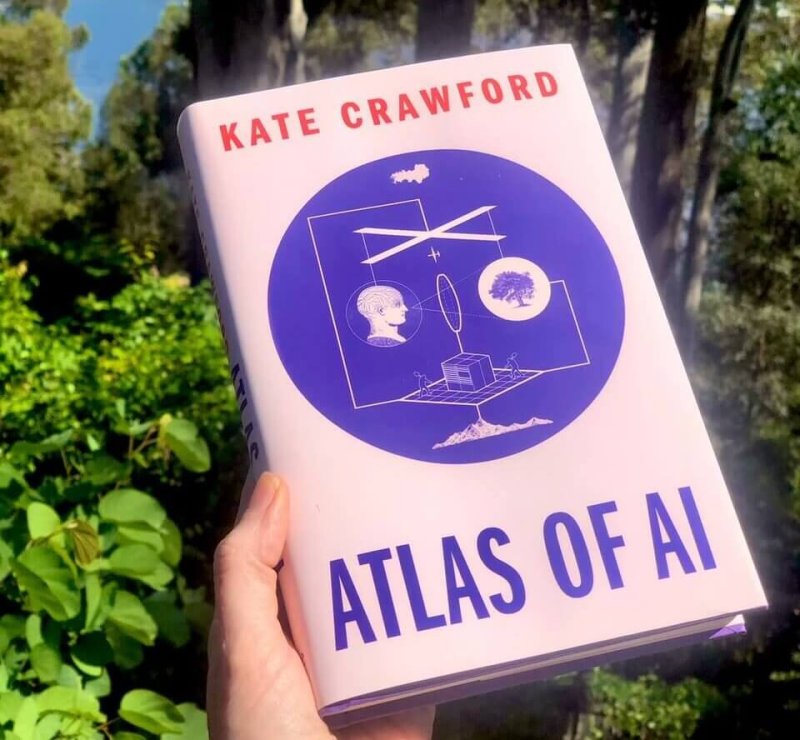
’AI is neither artificial nor intelligent’: Kate Crawford’s new book ‘Atlas of AI’ views technology through a social justice prism

Credit: Kate Crawford

[In her book “Atlas of AI,” Kate Crawford brings] us on a global journey, from the mines where the rare earth elements used in computer manufacturing are extracted to the Amazon fulfillment centers where human bodies have been mechanized in the company’s relentless pursuit of growth and profit. 

[Crawford:] I wanted to… really understand how artificial intelligence is made in the broadest sense. This means looking at the natural resources that drive it, the energy that it consumes, the hidden labor all along the supply chain, and the vast amounts of data that are extracted from every platform and device that we use every day.

In doing that, I wanted to really open up this understanding of AI as neither artificial nor intelligent. It’s the opposite of artificial. It comes from the most material parts of the Earth’s crust and from human bodies laboring, and from all of the artifacts that we produce.

Follow the latest news and policy debates on sustainable agriculture, biomedicine, and other ‘disruptive’ innovations. Subscribe to our newsletter.

When you start looking at AI systems on that bigger scale, and on that longer time horizon, you shift away from these very narrow accounts of “AI fairness” and “ethics” to saying: these are systems that produce profound and lasting geomorphic changes to our planet, as well as increase the forms of labor inequality that we already have in the world.

[Editor’s note: Find Atlas of AI here.]

Read the original post

{{ reviewsTotal }}{{ options.labels.singularReviewCountLabel }}
{{ reviewsTotal }}{{ options.labels.pluralReviewCountLabel }}
{{ options.labels.newReviewButton }}
{{ userData.canReview.message }}

Related Articles

Infographic: Global regulatory and health research agencies on whether glyphosate causes cancer

Infographic: Global regulatory and health research agencies on whether glyphosate causes cancer

Does glyphosate—the world's most heavily-used herbicide—pose serious harm to humans? Is it carcinogenic? Those issues are of both legal and ...

Most Popular

ChatGPT-Image-Jun-23-2026-03_12_23-PM
Is cellular reprogramming junk science? Nearly 20 patients are getting eye injections in the first FDA-cleared cellular trial
ChatGPT-Image-Jun-25-2026-12_23_17-PM
No, Bill Gates did not secretly engineer ticks to promote veganism
ChatGPT-Image-Jun-24-2026-11_36_47-AM
Why the human genome is less a script than a puzzle
Screenshot-2026-06-15-at-1.55.27-PM
America's trust in Trump-Kennedy's CDC health recommendations is plunging
ChatGPT-Image-Jun-17-2026-10_52_43-AM
Anguished parents, doctors in tears: Utah’s long measles outbreak takes a toll
Screenshot 2026-06-25 at 10.55
Leading OB-GYN group challenges RFK, Jr. gutting of maternal vaccine schedule
ChatGPT-Image-Mar-10-2026-01_39_01-PM
Viewpoint—“Miracle molecule” debunked: Why acemannan supplements don’t work
Screenshot-2026-06-22-at-9.04.46-PM
Kennedy's nutrition prescription for medical schools: Real problem, bad cure
Screenshot-2026-06-24-at-2.57.41-PM
Viewpoint: Trump’s Reflecting Pool algae fiasco points to a bigger culprit: Climate change
Screenshot-2026-06-25-at-1.48.40-PM
Glyphosate affirmed as safe: Supreme Court rejects lawsuit claiming Roundup herbicide causes cancer, upholding EPA determination
Screenshot-2026-06-24-at-2.40.46-PM
Hegseth reversal: As Air Force flu outbreak continues to surge, military reinstitutes mandatory vaccines for recruits

Sorry. No data so far.

glp menu logo outlined

Get news on human & agricultural genetics and biotechnology delivered to your inbox.