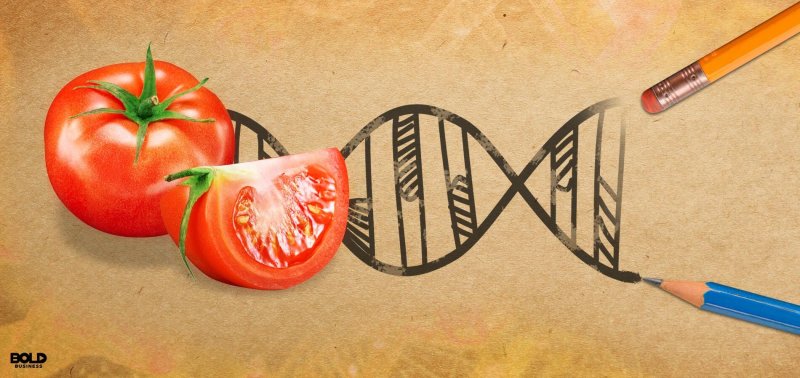
Video: Tired of tasteless tomatoes? A juicier, faster-growing genetically-engineered breed is on the horizon

Credit: Bold Business

Scientists at the University of Oxford’s Department of Plant Sciences have discovered how the overall process of fruit ripening in tomato (including colour changes and softening) can be changed -speeded up or slowed down – by modifying the expression of a single protein located in subcellular organelles called the plastids. This offers a novel opportunity for crop improvement.

The production of fruit is a vital process for plants because it enables them to reproduce and thrive. One strategy that plants use to ensure that their fruit are successful is to give them a colourful appearance, so that they are attractive to animals for seed dispersal.

In tomato, the fruit ripening process involves dramatic changes in tiny “organelles” inside the fruit cells called plastids. It is these plastids that are responsible for giving colour to the fruit.

In spite of their central importance in delivering fruit colour, surprisingly little was known about how plastids participate in the ripening process.

The regulatory properties of SP1 revealed in our study show that it has real potential as a technology for crop improvement

Follow the latest news and policy debates on sustainable agriculture, biomedicine, and other ‘disruptive’ innovations. Subscribe to our newsletter.

The Oxford team has now discovered a function in fruit for a protein located in the plastids called SP1 (this SP1 protein controls a regulatory pathway called CHLORAD, which was discovered by the group in 2019). The new finding reveals an important regulatory or controlling role for plastids in the fruit ripening process in tomato.

Significantly, the results published [May 18] in Nature Plants provide a theoretical basis for the modification or manipulation of the ripening of fleshy fruits such as tomato, providing a novel opportunity for crop improvement.

Corresponding author, Professor Paul Jarvis from Oxford’s Department of Plant Sciences, said: ‘The regulatory properties of SP1 revealed in our study show that it has real potential as a technology for crop improvement. For example, it could be used to develop early or late fruiting varieties of fleshy fruits, or to improve the transportability or shelf-life of fruit by delaying ripening without compromising the quality of the ripe fruit.

‘It’s fascinating that the amount of a single protein in these tiny subcellular structures called plastids can have such far-reaching consequences for fruit ripening in tomato.’

The work is based on the modification of the expression of the tomato SP1 gene (as well as the related tomato SPL2 gene) in transgenic tomato plants. Transgenic plants with reduced or elevated levels of expression of SP1 were studied in detail, using a range of techniques including phenotyping, electron microscopy, gene expression analysis, and metabolomics.


Read the original post

{{ reviewsTotal }}{{ options.labels.singularReviewCountLabel }}
{{ reviewsTotal }}{{ options.labels.pluralReviewCountLabel }}
{{ options.labels.noReviewsLabel }}
{{ options.labels.newReviewButton }}
{{ userData.canReview.message }}

Related Articles

Infographic: Global regulatory and health research agencies on whether glyphosate causes cancer

Infographic: Global regulatory and health research agencies on whether glyphosate causes cancer

Does glyphosate—the world's most heavily-used herbicide—pose serious harm to humans? Is it carcinogenic? Those issues are of both legal and ...

Most Popular

ChatGPT-Image-Jul-17-2026-12_42_10-PM
Viewpoint: RFK, Jr. is setting up a panel to compensate people who claim they were injured by a COVID vaccine–no proof needed 
Screenshot-2026-07-17-at-12.55.22-PM
Viewpoint: Is bagged salad a dangerous science experiment? Challenging an online misinformation campaign
ChatGPT-Image-Mar-10-2026-01_39_01-PM
Viewpoint—“Miracle molecule” debunked: Why acemannan supplements don’t work
ChatGPT-Image-Jul-6-2026-02_25_26-PM
40 million Americans take glucosamine. If you have memory loss, it could accelerate cognitive decline.
Screenshot-2026-07-01-at-2.49.48-PM
Dr. TikTok and male fertility: Viral claims tout GLP-1 drugs as fertility boosters. What does the science say?
px-Minced-beef-meat-cow-cattle
Can we trust Trump’s USDA to accurately report farm data? Beef export numbers suggest ‘no’.
Screenshot 2026-07-11 094410
Growing animal muscle and fat cells inside rice grains and calling it beef: One of numerous genetically engineered products shaking up our ecosystem
file-f-d-d-
Facts & Fallacies Podcast: Europe's AC debacle underscores fatal flaw in green activism
ChatGPT-Image-Jul-9-2026-02_39_22-PM
Viewpoint: Polyphenols or NAD+ supplements to combat aging: No, Gwenyth Paltrow and followers, don’t waste your money.
UK scientists support loosening restrictions limiting embryo research
Are we edging closer to precisely, and safely, editing human embryos?
ma art page image
‘It’s time to have a conversation’: Once adamantly opposed to human gene editing, UK’s The Guardian acknowledges likely benefits
reverse-aging
Rapamycin: Here’s the skinny on the anti-aging pill that increases the lifespan—of mice by 10%
ChatGPT-Image-Jun-17-2026-03_29_08-PM
Viewpoint: What’s the impact of the U.S. abandoning support for global health?
afb-a-b
As the EU loosens restrictions on agricultural gene editing, it remains years behind the rest of the world on equally-safe GMO foods
glp menu logo outlined

Get news on human & agricultural genetics and biotechnology delivered to your inbox.