‘It’s out-competing other viruses’: Killer Indian COVID strain spreads dark cloud over growing global recovery

Credit: Reuters
Credit: Reuters

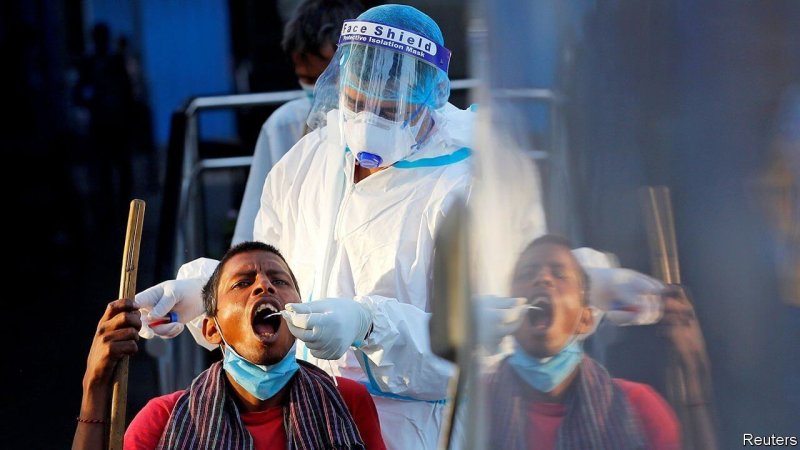
India [has] set another coronavirus milestone. [On May 19th], authorities announced the country had recorded more than 4,500 deaths from covid-19 for the prior 24 hours, setting a world record.

[A] fast-spreading variant such as [India’s] B.1.617.2 would have “a biological passport for international travel and global spread” — meaning international spread was likely, perhaps inevitable.

That’s true already. In recent days, U.S. health experts have raised their concerns about the variant spreading here, while there have been documented cases in GermanySingapore and elsewhere.

“It’s outcompeting the other viruses,” Jeremy Luban of the University of Massachusetts Medical School told NPR [recently]. “It’s replacing whatever variants were there before. And it’s always a concern when something like this changes because we don’t know what will happen.”

Follow the latest news and policy debates on sustainable agriculture, biomedicine, and other ‘disruptive’ innovations. Subscribe to our newsletter.

The high stakes for slow action have been made clear in India. Despite the country’s strong tradition of manufacturing vaccines, it has been sluggish in getting out doses domestically. This, combined with government complacency and the loosening of restrictions, allowed B.1.617.2 and related variants to spread — killing thousands of Indians each day and threatening the rest of the world.


Read the original post

{{ reviewsTotal }}{{ options.labels.singularReviewCountLabel }}
{{ reviewsTotal }}{{ options.labels.pluralReviewCountLabel }}
{{ options.labels.newReviewButton }}
{{ userData.canReview.message }}

Related Articles

Infographic: Global regulatory and health research agencies on whether glyphosate causes cancer

Infographic: Global regulatory and health research agencies on whether glyphosate causes cancer

Does glyphosate—the world's most heavily-used herbicide—pose serious harm to humans? Is it carcinogenic? Those issues are of both legal and ...

Most Popular

ChatGPT Image May 10, 2026, 08_16_59 PM 2
Overmedicalization? RFK Jr.’s antidepressant crackdown raises conflict questions over his fee stake in Wisner Baum, the tort firm built on suing drug makers
Picture1-5
Science Disinformation Gap: The transatlantic battle over social media and censorship
Picture1-1
Cooling the planet with balloons: Could a geoengineering gamble slow global warming?
ChatGPT-Image-Apr-13-2026-02_20_22-PM
Viewpoint: Misinformation infodemic? Why assessing evidence is so challenging 
Screenshot-2026-05-11-104424
Hantavirus outbreak research: Trump administration shut down study last year on rodent-to-human transmission
Picture1-14
When superbugs threaten vulnerable children: Can AI help solve antibiotic resistance?
S
As vaccine rejectionism spreads, measles may be taking a more dangerous turn
Screenshot-2026-05-01-at-1.29.41-PM
Viewpoint: What happens when whole grains meet modern food manufacturing? Labels don’t tell the whole story.
Screenshot 2026-05-11 at 11.30
Despite politicized disinformation, Midwest AI data centers are fueling a solar energy boom
Screenshot-2026-05-08-at-3.40.33-PM
Seeds of power: China turns to genetic engineering to become global superpower
Screenshot-2026-05-08-at-11.55.47-AM
Anti-vax activists falsely blame COVID vaccines for the rising U.S. cancer rate among younger people.
Screenshot 2026-05-08 at 3.01
Transforming farming and nutrition with AI and robotics? Larry Ellison’s half-billion-dollar Hawaii greenhouse dream goes bust
glp menu logo outlined

Get news on human & agricultural genetics and biotechnology delivered to your inbox.