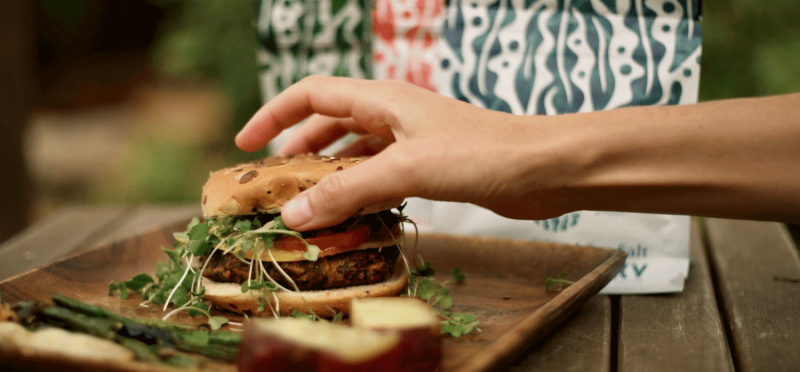
‘Zero input’ seaweed burger? This sustainable kelp-based patty requires no fertilizer, land, or fresh water to produce

Credit: Akua
Credit: Akua

With the increasing consumer demand for plant-based meat alternatives, kelp could be an important sustainable solution: a zero-input crop that doesn’t need any freshwater, fertilizers, feed, or arid land to grow. It helps absorb carbon and nitrogen from the oceans’ and contains several nutritional benefits given that it is high on vitamins A, B6, K, as well as zinc, calcium, folate, potassium and iron, fiber and protein. In addition, it has no saturated fats, trans fats, added sugar nor carbohydrates.

Commenting on the launch [of their kelp burger], co-founder and CEO of Akua Courtney Boyd Myers said in statement that she is so thrilled and proud to unveil the world’s first Kelp Burger. “Ocean-farmed kelp is one of the most sustainable foods on the planet, and our goal at Akua is to introduce more people to its deliciousness, as well as its environmental and health benefits.”

Follow the latest news and policy debates on sustainable agriculture, biomedicine, and other ‘disruptive’ innovations. Subscribe to our newsletter.

Elsewhere, other companies are banking on kelp like American fast casual salad chain Sweetgreen that has committed to bringing its carbon footprint to zero by 2027, has plans to “introduce even more plant-powered salads and soil-friendly ingredients”, with customers soon able to order kelp in its future menus.


Read the original post

{{ reviewsTotal }}{{ options.labels.singularReviewCountLabel }}
{{ reviewsTotal }}{{ options.labels.pluralReviewCountLabel }}
{{ options.labels.newReviewButton }}
{{ userData.canReview.message }}

Related Articles

Infographic: Global regulatory and health research agencies on whether glyphosate causes cancer

Infographic: Global regulatory and health research agencies on whether glyphosate causes cancer

Does glyphosate—the world's most heavily-used herbicide—pose serious harm to humans? Is it carcinogenic? Those issues are of both legal and ...

Most Popular

Screenshot-2026-06-05-at-2.12.30-PM
Some plants can poison you. So how did humans figure out what is safe to eat?
Credit: ACSH
Viewpoint: Who and what’s to blame for the surge in vaccine-preventable diseases?
Organic-Produce
Viewpoint: Why you should ignore organic food advocates’ advice to avoid ‘pesticide soaked’ conventional fruits and vegetables
ChatGPT-Image-Jun-5-2026-01_17_48-PM
GLP-1 weight-loss drugs may reshape our desires and emotions
Screenshot-2026-06-05-at-11.12.44-AM
‘Protecting religious liberty and parental authority’: Challenging expert guidance, Trump signs off on Kennedy’s gutting of childhood vaccine schedule
ChatGPT-Image-Mar-10-2026-01_39_01-PM
Viewpoint—“Miracle molecule” debunked: Why acemannan supplements don’t work
Screenshot 2026-06-05 at 12.14
‘Nicotine-free generation’: Should the U.S. emulate Britain and ban all nicotine products, from cigarettes to vapes?
Screenshot-2026-06-04-at-12.05.08-PM
Cases of brain inflammation surge as U.S. measles pandemic approaches 2000
Screenshot 2026-05-26 at 10.15
Viewpoint: Double standard—Why does the wellness industry get a free pass while Big Healthcare is treated as morally suspect?
ChatGPT-Image-Jun-4-2026-11_49_36-AM-2
‘You don’t understand Tolkien’: Skeptic Pope trolls tech giants about the exaggerated, risk-less benefits of AI
ChatGPT-Image-May-26-2026-07_51_21-AM-2
Viewpoint: There are more than 1,000 chemicals in a cup of coffee—including many substances that can cause cancer. Why isn’t it banned?
Picture1
Sounds we can’t hear — the hidden planetary signals behind science, fear, and misinformation
edb7f6d7-2370-418f-9578-74e29678e35c
Facts & Fallacies Podcast: Nicotine vaping—public health miracle, or risk to children? Professor Cliff Douglas
glp menu logo outlined

Get news on human & agricultural genetics and biotechnology delivered to your inbox.