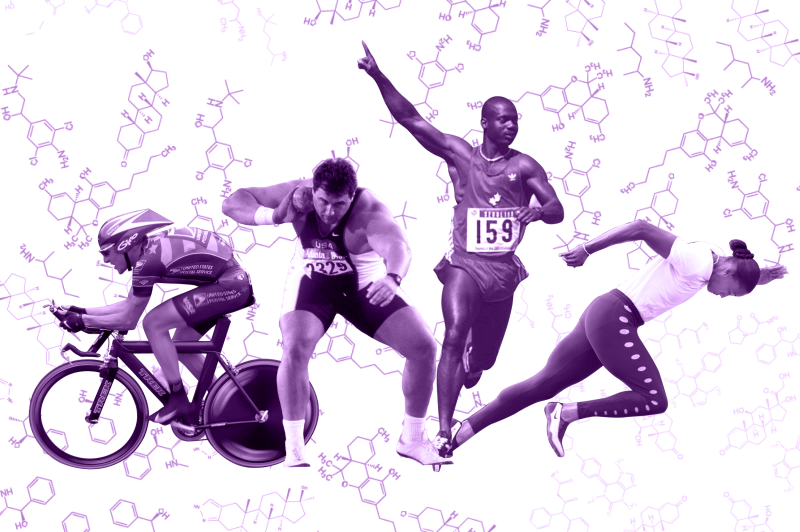
Is doping in sports unfair? Here’s how drug and tech enhancements could level the playing field

Credit: Washington Post

Sports regulators have a tough job sniffing out the latest enhancement technologies because coaches, trainers, and athletes are so adept at finding new ways to add a few centimeters of distance, shave a few tenths of a second off their time, or increase a judge’s score to bring that face-on-a-box-of-Wheaties win. So why not officially open the floodgates of techno-scientific enhancement, to make it a little more interesting? 

With the potential cancellation of the Olympics barely making headlines, and with viewership already in significant decline, would allowing enhancement make the Olympics more relevant? Would opening the competition to anyone wearing a springy exoskeleton suit to propel them down the track 50 percent faster than human legs alone actually make the games even more compelling? What about altering their genetics to enhance a freakish amount of red blood cells to ferry more oxygen to their muscles? And importantly, would changes to the games still be able to capture what it is that we appreciate about competitive sports in the first place? 

Follow the latest news and policy debates on sustainable agriculture, biomedicine, and other ‘disruptive’ innovations. Subscribe to our newsletter.

Now is the time to have to have frank conversations about what we want our sports to look like in the future. And, we must consider that while our ideas about fairness in competition are changing, that might not be a bad thing. 

Read the original post

{{ reviewsTotal }}{{ options.labels.singularReviewCountLabel }}
{{ reviewsTotal }}{{ options.labels.pluralReviewCountLabel }}
{{ options.labels.newReviewButton }}
{{ userData.canReview.message }}

Related Articles

Infographic: Global regulatory and health research agencies on whether glyphosate causes cancer

Infographic: Global regulatory and health research agencies on whether glyphosate causes cancer

Does glyphosate—the world's most heavily-used herbicide—pose serious harm to humans? Is it carcinogenic? Those issues are of both legal and ...

Most Popular

Screenshot-2026-04-13-at-3.54.04-PM
AI disinformation stress test: Challenges and response strategies
ChatGPT-Image-Feb-16-2026-01_04_32-PM
Raw milk myth wake-up call
ChatGPT-Image-Apr-20-2026-11_17_18-AM-2
10,000 scientists gone: Trump’s cuts create an unprecedented brain drain
ChatGPT-Image-Apr-23-2026-09_20_20-PM
Kennedy’s CDC blocks publication of study that shows vaccines reduce hospitalizations by 50%, then misrepresents why
Screenshot-2026-04-21-at-12.05.38-PM
MAHA’s special protein-focused formula for skin care: Beef tallow and salmon sperm. How could they be wrong?
Screenshot-2026-04-12-135256
Bixonimania: The fake disease scam that AI swallowed whole
Screenshot-2026-04-22-at-1.14.34-PM
Latest fevered, right-wing conspiracy: Fox, New York Post, and kooky GOP legislators push ‘Dead Scientists’ scare
images
The never-ending GMO debate: Pros and cons

Sorry. No data so far.

glp menu logo outlined

Get news on human & agricultural genetics and biotechnology delivered to your inbox.