Tofu waste used to make less expensive and more ethical cell-based meat

Credit: News Wantara

Researchers at Nanyang Technological University (NTU) are finding new uses for okara — the pulp leftover from making soy-based foods like soy milk and tofu. It contains high amounts of protein and fibre. 

The researchers fermented okara with microorganisms, heat, and water for about a week. They then extracted a yellow liquid from it, which contains plant growth hormones. These hormones could help animal cells to multiply into real animal tissue, enabling them to cultivate meat.

Mis- and disinformation are distorting science and public policy. Subscribe to our Daily and Weekly Digests for incisive coverage of ‘disruptive’ innovations in AI, agricultural biotechnology, food, chemicals, nuclear energy, vaccines, and other disruptive innovations.

Most cell-based meat production has had to rely on FBS, which is taken from the blood of unborn baby cows. It’s an extremely expensive process, costing as much as $2,000 per litre. It also presents ethical issues for a meat product aimed at ending animal slaughter, it requires tissue from unborn animals.
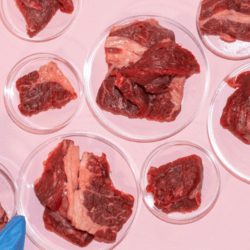

But now, the NTU team believes that their alternative can replace FBS—and lower costs as well. According to Professor William Chen, director of NTU’s food science and technology programme, the okara-based cell culture costs just $2 per litre. 

“Okara is available in large quantities from the food industry, is edible and safe, and is low cost,” explained Chen, in an interview with the Straits Times. 

Read the original post

Related Articles

Infographic: Global regulatory and health research agencies on whether glyphosate causes cancer

Infographic: Global regulatory and health research agencies on whether glyphosate causes cancer

Does glyphosate—the world's most heavily-used herbicide—pose serious harm to humans? Is it carcinogenic? Those issues are of both legal and ...

Most Popular

ChatGPT-Image-Mar-10-2026-01_39_01-PM
Viewpoint—“Miracle molecule” debunked: Why acemannan supplements don’t work
Screenshot-2026-11-06-at-11.44.47-AM
'Gattaca stack': The eugenic, technological push to 'improve the human stock'
Colorful GLP-1 Pens with Clocks_tagger
Biohacker influencers are claiming GLP-1 weight loss drugs extend lifespan. One mice experiment suggests there may be some truth to the claim
Screenshot-2026-11-04-at-11.31.42-AM
Uneasy allies: Are MAHA and American agriculture careening toward a breakup?
Stern-Profile-and-Marked-U.S.-Map
RFK Jr.’s collapsing legacy: U.S. poised to lose measles elimination status
Screenshot-2026-11-09-at-3.01.19-PM
Are Texas data centers killing calves? Debunking viral AI claims
Neon Binary Code Bacteriophage
AI medicine breakthrough: Could ‘good viruses’ created by AI, cure deadly viruses?
Children’s Health Defense Press Conference
As measles deaths among the unvaccinated hit a 35-year high, Kennedy-founded Children’s Health Defense bizarrely blames doctors for slow-walking a cure
Teal Hexagon Technology Icons
4 key ways the Blue Wave will upend science policy
glp menu logo outlined

Get news on human & agricultural genetics and biotechnology delivered to your inbox.