Ghana’s first genetically modified crop – pod borer resistant cowpea — is poised to address widespread protein deficiency challenges

Credit: Panos
Credit: Panos

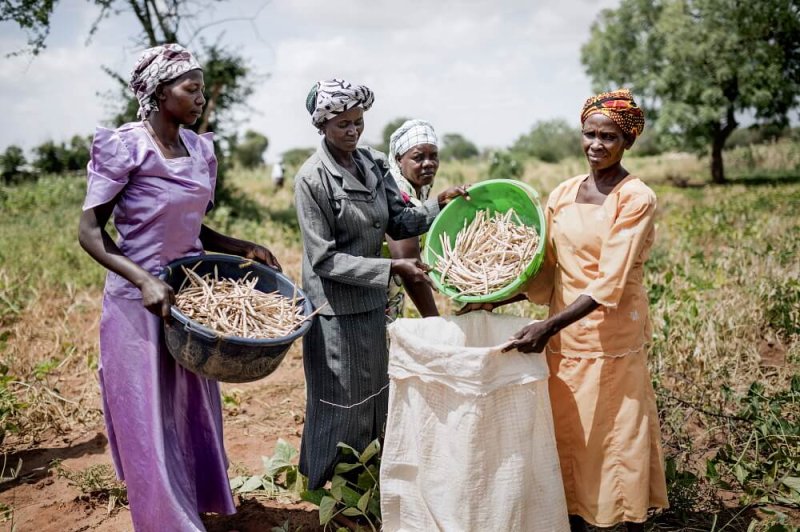
A Senior Research Scientist with the Science and Technology Policy Research Institute of the Council for Scientific and Industrial Research (CSIR) says Ghana’s first genetically modified crop – the pod borer resistant cowpea (beans), will help the country deal with protein deficiency challenges among the population.

Dr Richard Ampadu-Ameyaw believes the variety will offer the country many benefits when it is eventually approved for the benefit of farmers and consumers.

“In a lot of places, being able to buy fish or meat is a challenge, so more beans will help ensure more proteins for the people,” he observed.

“If it is well managed and well farmed, it could help a lot of people move away from poverty,” he added.

Follow the latest news and policy debates on sustainable agriculture, biomedicine, and other ‘disruptive’ innovations. Subscribe to our newsletter.

The pod borer resistant cowpea (PBR cowpea), as it is called, helped farmers cut down pesticide use on their farms by up to 80% during field trials supervised by scientists from SARI.

The resistance results from introducing a gene from a naturally occurring bacteria, Bacillus thuringiensis, to control the pest.


This is an excerpt. Read the original post here.

Related Articles

Infographic: Global regulatory and health research agencies on whether glyphosate causes cancer

Infographic: Global regulatory and health research agencies on whether glyphosate causes cancer

Does glyphosate—the world's most heavily-used herbicide—pose serious harm to humans? Is it carcinogenic? Those issues are of both legal and ...

Most Popular

ChatGPT-Image-Mar-10-2026-01_39_01-PM
Viewpoint—“Miracle molecule” debunked: Why acemannan supplements don’t work
ChatGPT-Image-Aug-28-2026-03_33_46-PM
Viewpoint: Bad science—Five bogus Trump administration claims about vaccines and autism
Screenshot-2026-09-10-at-12.20.19-PM
'Jet fuel didn't melt the steel': 9/11 conspiracy theories debunked
ChatGPT-Image-Sep-2-2026-10_30_14-PM
Zero: That is the official American measles death toll for 2026. Here is what RFK Jr.’s CDC leaves out.
ChatGPT-Image-Sep-13-2026-10_24_17-AM
Bayer urges court to approve $7.25 billion Monsanto Roundup settlement that could limit its future liabilities
ChatGPT-Image-Sep-14-2026-11_36_25-AM
How the reckless AI race among Anthropic, OpenAI and China spawned today’s safety crisis
Screenshot-2026-09-14-at-10.52.30-AM
AI is being used in dangerous bioscience experiments
ChatGPT-Image-Sep-15-2026-06_05_13-PM
CRISPR fine-tuning unlocks vitamin C-rich potatoes without yield loss
screenshot at  am
‘Glyphosate is not carcinogenic’: Independent EU chemical oversight agency reaffirms—for the 3rd time in 9 years—that the herbicide is safe-as-used
Screenshot-2026-09-14-at-3.07.56-PM
Trump EPA rolls back power-plant climate rules—and moves to block future carbon limits
ChatGPT-Image-Sep-14-2026-02_57_24-PM
Viewpoint: 6 Atlantic Council expert opinions on the U.S., China and the AI safety crisis
Screenshot-2026-08-04-at-11.36.16-AM
Viewpoint: Emotion-driven stories of doctors allegedly ignoring patient concerns are driving vaccine hesitancy
ChatGPT-Image-Sep-15-2026-05_59_18-PM
RFK Jr. spent two years distancing himself from Children’s Health Defense. Now he’s keynoting its anti-vaccine DC conference.
glp menu logo outlined

Get news on human & agricultural genetics and biotechnology delivered to your inbox.