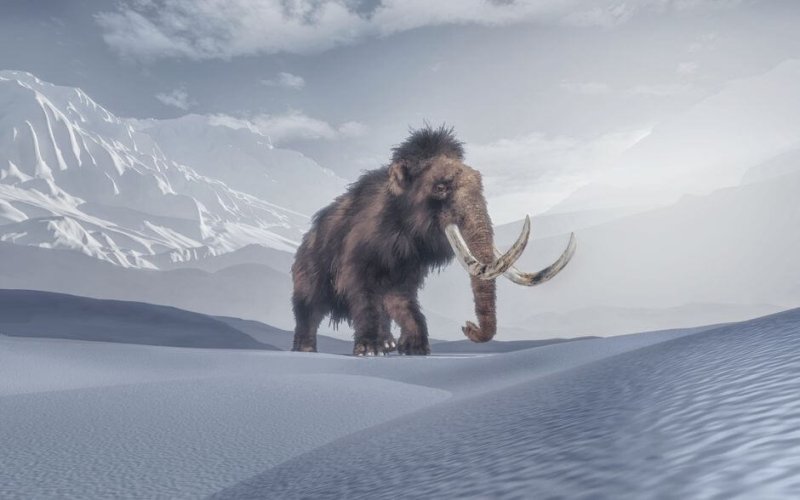
Viewpoint: ‘Mammoth debacle’ — The not-so-encouraging backstory to George Church’s $15 million start-up hoping to resurrect the extinct wooly mammoth

Credit: Getty Images

[A] team of scientists and entrepreneurs has formed a company called Colossal that aims to “bring back the woolly mammoth.” They raised fifteen million dollars in funding to do this job (cf. P. T. Barnum). The motivating force for this endeavor is well-known Harvard geneticist George Church, who for years has said that a “resurrected” woolly mammoth, constructed using DNA sequence from mammoths frozen in the permafrost, was right around the corner.

Well, the corner hasn’t been turned, and, if I don’t miss my guess, it won’t be.  This project is fraught with so many problems that the likelihood of producing a woolly mammoth is close to zero.

In fact it IS zero, because they’re not going to resurrect that extinct creature. What they are doing is making a genetically modified Asian elephant by inserting into its genome a maximum of sixty mammoth genes that they think differentiate the modern species from the extinct one.


Mis- and disinformation are distorting science and public policy. Subscribe to our Daily and Weekly Digests for incisive coverage of ‘disruptive’ innovations in AI, agricultural biotechnology, food, chemicals, nuclear energy, vaccines, and other disruptive innovations.

Further, a lot of other genes differ between a mammoth and an Asian elephant. What guarantee is there that the inserted mammoth genes would be expressed correctly, or even work at all in concert with the Asian elephant developmental system?


This is an excerpt. Read the original post here.

Related Articles

Infographic: Global regulatory and health research agencies on whether glyphosate causes cancer

Infographic: Global regulatory and health research agencies on whether glyphosate causes cancer

Does glyphosate—the world's most heavily-used herbicide—pose serious harm to humans? Is it carcinogenic? Those issues are of both legal and ...

Most Popular

ChatGPT-Image-Mar-10-2026-01_39_01-PM
Viewpoint—“Miracle molecule” debunked: Why acemannan supplements don’t work
ChatGPT-Image-Sep-17-2026-12_28_43-PM
Vitamin D, omega-3 fish oil and glucosamine supplements could cause brain damage 
ChatGPT-Image-Aug-28-2026-03_33_46-PM
Viewpoint: Bad science—Five bogus Trump administration claims about vaccines and autism
Screenshot-2026-08-19-at-6.19.42-PM
Facts & Fallacies podcast: 'Regenerative farming'? RFK Jr.’s federal push romanticizes the past and risks food security
Screenshot-2026-08-12-at-11.31.46-AM
AI is helping develop new vaccines
Screenshot-2026-09-14-at-4.31.14-PM
Viewpoint: What’s the likely impact when the EPA loosens rules limiting methane pollution from oil and gas wells?
Screenshot-2026-09-10-at-12.20.19-PM
'Jet fuel didn't melt the steel': 9/11 conspiracy theories debunked
ChatGPT-Image-Sep-9-2026-02_48_24-PM
Viewpoint: Trump-RFK Jr. report on “Gender Ideology & Left-wing Ideology’ targets LGBTQ community—and science
ChatGPT-Image-Sep-17-2026-10_17_15-AM
Viewpoint: Why are the less intelligent more likely to be conservative—and smarter people more socially liberal?
Eating Nuts Adds up to Longer Life x
For millions with peanut allergies, Nurtured Nuts’ CRISPR gene-edited peanuts could ease the fear of accidental exposure
Screenshot-2026-09-15-at-11.04.54-AM
Viewpoint: Childhood deaths in dispute: Why the CDC vs Pennsylvania conflict over measles vaccines matters
ChatGPT-Image-Sep-13-2026-10_46_11-AM
“Hit the brakes”: Anthropic warns the race to superintelligence could spawn internet-seizing AI swarms—and empower authoritarians. Here’s how to stop it.
glp menu logo outlined

Get news on human & agricultural genetics and biotechnology delivered to your inbox.