India and other developing countries struggling to develop regulations that match the fast-paced science of gene editing

Credit: Development Channel

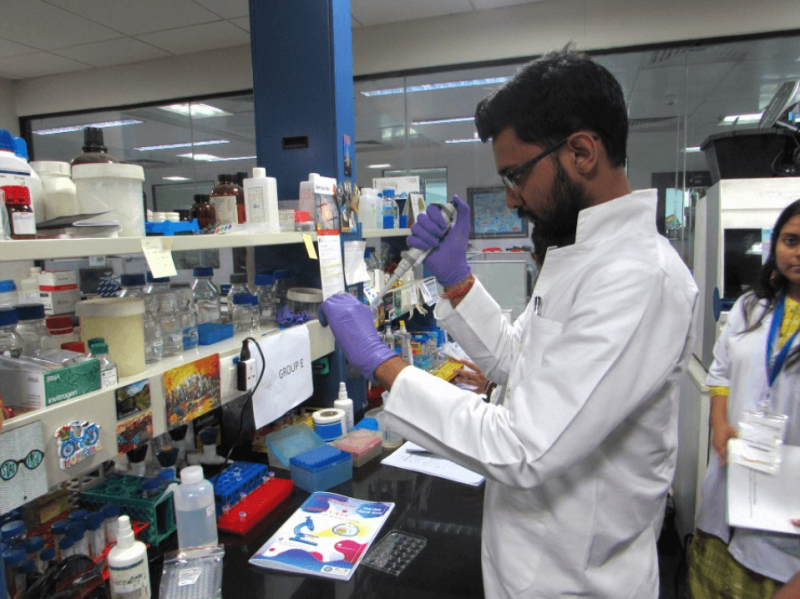
Called CRISPR, or “clustered regularly interspaced short palindromic repeats”, the technology is a powerful tool for editing genomes. It allows scientists to fix DNA segments, as easily as correcting an error in an article.

One of the few researchers in India working on the human applications of CRISPR is Debojyoti Chakraborty. A senior scientist at the CSIR-Institute of Genomics and Integrative Biology in Delhi, he and his colleagues created a CRISPR-based Covid-19 diagnostic test called FELUDA in 2020.

“When it comes to genome editing, we are kind of in the infancy. Although the funding for biology in general has been steadily growing, we have not had a long time with a lot of investment in infrastructure. Research in gene editing is not so abundant and it’s not increasing very fast, but it is growing steadily,” [Chakraborty said.]


Mis- and disinformation are distorting science and public policy. Subscribe to our Daily and Weekly Digests for incisive coverage of ‘disruptive’ innovations in AI, agricultural biotechnology, food, chemicals, nuclear energy, vaccines, and other disruptive innovations.

“We are one of the few countries to have proactively started discussing and implementing policies.

But because the field moves so fast, the legislation and guidelines also need to move fast. We are living in an era where information is getting processed and improved at a rapid pace. The legislation must keep up with this progress,” [Chakraborty said.]


This is an excerpt. Read the original post

Related Articles

Infographic: Global regulatory and health research agencies on whether glyphosate causes cancer

Infographic: Global regulatory and health research agencies on whether glyphosate causes cancer

Does glyphosate—the world's most heavily-used herbicide—pose serious harm to humans? Is it carcinogenic? Those issues are of both legal and ...

Most Popular

Screenshot-2026-09-20-at-9.03.54-AM
From Malaysia to the world: A pioneering science communicator reimagines global science communication for a digital age
Screenshot-2026-09-16-at-2.26.42-PM
Viewpoint: How to ecologically damage America’s forests: Ban glyphosate
ChatGPT-Image-Sep-17-2026-12_28_43-PM
Vitamin D, omega-3 fish oil and glucosamine supplements could cause brain damage 
ChatGPT-Image-Mar-10-2026-01_39_01-PM
Viewpoint—“Miracle molecule” debunked: Why acemannan supplements don’t work
Screenshot-2026-09-20-at-4.31.28-PM
White House drafting executive order to control what OMB Director Vought claims are “woke” NIH science grants
ChatGPT-Image-Sep-20-2026-04_22_32-PM
What’s Trump’s ‘AI Force’? Administration rushes to announce ill-defined watchdog agency and czar amid criticism of its resistance to curb AI acceleration
Screenshot-2026-08-12-at-11.31.46-AM
AI is helping develop new vaccines
Screenshot-2026-09-14-at-4.31.14-PM
Viewpoint: What’s the likely impact when the EPA loosens rules limiting methane pollution from oil and gas wells?
Screenshot-2026-08-19-at-6.19.42-PM
Facts & Fallacies podcast: 'Regenerative farming'? RFK Jr.’s federal push romanticizes the past and risks food security
ChatGPT-Image-Aug-28-2026-03_33_46-PM
Viewpoint: Bad science—Five bogus Trump administration claims about vaccines and autism
ChatGPT-Image-Sep-18-2026-10_49_24-AM
‘Symptom borrowing’: Young people are copying health problems they see on TikTok
ChatGPT-Image-Sep-9-2026-02_48_24-PM
Viewpoint: Trump-RFK Jr. report on “Gender Ideology & Left-wing Ideology’ targets LGBTQ community—and science
glp menu logo outlined

Get news on human & agricultural genetics and biotechnology delivered to your inbox.