On September 23, heads of state and specialist ministers [met] at the United Nations World Food Summit. As a member of a 23-person committee, the Swiss agricultural scientist Urs Niggli prepares the scientific basis for the summit. In an interview, he explains how to feed the growing world population and still achieve the climate goals.

[Der Tagesspiegel:] Mr. Niggli, if the world population grows by 78 million people every year, couldn’t you get enough [for] the additional heads if the farmers plow more land than before?
[Niggli:] Even if yields continue to rise as before, according to calculations by the World Food Organization (FAO), around 200 million hectares of arable land and 400 million hectares of green space would have to be cultivated in order to feed the world population, which is estimated to have grown to almost ten billion by then. That would be one and a half times the area of the entire European Union. Rainforests, moors and savannahs would be endangered, with massive negative consequences for nature and the environment.
[Der Tagesspiegel:] What role will organic products play in feeding the world’s population in the future?
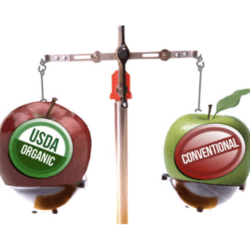



[Niggli:] Organic farming alone can hardly feed the growing world population for one simple reason: the yields of organic farmers are on average 20 to 25 percent lower than those of their conventional colleagues. Research at the University of Kiel shows that this difference can be even greater on good soils. On the other hand, in poor fields, they sometimes harvest as much grain as conventional farmers. Nevertheless, organic farming has a number of significant advantages: If you use organic fertilizers or compost, cultivate diverse crop rotations or mixed crops, for example from grain and legumes, this improves the soil enormously.
[Editor’s note: Urs Niggli is one of the world’s foremost agricultural scientists and from 1990 to 2020 was the Director of the Research Institute of Organic Agriculture (FiBL), a top agroecology research center. Since 2009, he has been an honorary professor for “Research Management in International Organic Agriculture” at Kassel University in Witzenhausen, Germany. He is president of the Institute of Sustainable Food and Farming Systems, which was founded in 2020.
This article was originally published in German and is translated and edited for clarity.]
This is an excerpt. Read the original post here (behind paywall).