Detroit joins growing list of cities decriminalizing psychedelics

Credit: Richard Vogel/AP

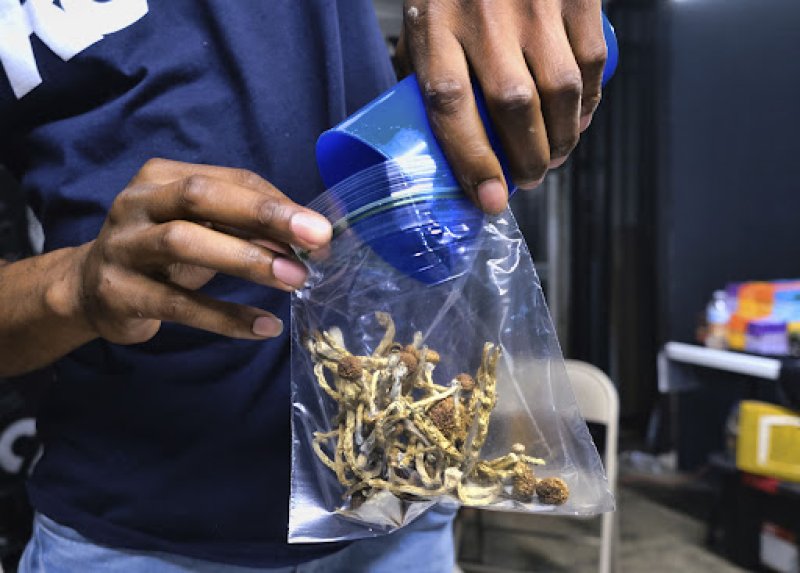
Detroit has joined the growing number of cities and states that have decriminalized entheogenic plants and fungi, more colloquially known as “magic mushrooms” and psychedelics.

Voters, including the city’s incumbent mayor who won a re-election, passed Proposal E on [November 2] to decriminalize entheogenic plants and fungi. Just more than 61 percent of voters supported the measure, with nearly 39 percent of voters opposing it, according to the City of Detroit’s unofficial election results [November 3].

“Detroiters voted in high numbers in support of further decriminalization,” Michigan State Sen. Adam Hollier of Detroit told the PBS NewsHour after the election. “The war on drugs was a war on Black and brown communities and it’s good to see Black communities pushing back.”

Follow the latest news and policy debates on sustainable agriculture, biomedicine, and other ‘disruptive’ innovations. Subscribe to our newsletter.

State and federal law still prohibits personal possession and therapeutic use of entheogenic plants and fungi. But decriminalizing use and possession within city limits means the local police department does not prioritize arrests for those offenses, unless they’re linked to another crime. The measure did not authorize commercialization of the plants and fungi.

The entheogenic plants include psilocybin mushrooms, ibogaine from Africa, ayahuasca from South America and peyote and mescaline from certain cacti.


This is an excerpt. Read the original post here.

{{ reviewsTotal }}{{ options.labels.singularReviewCountLabel }}
{{ reviewsTotal }}{{ options.labels.pluralReviewCountLabel }}
{{ options.labels.newReviewButton }}
{{ userData.canReview.message }}

Related Articles

Infographic: Global regulatory and health research agencies on whether glyphosate causes cancer

Infographic: Global regulatory and health research agencies on whether glyphosate causes cancer

Does glyphosate—the world's most heavily-used herbicide—pose serious harm to humans? Is it carcinogenic? Those issues are of both legal and ...

Most Popular

Screenshot-2026-05-01-at-11.56.24-AM
‘Science moves forward when people are willing to think differently’: Memories of DNA maverick Craig Venter
79d03212-2508-45d0-b427-8e9743ff6432
Viewpoint: The Casey Means hustle—Wellness woo opportunism dressed up as medical wisdom
Screenshot-2026-04-03-at-11.15.51-AM
Paraben panic: How a flawed study, media hype, and chemophobia convinced the public of the danger of one of the safest classes of preservatives
Screenshot-PM-24
Viewpoint: The herbicide glyphosate isn’t perfect. Banning it would be far worse.
ChatGPT-Image-Mar-27-2026-11_27_05-AM
The myths of “process”: What science says about the “dangers’ of synthetic products and ultra-processed foods
ChatGPT-Image-Mar-10-2026-01_39_01-PM
Viewpoint—“Miracle molecule” debunked: Why acemannan supplements don’t work
ChatGPT-Image-Mar-3-2026-01_17_14-PM
MAHA wellness influencers deride proven anxiety medications, tout lifestyle fixes
ChatGPT-Image-Apr-30-2026-12_21_05-PM-2
The tech billionaires behind the immortality movement
ChatGPT-Image-May-1-2026-03_16_32-PM
Viewpoint: How ‘health care guru’ Joe Rogan circumvented the FDA’s skepticism on psychedelics
ChatGPT Image Apr 30, 2026, 01_11_41 PM
Trump’s America First health aid cuts: Retrenchment has already hit global malaria, HIV, TB, and polio programs
ChatGPT-Image-Apr-30-2026-05_00_48-PM
Wellness grifter physician turned wellness influencer out as surgeon general nominee
Screenshot-2026-04-12-135256
Bixonimania: The fake disease scam that AI swallowed whole
glp menu logo outlined

Get news on human & agricultural genetics and biotechnology delivered to your inbox.