How climate change is impacting the future of coffee

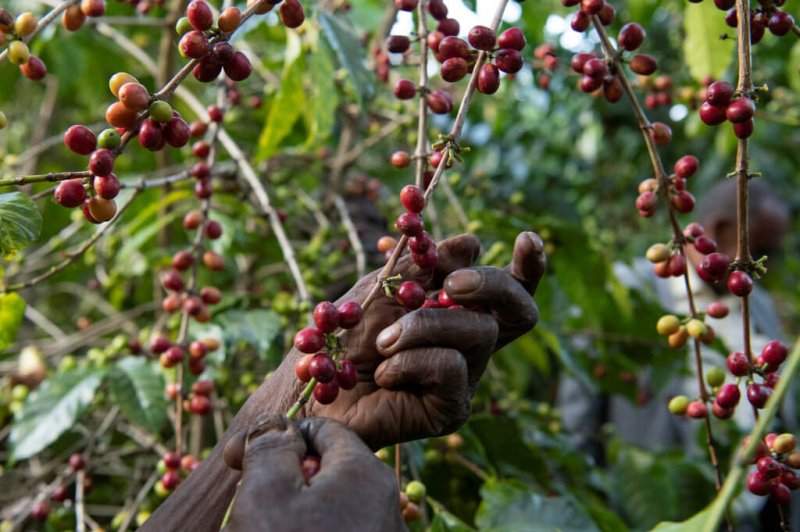
Credit: Maheder Haileselassie/Reuters

According to a 2014 study, under modest declines of greenhouse gas emissions, about 50 percent of the land with conditions suitable for growing the two main species of coffee, arabica and robusta, which account for 99 percent of commercial supply, “could disappear by 2050.” Brazil and Vietnam, major producing countries, would be especially hard hit.

To the billions of people around the world who rely on drinking coffee (to put it mildly), that forebodes many difficult mornings and possibly rising prices. To the 100 million or so coffee farmers, to say nothing of the tens of millions more who work in transporting, packaging, distributing, selling and brewing coffee, the effects of climate change are making an already precarious existence even more so.

Follow the latest news and policy debates on sustainable agriculture, biomedicine, and other ‘disruptive’ innovations. Subscribe to our newsletter.

Next year, World Coffee Research will start a global breeding network, which aims to introduce modern breeding techniques and new varieties in coffee-producing countries to help farmers dealing with new climatic conditions. Based on the information that is obtained, the organization will evaluate how new species perform in different environments around the world, a sort of real-time lab trial.


This is an excerpt. Read the original post here.

{{ reviewsTotal }}{{ options.labels.singularReviewCountLabel }}
{{ reviewsTotal }}{{ options.labels.pluralReviewCountLabel }}
{{ options.labels.newReviewButton }}
{{ userData.canReview.message }}

Related Articles

Infographic: Global regulatory and health research agencies on whether glyphosate causes cancer

Infographic: Global regulatory and health research agencies on whether glyphosate causes cancer

Does glyphosate—the world's most heavily-used herbicide—pose serious harm to humans? Is it carcinogenic? Those issues are of both legal and ...

Most Popular

Picture1-5
Science Disinformation Gap: The transatlantic battle over social media and censorship
ChatGPT Image May 10, 2026, 08_16_59 PM 2
Overmedicalization? RFK Jr.’s antidepressant crackdown raises conflict questions over his fee stake in Wisner Baum, the tort firm built on suing drug makers
Screenshot-2026-05-12-at-9.58.31-PM
'He seems fine': Marty Makary out as FDA commissioner
ChatGPT-Image-May-12-2026-08_39_41-PM
GLP podcast: Big Pharma, Big Ag, Big Food—health harming industries or life-saving innovators?
Picture1-1
Cooling the planet with balloons: Could a geoengineering gamble slow global warming?
Screenshot-2026-04-23-at-11.00.36-AM
Regulators' dilemma: Thalidomide, Metformin, and the cost of getting drug approvals wrong
Screenshot-2026-05-12-at-10.05.11-AM
Pro-vaccine “hero” vs. an anti-vax “villain”: ‘Bad Vaxx’ video stirs MAHA backlash
Picture1-14
When superbugs threaten vulnerable children: Can AI help solve antibiotic resistance?
Screenshot-2026-05-11-104424
Hantavirus outbreak research: Trump administration shut down study last year on rodent-to-human transmission
Screenshot-2026-04-12-135256
Bixonimania: The fake disease scam that AI swallowed whole
glp menu logo outlined

Get news on human & agricultural genetics and biotechnology delivered to your inbox.