All animals sleep — and scientists are still struggling to understand why

Credit: Quanta Magazine

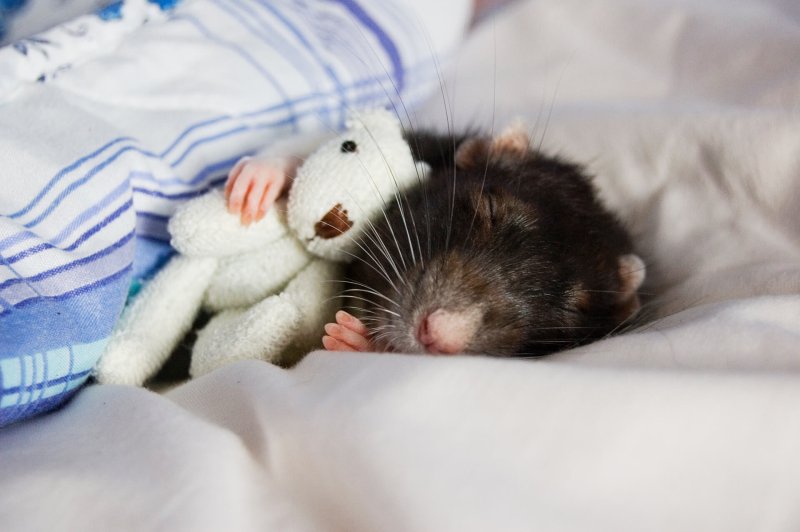
All animals sleep, even the diminutive roundworm Caenorhabditis elegans. Tinkering scientists have tried to genetically engineer the act out of laboratory mice, but all attempts have failed; even severing sleep-promoting circuits in their brains does not remove rest entirely. Sleep seems to be fundamental. The simple yet grand question is why.

Follow the latest news and policy debates on sustainable agriculture, biomedicine, and other ‘disruptive’ innovations. Subscribe to our newsletter.

In a recent review published in the journal Science, [researchers Nicholas] Franks and [William] Wisden shared a few of the things they’ve learned over almost a decade of research. For starters, they have an educated hunch as to sleep’s true purpose: to conduct basic structural or metabolic processes that allow the brain to function normally when we’re awake.

“Much like the cleaning teams who move into empty offices during the night and whose work would be almost impossible during the daytime bustle, some essential and restorative process is underway after we slip into sleep, when normal brain function is at least partly suspended,” they wrote.

Previous studies suggest that one of these janitorial roles is a cleansing of damaged molecules and toxic proteins that build up during wakefulness, a side effect of the brain’s metabolically intensive activity. 

This is an excerpt. Read the original post here. 

{{ reviewsTotal }}{{ options.labels.singularReviewCountLabel }}
{{ reviewsTotal }}{{ options.labels.pluralReviewCountLabel }}
{{ options.labels.newReviewButton }}
{{ userData.canReview.message }}

Related Articles

Infographic: Global regulatory and health research agencies on whether glyphosate causes cancer

Infographic: Global regulatory and health research agencies on whether glyphosate causes cancer

Does glyphosate—the world's most heavily-used herbicide—pose serious harm to humans? Is it carcinogenic? Those issues are of both legal and ...

Most Popular

Screenshot-2026-04-20-at-2.26.27-PM
Viewpoint — Food-fear world: The latest activist scientists campaign: Cancer-causing additives
Screenshot-2026-05-04-at-12.54.32-PM
How Utah became the country’s supplement capital  — and a haven for unregulated, ineffective and fake products
Screenshot-PM-24
Viewpoint: The herbicide glyphosate isn’t perfect. Banning it would be far worse.
Screenshot-2026-03-13-at-12.14.04-PM
The FDA wants to make many popular prescription drugs OTC—a great idea. Here’s why it’s unlikely to happen
Screenshot-2026-05-01-at-11.56.24-AM
‘Science moves forward when people are willing to think differently’: Memories of DNA maverick Craig Venter
Screenshot-2026-04-12-135256
Bixonimania: The fake disease scam that AI swallowed whole
Screenshot-2026-04-03-at-11.15.51-AM
Paraben panic: How a flawed study, media hype, and chemophobia convinced the public of the danger of one of the safest classes of preservatives
bigstock opioids on chalkboard with rol
GLP podcast: 'Safe injection sites': enabling drug addiction or saving lives?
glp menu logo outlined

Get news on human & agricultural genetics and biotechnology delivered to your inbox.