‘Current varieties of coffee aren’t optimized for current conditions’: CRISPR is key to developing climate change-resistant brews

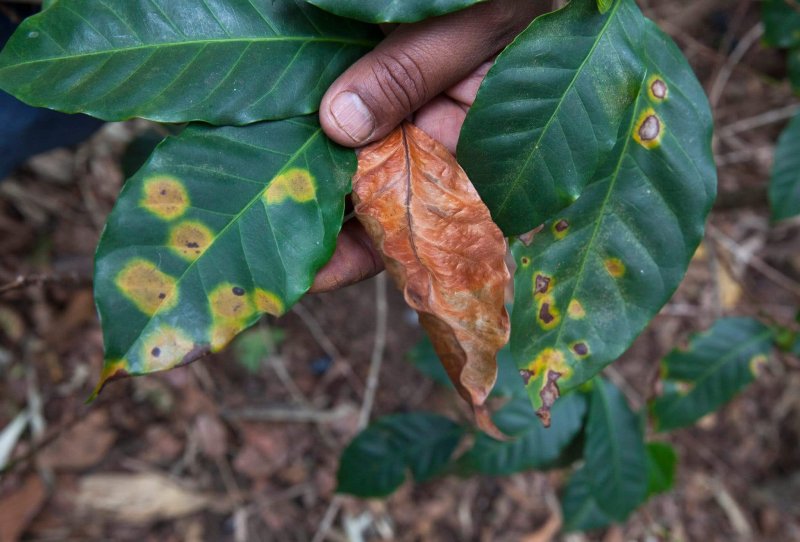
Coffee leaf rust is caused by fungus, damaging production. Source Janet Jarma

Humanity consumes a half-trillion cups annually of the caffeinated brew — almost double from a decade ago — yet coffee production is one of the most antiquated industries in all of agriculture. There hasn’t been a major effort to develop a new coffee bean varietal in half a century and we’re now witnessing the consequences: a crop that simply can’t survive much longer in our changing climate.

Follow the latest news and policy debates on sustainable agriculture, biomedicine, and other ‘disruptive’ innovations. Subscribe to our newsletter.

“Current varieties of coffee aren’t optimized for current conditions,” said Vern Long, chief executive officer of World Coffee Research, an industry group funded by major roasters. “It’s a crop health crisis. Imagine if the last time vaccines were worked on was 1967.”

World Coffee Research is launching a global breeding network in 2022 to encourage the development of heartier and more diverse coffee varieties. New biotechnology startups are also using Crispr and other gene-editing tools to jumpstart the long-overdue evolution of this cultivated plant, the genome of which was first sequenced in 2017.

Investors and lawmakers must support significant changes to coffee production to future-proof our supply, and not just in coffee-producing nations — coffee-consuming nations must also join the effort.


This is an excerpt. Read the original post here.

{{ reviewsTotal }}{{ options.labels.singularReviewCountLabel }}
{{ reviewsTotal }}{{ options.labels.pluralReviewCountLabel }}
{{ options.labels.newReviewButton }}
{{ userData.canReview.message }}

Related Articles

Infographic: Global regulatory and health research agencies on whether glyphosate causes cancer

Infographic: Global regulatory and health research agencies on whether glyphosate causes cancer

Does glyphosate—the world's most heavily-used herbicide—pose serious harm to humans? Is it carcinogenic? Those issues are of both legal and ...

Most Popular

Screenshot-2026-04-13-at-3.54.04-PM
AI disinformation stress test: Challenges and response strategies
ChatGPT-Image-Feb-16-2026-01_04_32-PM
Raw milk myth wake-up call
ChatGPT-Image-Apr-23-2026-09_20_20-PM
Kennedy’s CDC blocks publication of study that shows vaccines reduce hospitalizations by 50%, then misrepresents why
ChatGPT-Image-Apr-20-2026-11_17_18-AM-2
10,000 scientists gone: Trump’s cuts create an unprecedented brain drain
Screenshot-2026-04-21-at-12.05.38-PM
MAHA’s special protein-focused formula for skin care: Beef tallow and salmon sperm. How could they be wrong?
Rod Curtis
In Zimbabwe, an almost-deadly collision between fake news and a real virus
images
The never-ending GMO debate: Pros and cons
Screenshot-2026-04-12-135256
Bixonimania: The fake disease scam that AI swallowed whole
Screenshot-2026-04-22-at-1.14.34-PM
Latest fevered, right-wing conspiracy: Fox, New York Post, and kooky GOP legislators push ‘Dead Scientists’ scare
ChatGPT-Image-Apr-23-2026-10_27_42-AM
Viewpoint: ‘Make America Pregnant Again’ — Trump guts support for birth control to placate the right’s birth obsession
glp menu logo outlined

Get news on human & agricultural genetics and biotechnology delivered to your inbox.