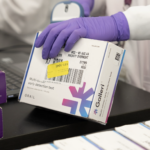
Do biobanks that accept anonymous DNA have a responsibility to inform donors when they discover a treatable genetic defect?

Credit: Harvard
Credit: Harvard

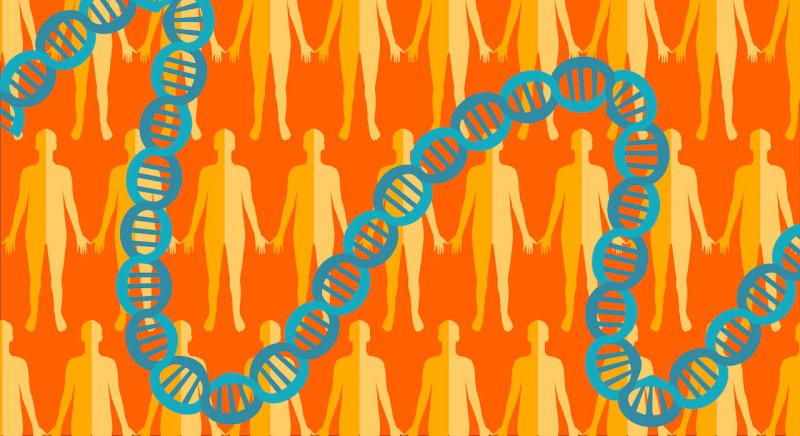
What should happen when researchers, while sequencing a participant’s DNA as part of a large study, discover gene variants that increase the risk for conditions that might be prevented with medical treatment or surveillance?

Some researchers believe they have an obligation to find the participants — often years after they provided a DNA sample — contact them, and tell them what they have found. But, some research subjects, like Ms. [Marin] Konstadt, feel they have a right not to know.

Follow the latest news and policy debates on sustainable agriculture, biomedicine, and other ‘disruptive’ innovations. Subscribe to our newsletter.

Is it ethical for doctors to let them insist they can opt out of learning more without first knowing the particular risk they are facing?

For Dr. Robert Green, an investigator for the biobank with Ms. Konstadt’s DNA, the Mass General Brigham Biobank, and author of a recent paper about its policies, the answers are clear.
The consent form for the biobank tells participants that if the researchers find a worrisome variant, and if there is an intervention that can reduce risk, the participants will be contacted. There will be seven attempts to reach participants — calls and letters — before the team gives up.

“We are offering the information, not forcing participants to accept it,” said Dr. Green.

This is an excerpt. Read the original post here.

{{ reviewsTotal }}{{ options.labels.singularReviewCountLabel }}
{{ reviewsTotal }}{{ options.labels.pluralReviewCountLabel }}
{{ options.labels.noReviewsLabel }}
{{ options.labels.newReviewButton }}
{{ userData.canReview.message }}

Related Articles

Infographic: Global regulatory and health research agencies on whether glyphosate causes cancer

Infographic: Global regulatory and health research agencies on whether glyphosate causes cancer

Does glyphosate—the world's most heavily-used herbicide—pose serious harm to humans? Is it carcinogenic? Those issues are of both legal and ...

Most Popular

ChatGPT-Image-Mar-10-2026-01_39_01-PM
Viewpoint—“Miracle molecule” debunked: Why acemannan supplements don’t work
Screenshot-2026-07-01-at-2.49.48-PM
Dr. TikTok and male fertility: Viral claims tout GLP-1 drugs as fertility boosters. What does the science say?
a-mature-farmer-working-in-the-field-at-sunrise-harvesting-crops-generated-by-ai-photo
What’s the prospect of developing gene-altered crops that are more nutritious and resist climate disruption
ChatGPT-Image-Jun-25-2026-02_53_56-PM
Embryo gene editing is on the horizon, stirring mixed emotions
ChatGPT-Image-Jul-6-2026-02_25_26-PM
40 million Americans take glucosamine. If you have memory loss, it could accelerate cognitive decline.
png-upside-food-syn-bio-cultured-meat
Regulating cultured meat around the world
Screenshot-2026-07-21-at-6.22.06-PM
The Indian physician’s one-woman battle against health disinformation on Wikipedia
reverse-aging
Rapamycin: Here’s the skinny on the anti-aging pill that increases the lifespan—of mice by 10%
YearReview Grift
Viewpoint: A practical guide to evaluating social media wellness hype
ChatGPT-Image-Jul-17-2026-12_42_10-PM
Viewpoint: RFK, Jr. is setting up a panel to compensate people who claim they were injured by a COVID vaccine–no proof needed 
ChatGPT-Image-Jun-17-2026-03_29_08-PM
Viewpoint: What’s the impact of the U.S. abandoning support for global health?
file-f-d-d-
Facts & Fallacies Podcast: Europe's AC debacle underscores fatal flaw in green activism
glp menu logo outlined

Get news on human & agricultural genetics and biotechnology delivered to your inbox.