Air steaks? This California startup believes it can make meat out of thin air with some help from tweaked bacteria

Credit: Air Protein
Credit: Air Protein

The company is taking carbon dioxide—the pernicious greenhouse gas warming our planet—and transforming it into a juicy steak or a delicate salmon fillet.

The process is similar to how yoghurt is made, relying on live cultures. Air Protein cultivates hydrogenotrophic microbes inside fermentation tanks and feeds them a mix of carbon dioxide, oxygen, minerals, water, and nitrogen.

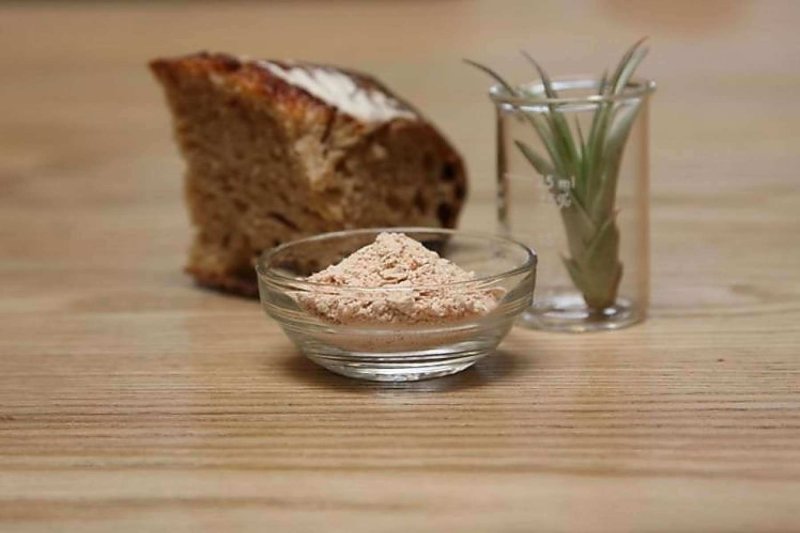
The end result is a protein-rich flour, which has a similar amino acid profile as meat protein.

But how does the company turn that into a tender chicken breast? “

We just add culinary techniques that give you the different textures that you’re looking for,” says [cofounder Lisa] Dyson—using a combination of pressure, temperature, and cooking techniques.

Follow the latest news and policy debates on sustainable agriculture, biomedicine, and other ‘disruptive’ innovations. Subscribe to our newsletter.

The technology’s climate-saving potential is twofold. First, the process itself is carbon-negative, as it uses carbon dioxide to make the protein, and Air Protein aims to eventually pull carbon dioxide from the atmosphere through direct-air capture plants. Second, the process uses 1.5 million times less land than beef and reduces water usage 15,000 times compared to beef.

The most crucial part is making the process cost-competitive with the meat industry, as well as with other meat alternatives, like soy and mycoprotein.


{{ reviewsTotal }}{{ options.labels.singularReviewCountLabel }}
{{ reviewsTotal }}{{ options.labels.pluralReviewCountLabel }}
{{ options.labels.newReviewButton }}
{{ userData.canReview.message }}

Related Articles

Infographic: Global regulatory and health research agencies on whether glyphosate causes cancer

Infographic: Global regulatory and health research agencies on whether glyphosate causes cancer

Does glyphosate—the world's most heavily-used herbicide—pose serious harm to humans? Is it carcinogenic? Those issues are of both legal and ...

Most Popular

Screenshot-2026-04-13-at-1.39.26-PM
Viewpoint: ‘Safer for children?’ Stonyfield yogurt under fire for deceptive organic marketing
Screenshot-2026-04-22-at-10.46.29-AM
Viewpoint: How to counter science disinformation? Science journalist offers 12 practical tips
ChatGPT-Image-May-7-2026-12_16_37-PM-2
Viewpoint: Are cancer rates ‘skyrocketing’ as RFK, Jr. and MAHA claim? The evidence says mostly the opposite
Picture1-14
When superbugs threaten vulnerable children: Can AI help solve antibiotic resistance?
ChatGPT-Image-May-12-2026-08_39_41-PM
GLP podcast: Big Pharma, Big Ag, Big Food—health harming industries or life-saving innovators?
Screenshot-2026-04-23-at-11.00.36-AM
Regulators' dilemma: Thalidomide, Metformin, and the cost of getting drug approvals wrong
Picture1-1
Cooling the planet with balloons: Could a geoengineering gamble slow global warming?
png-pill-omega-Supp-fish-oil
Millions take omega-3 fish oil for brain health. New research suggests it may do the opposite.
bigstock opioids on chalkboard with rol
GLP podcast: 'Safe injection sites': enabling drug addiction or saving lives?
glp menu logo outlined

Get news on human & agricultural genetics and biotechnology delivered to your inbox.