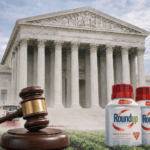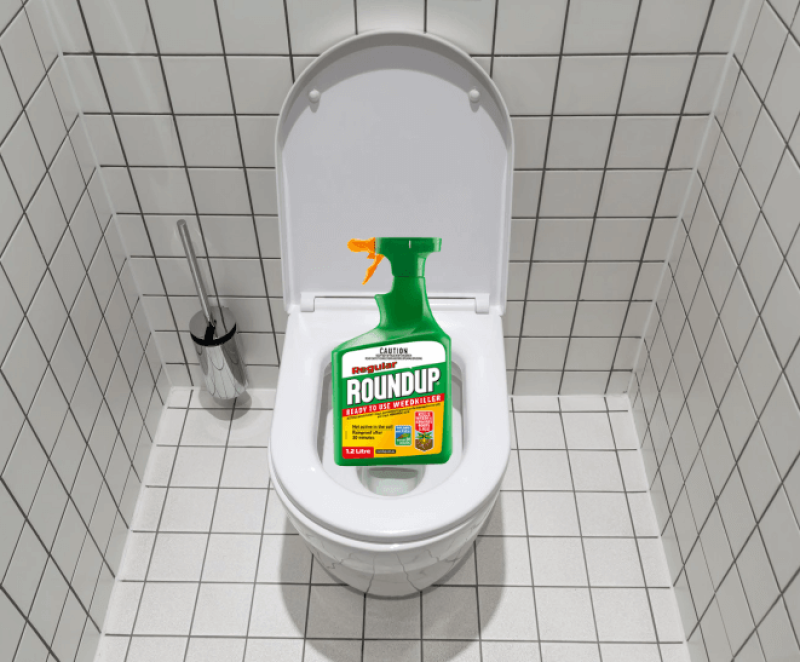
Vilifying the safe herbicide glyphosate has been a long-time proxy for attacking modern conventional agriculture. Sold under the brand name Roundup by Monsanto (absorbed by Bayer in 2018), the weedkiller has been a target of activists since a United Nation’s sub-agency, the International Association for Research on Cancer, concluded in 2015 based on mixed and contentious evidence that glyphosate was “probably carcinogenic” — to agricultural workers who used it every day for years.
Glyphosate fell into IARC’s “probably carcinogenic” category, along with such dastardly things as eating processed meat, sunbathing too long and working as a hairdresser or barber. What does IARC consider much more dangerous than glyphosate? Drinking wine or beer or eating salty fish.
In other words, by any reasonable measure, glyphosate is not remotely dangerous. And even IARC said there is no persuasive evidence that trace amounts in food pose any serious hazard at all.
Following the IARC ‘hazard analysis,’ 19 other agencies including the UN itself and agencies in Europe, Asia, Africa, Canada, New Zealand, Australia and the United States have reviewed the “probably carcinogenic” conclusion and rejected it outright, often with a scathing rebuke of the IARC, which has been mired in scandal since issuing its report and details emerged about what Reuters called a flawed and politicized process.
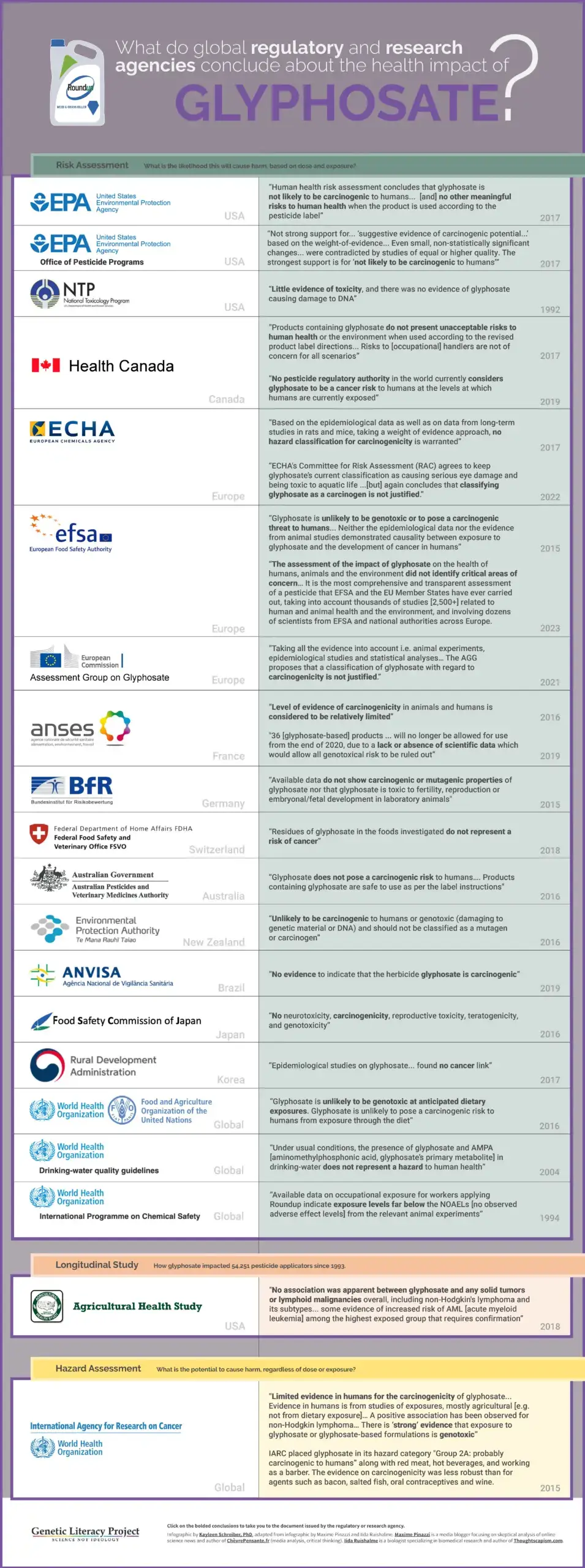
[Editor’s note: See full PDF with links to the studies here.]
Yellow journalism
In the wake of the IARC classification fiasco, with often scientifically illiterate journalists attempting to parse basic chemistry, the coverage of the glyphosate saga evolved into a textbook lesson in deceptive journalism, with new examples appearing almost weekly.
The latest entry appeared in an article over the past week in the UK The Guardian: ‘Disturbing’: weedkiller ingredient tied to cancer found in 80% of US urine samples.

The article also appeared in The New Lede, a website by the Environmental Working Group, an organization funded by the organic industry known for its annual “Dirty Dozen” and other distortions of chemical risk. [Read GLP profile of the Environmental working Group here] Their current primary funding, according to information on the EWG site, comes from Organic Valley, Stonyfield Farms, Earthbound Farms, Applegate, Klean Kanteen, Dr. Bronner Soaps, Beauty Counter, Juice Beauty and Brown Advisory. EWG refers to these companies as its “corporate partners’. Curiously, that information identifying them as a front group was purged from EWG’s site after this article first appeared. Here is the link to the original information before it was removed.
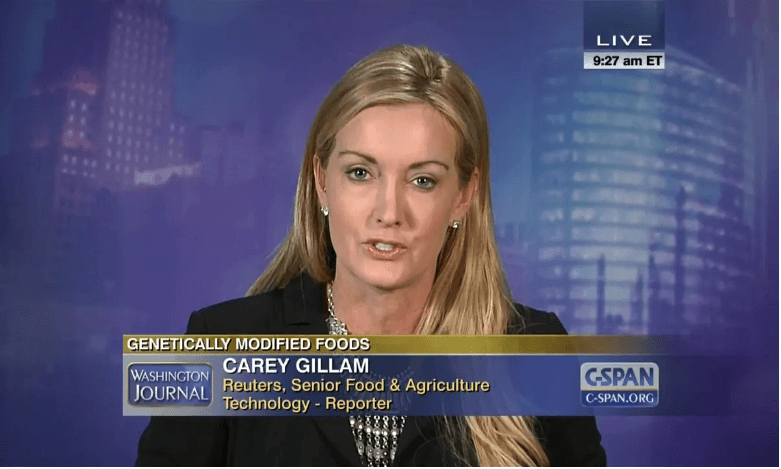
The story is written by Carrey Gillam. The author skillfully uses omission, selective interviews of known anti-glyphosate personalities, and fully overblows any sense of risk associated with the results of the CDC findings.
Who is Gillam? She was a longtime reporter for Reuters covering the agricultural biotechnology beat before leaving after being confronted with allegations of bias against conventional agriculture and for having a cozy relationship with activist groups. After leaving Reuters under a cloud, she joined US Right to Know, an activist group [Read GLP profile] funded by the vaccine-rejectionist wing of the organic industry and started with funding from the Organic Consumers Association [Read GLP profile].
During her time there she wrote two books attacking glyphosate and acted as a consultant with anti-glyphosate litigants who leveraged the IARC rulings to sue Monsanto, claiming Roundup caused their cancers. She abruptly left USRTK under mysterious circumstances with the organization under attack for vaccine denialism—only to land a gig with The Guardian, where she presents herself as an “independent”, bias-free journalist. The Guardian does not disclose any of her ethically questionable history.
Let’s analyze the science
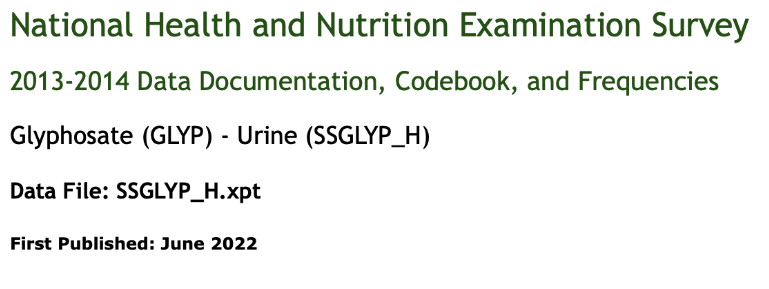
Back to her ‘bombshell’ report that is creating waves in some news circles and on social media. Gillam’s account is extracted from a June 2022 release from the US Centers for Disease Control, a 2013-2014 survey of urine samples from 2322 individuals over six years old. The report found that glyphosate was detected in 80% of samples, as the title of The Guardian article states. But that is where accuracy ends, and deception begins.

Eighty percent sounds alarming, but a scientific breakdown shows much ado about nothing. The first major problem is the science weenie-words that falsely connect glyphosate to cancer. After 40 years of massive scrutiny there is no strong epidemiological, mechanistic or cellular/molecular evidence that this safe herbicide causes cancer, and every major independent regulatory or chemical assessment organization agrees, as noted above. But that does not stop the author from manufacturing the illusion that it does. Her title says, “tied to cancer” and within the article it states, “linked to cancer”. Those are not science designations. Those “ties” and “links” are really just tenuous associations and statistical blips that are weak suggestions, not definitive causal relationships.
But to the non-scientific eye these characterizations achieve the author’s intent—producing the hocus-pocus of a hard cancer-glyphosate connection into the title of an article in a trusted news source. The article states this false cancer connection, even though the Center for Disease Control document they used for the data clearly states that European agencies and the US EPA have evaluated glyphosate carefully and have no evidence that it causes cancer. The author only soft pedals a statement from the EPA near the end of the article and ignored the findings of 18 other agencies entirely.
What does it mean to find chemical traces in urine?
The next deception is in the 80% detection claim and what that really means. Gillam states in The Guardian article that “researchers have been noting high levels of glyphosate in … human urine”. What is the high level found in the CDC report?
We don’t know. The CDC assessment did not measure how much was there, it only noted if it was detected above an analytical threshold. Present/absent, 1/0, yes/no. Not how much. The author sets up the paragraph talking about high levels when there are no quantitative data. Deception again. Note that no other agency and no other review of glyphosate has found levels of glyphosate in urine or blood anywhere near those suggesting health risk. So, the sleight-of-hand here serves only to promote uncertainty and fear.
What level would pose a danger? What is a “detection”? Analytical chemists have devised amazingly sensitive protocols to detect glyphosate in aqueous solutions like urine. In this case, they can detect 0.2 nanograms per milliliter. That’s 200 parts per trillion. What does that mean? That means analytical chemists can confidently say that they detected glyphosate at a level comparable to 200 seconds in one trillion seconds—or about three minutes in 32,000 years. Amazing!
In the reality in the mainstream science world, where the dose makes the poison, a wisp of not much at the edge of nothing poses next to zero biological risk. It was detected in urine. Glyphosate is readily eliminated from the body, making it even more unlikely to be the root cause of cancer. Yes, it was detected in 80% of samples, but it is likely that all were at or near the limit of detection, and outside of the human body.
The article fails to gather interpretations from CDC scientists that conducted the research, as well as commentary from any scientist that does not slather the non-story in a frosting of risk and uncertainty. It is all but certain they would have thrown cold water on Gillam’s scare thesis.
There is a quotation from Professor Lianne Sheppard, stating that “glyphosate in our urine will be disturbing to many people”, providing the word “Disturbing” to the title. Is Sheppard a noted toxicologist noted for her independence?
Anything but. She has other credentials though that undoubtedly made her attractive to Gillam as an interview subject. She was a co-author on a report widely celebrated by the anti-glyphosate world (and The Guardian) that suggested enhanced incidence of non-Hodgkin’s Lymphoma from some high-exposure, long-term glyphosate users (but not others).
That meta-analysis compared non-comparable data sets and made other assumptions to arrive at that conclusion—one not supported by the largest and most comprehensive analysis of agricultural applicators, the Agricultural Healthy Study, considered the gold-standard among researchers tracking cancer in farm workers.
At no point as Gillam develops her ‘glyphosate will kill you’ thesis does she seek input from independent scientists around the world who participated in those 19 regulatory reviews. Instead, she gathers quotations from perennial technology and farming critics like Phil Landrigan and Paul Mills. No scientists from the EPA, USDA or any of the dozens of other international bodies that have examined glyphosate safety were consulted for this piece.
The article concludes with a quotation from Cynthia Curl from Boise State University who said that it is “still unclear how that [exposure to infinitesimally small levels of glyphosate] translates to human health. Since Curl first articulated that position in a 2019 PBS documentary, there have been more than 10 assessments by independent global bodies directly rejecting her ‘lack of clarity’.
In contrast to Dr. Curl’s uncertainty, those of us that have followed the scientific literature around this compound for over 40 years, the dozens of international regulatory agencies, and the results of hundreds (maybe thousands) of independent assessments, it is hardly unclear. The most concise statement came from a Health Canada special re-evaluation meeting that stated,
Glyphosate is not genotoxic and is unlikely to pose a human cancer risk … No pesticide regulatory authority in the world currently considers glyphosate to be a cancer risk to humans at the levels at which humans are currently exposed.
This article is the latest salvo in the ongoing assault on conventional agriculture and this farm chemistry cornerstone. Glyphosate is a crucial tool for farmers and municipalities, and while it certainly has its limitations and precautions, it remains a non-toxic tool to enhance efficient farming. The asymmetrical articles produced by a tiny handful of critics exploit trusted news sources like The Guardian to distort the facts, ignore the science, and manufacture risk where virtually none exists.
Kevin M. Folta is a professor, keynote speaker and podcast host. Follow Professor Folta on Twitter @kevinfolta