
From Ethiopia to South Africa, and points in between, a cross section of leaders — both serving and former — have agreed that GMOs deserve an opportunity to boost the continent’s agricultural fortunes and improve rural livelihoods.
Here are some of the prominent voices from the African political space who have lent their voice to the clamour for GMOs and explicitly endorsed the technology.
Kenya’s president Uhuru Kenyatta
President Uhuru Kenyatta has on various occasions expressed his support for GMOs despite stifling legislation that limits the importation of GMOs into the East African country.
It was during Kenyatta’s second term that Kenya approved Bt cotton for commercial cultivation, heralding the revival of a cotton industry that had gone to the doldrums in the 1990s.
Kenyatta has said that Bt cotton has proven potential for better yields compared to conventional varieties and has pledged that the government will continue to improve policy conditions to ensure that the country reaps maximum benefits from the variety.
His deputy, William Ruto, is an equally avid biotechnology advocate who has previously expressed support for lifting the GMO ban that was put in place in 2012. In what is perhaps his most lucid expression of support for GM technology, Ruto, on the sidelines of the 10th Conference of the Parties to the Convention on Biological Diversity in Japan, termed GM as a “breakthrough technology that is going to get more people, especially the 1 billion or so people in the world… who are faced with hunger, majority of them in Africa, a chance to have a meal on their plate.”
Kenya’s second president, the late Daniel Arap Moi, also sought support for the country’s efforts to adopt the technology. In May 2000, Moi wrote to US President Bill Clinton seeking US support to close the biotechnology gap, stating that current farming methods were proving incapable of meeting the country’s requirements for food security and economic growth.
Ghana’s ministers of science and technology
In 2017, Ghana’s then Minister of Environment, Science, Technology and Innovation Professor Kwabena Frimpong-Boateng made it explicitly clear that GMOs were part and parcel of contemporary times, and that there was no way Ghana could avoid GMOs.
“…whether we like it or not, GMO organisms and food are with us,” Boateng told a parliamentary committee, while affirming the government’s support for responsible use of the technology.
By profession a physician and cardiothoracic surgeon, Boateng asserted that “biotechnology is so important that we can’t develop without it.”
Despite the storms of opposition waged by anti-GMO groupings in the country, Ghana is on course towards adopting genetically modified crops as a way to boost its food production. Recent developments include an application to the National Biosafety Authority (NBA) for approval to release Bt cowpea, the country’s first GM crop, which has an inbuilt resistance to attacks by the Maruca vitrata pest.
Like his predecessor, Dr Kwaku Afriyie has adopted a similar position, saying that GMOs are scientific innovations and that no country can develop sustainably without science, technology and innovation.
Former Ethiopian Prime Minister Meles Zenawi
The late Ethiopian Premier was once described as an “orchestrator of influential ideas, highest caliber of practicality and source of long-sighted visions during his leadership.”
At some point in his leadership when many African countries were dithering over whether to adopt GM technology, the former Ethiopian premier was quite resolute, saying that Africa should not shy away from embracing GM crops as a means of tackling its massive hunger.
“Should we rule out GM crops or biotechnology as a weapon in our arsenal? No. Why should we rule out any technology? GM technology is like every other technology. It could be used well, or it could be misused. The issue is how to use it well. I think it can be used well if is used safely,” Zenawi posed during an international summit on hunger held in 2004.
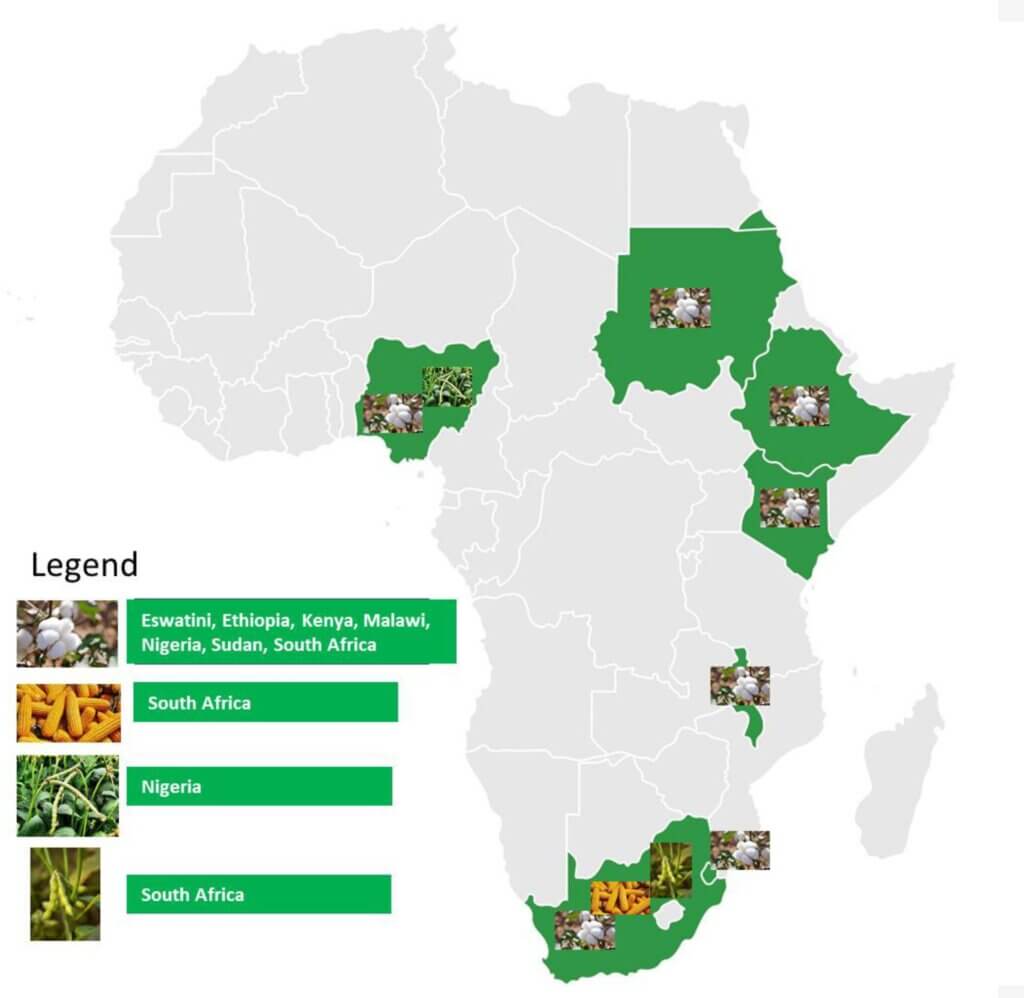
And Ethiopia has certainly used GM well. In 2018, the country approved the commercial cultivation of GM cotton and field research on GM maize, as part of efforts to improve agricultural productivity.
Former South Africa President Thabo Mbeki
South Africa acknowledges the important role that biotechnology contributes to its national imperatives such as ensuring food security, poverty alleviation, job creation and socio-economic development.
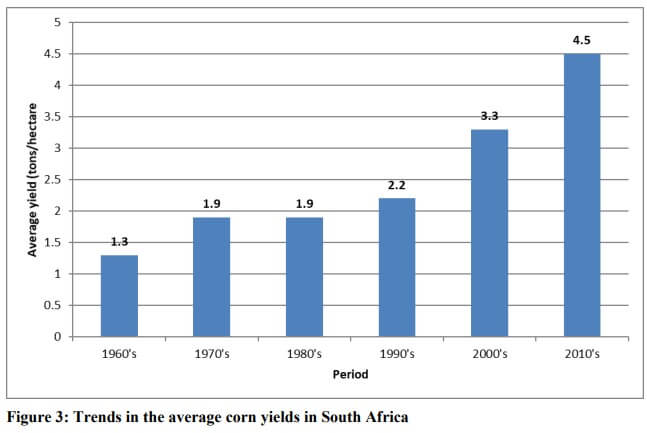
The country has historically reaped impressive yields thanks to GMOs but some of its neighbors in the region have been slow to adopt the technology, a fact the government says is linked to perceptions of GMOs.


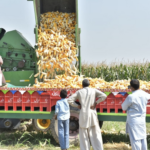
For instance, in 2002 when several countries in southern Africa were struggling to feed their populations following a widespread famine, President Mbeki offered to mill a consignment of relief GMO maize on behalf of the affected countries.
Mbeki was even seen as the sobering voice that would help temper the bewilderment and apprehension of some neighboring leaders who had faltered to receive the food aid and stoked a controversy laced with falsehoods and widespread ignorance on GMOs.
Government ministers in Zambia
A number of government officials in Zambia have been outspoken in their endorsement of GMOs and have sought to dispel negative perceptions of the technology, the seeds of which were sown in the early 2000s by President Levy Mwanawasa.
“… The perception out there is that GMOs were banned by Late President Levy Mwanawasa and there are no GMOs in Zambia. I have struggled to understand that line of thinking because today there is nothing that is not modified in one way or another…. We live in an engineering world where technologies are advancing every day, therefore we cannot ignore what is happening. It’s the time we are in,” was the bold assertion by Dr Brian Mushimba, the Minister of Higher Education under President Edgar Lungu’s rule.
His counterpart in the health ministry, Dr Chitalu Chilufya, assured the Zambian parliament that GMO food stuffs were safe for consumption, while explaining the context of the country’s ban on importation of GMOs.
At the time of the ban, Zambia lacked the infrastructural and human resource capacity to handle GMOs, but these hurdles were overcome through enactment of appropriate legislation and establishment of the National Biosafety Authority (NBA).
Zambia has lately been receptive to the GM products, a far cry from the hardline position taken by the Mwanawasa regime.
Senegal President Macky Sall
Two-term Senegal President Macky Sall, a geological engineer and geophysicist by training, has been seen to “strongly support” the adoption of biotechnology in his country.
On June 14, 2022, President Sall signed a new biosafety law that effectively repealed the 2009 biosecurity law, enabling Senegal to reap maximum benefits from modern biotechnology.
Sall has consistently rooted for science and technology as important tools in enhancing the well-being of the Senegalese people.
“It is undeniable that GMOs can help meet current challenges, such as food insecurity, public health issues, natural resource conservation and climate change,” he stated during the 2017 Annual Session of the Senegal National Scientific and Technical Academy (ANSTS.
Former Malawi president Dr. Joyce Banda
Dr Joyce Banda was quite forthright in her support for biotechnology from the early stages of her presidency, as Malawi laid the groundwork for research on new GM crops (beans, cassava, cowpeas, and maize).
In her maiden address to the country’s parliament in May 2012, Banda pledged that her government would encourage technology and innovation adaptation by promoting and supporting genetic modification in agriculture.
“With modern biotechnology, farmers will not be troubled to weed their gardens; they will not have to buy pesticides; and genetic modification will help improve soil carbon and moisture content,” she stated.
Since then, Malawi has made notable steps in its quest to incorporate GM crop farming in its agriculture. Malawi currently is one of seven African countries that have approved the commercial production of GM crops.
Dr. Joseph Maina is a Senior Lecturer in the Department of Earth and Environmental Sciences at Macquarie University. Joseph’s ultimate goals are to understand and predict the impacts of environmental variability and change on social and ecological systems at local and global scales to support spatial planning & management.
A version of this article was originally posted at the Cornell Alliance for Science and is reposted here with permission. The Cornell Alliance for Science can be found on Twitter @ScienceAlly