Why is our species almost universally seen as the logical endpoint of evolution, with all other species serving as inferior detours or temporary placeholders on an inevitable march toward humanity?
This default, hard-to-shake view of evolution has been debunked as definitively as Walker’s ape question. Yet it continues to be echoed in education, policy, business, conservation efforts, and the behaviors of the vast majority of people in Western, industrialized nations.
Consider that bacteria do countless things humans cannot, including orienting by magnetic fields, encysting to survive hundreds of years in “suspended animation,” and incorporating stray bits of DNA lying around their environment. Many bacteria make their own food by chemosynthesis or photosynthesis. Others glow in the dark, survive in anoxic muck or boiling water, or pick up metal particles to shield themselves from toxic and radioactive environments.



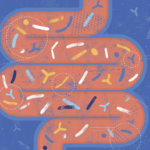
People remain dependent on “simple” bacteria to digest our food and produce vitamins in our gut—things humans can’t manage on our own. Microbes reign over the insides and outsides of our bodies. Their immense impact on human health—both positive and negative—is underestimated at our peril.
Naturalist Charles Darwin drafted a note to himself to “Never use the words higher or lower.” Apes did not appear just so they could morph into humans. Nor did reptiles evolve solely to give rise to mammals, nor fish to amphibians.