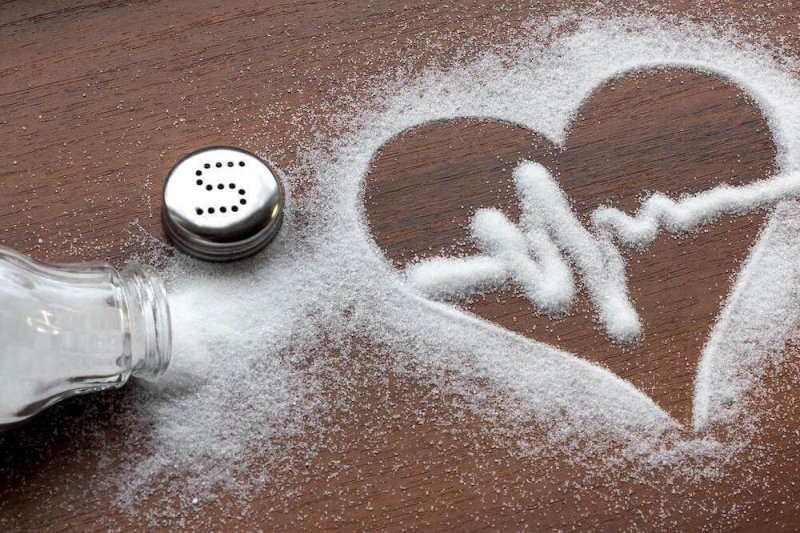
The tipping point for millions of heart attacks is one single gram of salt per day

Credit: Getty Images
We know consuming too much salt raises blood pressure, which in turn can lead to cardiovascular problems. A new study has now quantified this relationship as a public health message in clear, stark terms.

Looking at health data on adults in China, the study authors estimate that a reduction of just 1 gram in daily salt intake would be enough to prevent 9 million cases of stroke and heart attack between now and 2030.

With 4 million of those cases likely to be fatal, such a simple measure could save a lot of lives.

In China, average daily salt consumption sits at 11 grams, way above theย 5 grams recommendedย by theย World Health Organizationย (WHO). The researchers pulled together the latest stats on population size, salt consumption, blood pressure and disease rates.

“Previous estimations of the health impact of reducing salt intake in China used either obsolete or otherwise unreliable data sources and did not account for the more prolonged effect of salt reduction on blood pressure over several years,” write the researchers in theirย published paper.

Follow the latest news and policy debates on sustainable agriculture, biomedicine, and other ‘disruptive’ innovations. Subscribe to our newsletter.

If those targets are hit, up to twice as many deaths related to cardiovascular disease could be prevented, due to the estimated reduction in systolic blood pressure.

However, the researchers emphasize that the reduction would have to be consistent over several years.ย Education programs run in Chinese schoolsย suggest most of the population wouldn’t find it too difficult to hit that 1 gram per day target.

“Other trials, on low-sodium high-potassium salt substitutes, health education to home cooks and restaurant interventions are ongoing or have recently been completed, some of which have already shown promising results,”ย write the researchers.

While the authors of this study only looked at a potential reduction in cases of cardiovascular disease, they suggest that lowering salt intake would have multiple other benefits too. Too much salt hasย also been linkedย to certain types of cancers and various kidney problems, for example.

The Chinese government has launched aย Healthy China 2030ย campaign to try to hit its target of a daily salt intake of just 5 grams. That won’t be easy with a population of 1.4 billion people, but the numbers produced in this study are compelling.

“A salt reduction programme that is workable, coherent, sustainable and targeting current and upcoming major dietary sources of salt in China is urgently needed,”ย write the researchers.

Read the original post here

{{ reviewsTotal }}{{ options.labels.singularReviewCountLabel }}
{{ reviewsTotal }}{{ options.labels.pluralReviewCountLabel }}
{{ options.labels.newReviewButton }}
{{ userData.canReview.message }}

Related Articles

Infographic: Global regulatory and health research agencies on whether glyphosate causes cancer

Infographic: Global regulatory and health research agencies on whether glyphosate causes cancer

Does glyphosateโ€”the world's most heavily-used herbicideโ€”pose serious harm to humans? Is it carcinogenic? Those issues are of both legal and ...

Most Popular

Screenshot-2026-04-23-at-11.00.36-AM
Regulators' dilemma: Thalidomide, Metformin, and the cost of getting drug approvals wrong
Picture1-5
Science Disinformation Gap: The transatlantic battle over social media and censorship
ChatGPT-Image-May-13-2026-11_56_08-AM
After slashing global health aid by $19 Billion, Trump moves to tap $2.1 billion moreโ€”to cover shutdown costs
ChatGPT-Image-May-12-2026-08_39_41-PM
GLP podcast: Big Pharma, Big Ag, Big Foodโ€”health harming industries or life-saving innovators?
Screenshot-2026-02-20-at-10.48.04-AM
Deepfakes raise profound ethical questions in science
Picture1-1
Cooling the planet with balloons: Could a geoengineering gamble slow global warming?
ChatGPT-Image-May-7-2026-12_16_37-PM-2
Viewpoint: Are cancer rates โ€˜skyrocketingโ€™ as RFK, Jr. and MAHA claims? The evidence says mostly the opposite
Screenshot-2026-05-01-at-1.29.41-PM
Viewpoint: What happens when whole grains meet modern food manufacturing? Labels donโ€™t tell the whole story.
ChatGPT-Image-Apr-13-2026-02_20_22-PM
Viewpoint: Misinformation infodemic? Why assessing evidence is so challengingย 
Screenshot-2026-05-12-at-9.58.31-PM
'He seems fine': Marty Makary out as FDA commissioner
png-pill-omega-Supp-fish-oil
Millions take omega-3 fish oil for brain health. New research suggests it may do the opposite.
Screenshot-2026-05-12-at-10.05.11-AM
Pro-vaccine โ€œheroโ€ vs. an anti-vax โ€œvillainโ€: โ€˜Bad Vaxxโ€™ video stirs MAHA backlash
ChatGPT Image May 12, 2026, 10_19_00 AM 2
Viewpointโ€” 'Muscular governance': How authoritarianism is surging corporate-linked energy misinformation
S
As vaccine rejectionism spreads, measles may be taking a more dangerous turn
glp menu logo outlined

Get news on human & agricultural genetics and biotechnology delivered to your inbox.