For better or worse, no definition of disease exists independent of historical context. In 2022, an infertile woman may be said to possess a medical condition. In the 1600s, the same woman may have been burned at the stake, or said to bear “a wandering womb” (as medieval concepts of anatomy included “the womb being able to run around inside the body at will”). In 2065, still the same woman may be considered perfectly healthy, if childbearing becomes the job of artificial wombs.
This notion—that the term “disease” is not static—complicates the moral distinction between “therapy” and “enhancement.” Some bioethicists argue that therapies should be pursued which prevent human suffering. Yet human suffering does not fall categorically outside the boundaries of early-21st-century conceptions of health. In 2022, one can both suffer and be considered healthy—or, as one definition of the absence of disease suggests, one can be on “the normal functioning path of the organism.”
If a person lives to be 100 years old, they are almost certain to develop cancer. Indeed, 96 percent of all cancers occur in patients aged 35 and older. This means that cancers are often not a deviation from “the normal functioning path of the organism”—and yet we treat them as abnormal. Human aging is not yet widely considered a disease, but can be perceived as the primary cause of suffering in our century. Scientifically, aging can be understood as the source of all the leading causes of death in 2022, including COVID-19—around 90 percent of all US deaths from the virus were patients over 60.
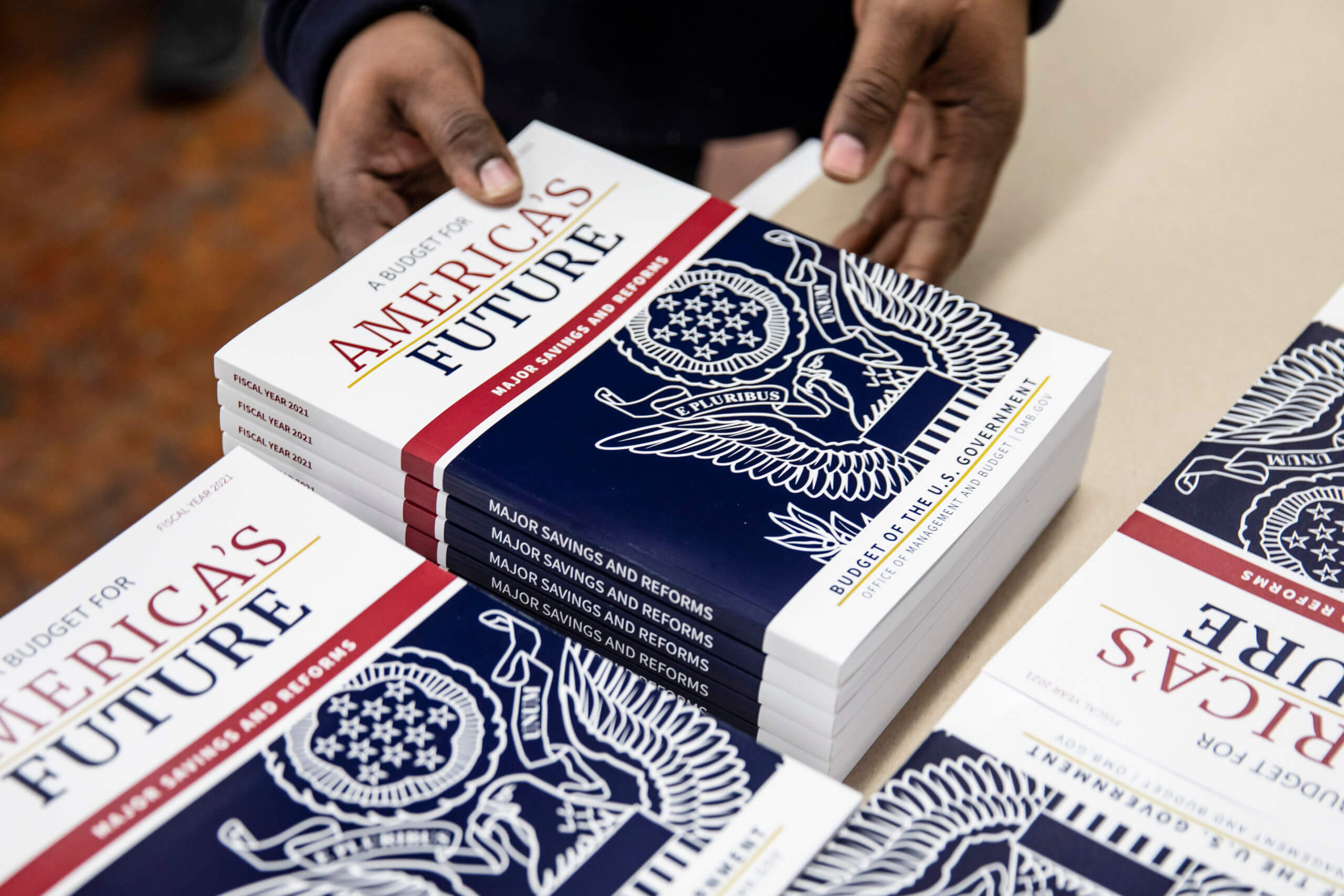
Economically, the gradual decay of our unprecedentedly long-lived populations costs the US nearly half its federal budget every year. It’s no wonder that the most well-funded pre-seed biotechnology startup in history—Altos Labs, which boasts an impressive list of Nobel laureates and enjoys funding from Jeff Bezos—is committed to the idea that aging, even if normal to our species, is also profoundly harmful. It’s unsurprising, too, that the Saudi royal family is planning to donate a billion dollars a year to aging science.
A growing number of scientists suggest that aging is the (treatable) disease of which most cases of Alzheimer’s, heart disease, and cancer are symptoms. Over the past century, we engineered more than a doubling in average life expectancy, but average health-span has hardly changed throughout the history of humankind.
Aging therapies are often deemed superfluous because, through the myopic lens of early-21st-century morality, they constitute “enhancement”: a deviation from the sick-care model of therapeutics whereby diseases are only named—and treated—retroactively.
Is aging an essential part of our design?
Today, human aging and being human are often conflated as a single process, aging being comprehended as a mystico-teleological phenomenon designed by tenderhearted gods to furnish human life with meaning. When cancers were first documented in ancient Egypt, they were similarly thought to be a product of celestial ingenuity: as the American Cancer Society writes, “Ancient Egyptians blamed cancers on the gods”—but their theology was consistent with this proposition.

In 2022, if we choose to accept post-Enlightenment evolutionism, reality is far more grim: when it comes to longevity, as David A. Sinclair writes in Lifespan, “individuals look out for themselves.” We have been painfully slow to revise Aristotle’s unscientific—and highly influential—theory that older adults die to make way for the young. Now, several biologists dispute the notion that aging and its ailments exist for a reason special to us. They reject the belief that what Yuval Harari has called “the human spark” could ensure biological processes exist to advance human ideals.
Humans, unlike other primates, have a fondness for mythological narratives of grandeur and heroism—often, at the expense of comprehending the more humdrum or capricious reasons for why things happen. Cancers, like the processes of aging, constitute not one, but several diseases. They develop not so civilizations may prosper and flourish, but as happenstance features of haphazardly conceived systems. Biologically immortal species (like the jellyfish Turritopsis dohrnii) offer good evidence that aging is not inevitably beneficial to life, and may well be considered a multifactorial genetic disease, the universality of which in humans makes it more—not less—harmful.
Concerns that this shift may provoke ageism ought to be addressed by preventing older (not younger) individuals from enjoying excessive perks, such as holding onto a job for 80 years. And even if calling aging a disease is a conflation of cause and effect, language only works because it allows for such imperfect generalizations, with far-reaching effects in the real world.
In The Blank Slate, Steven Pinker reminded us that natural selection is “morally indifferent”: no engineer is tasked with guaranteeing that the survival of specific genes aligns with human aspirations. To think, as the philosopher Hans Jonas does, of “the organically programmed dying of parent generations to make room for their offspring” is to subscribe to the gawky mishmash of a creationist-secularist view—accepting the callousness of a godless universe, while hoping, still, for teleological protection from our designer-gods.
Absent effective aging drugs, one of humanity’s most pressing problems by the year 2100 will be the contraction of the global population. Without young immigrants, the United States would already be experiencing negative growth, and Japan is set to lose 21 million people by 2050.

The current global population of nearly eight billion people (better fed and sheltered than at any time in human history) is proof that large populations in themselves are not the problem. Indeed, as Peter Diamandis and Steven Kotler argue in The Future Is Faster Than You Think, an unprecedented number of well-nourished minds working towards human flourishing is what made feats like the Enlightenment possible.
But, to most early-21st-century humans, there remains something deeply unsettling about the treatment of human bodies as high-tech mechanical devices to be tweaked. Should we be striving for this kind of limitless “enhancement”? Could human life be purchased, like silicon devices? What about our very special spark?
When we discard teleological narratives of almighty gods—which in the past (as in 1851) served as heuristics for profoundly irrational and immoral deeds—the facts become clear. If evolution had our flourishing in mind when it produced the processes of aging millions of years ago, this benefit is no longer valid. And if we choose to treat Alzheimer’s or fund retirement programs, then the preventative treatment of the fundamental processes of aging is not simply a pet-project for future, more stable civilizations, but an ethical imperative if civilizations wish to become more stable.
Who will receive treatment?
Today’s aging therapies are far from equitably distributed. Those with some arguable benefits—including NMNs and metformin—even when offered at a low cost, remain unsought by lower-income populations due to systemic barriers. Further, governments rarely fund fundamental aging research (only 0.54 percent of all National Institutes of Health funding is devoted to it), which delays at once the democratization of existing therapies and the advancement of clinical safety studies for more effective ones.
But just as safe and affordable cancer treatments are not yet here, and champions of a cure for cancer are untrained in the science and economics of promising drugs, so too, one need not agree on the nuances of aging therapies to find their potential success—including safety and affordability—ethically permissible.
As Sinclair writes, “effective longevity drugs will cost pennies on the dollar compared to the cost of treating the diseases they will prevent.” If we decide to name the fundamental processes of aging a disease, governments and average individuals would incur fewer costs, freeing up capital for other important human aspirations, such as wider access to medical therapies.
Yes, Jeff Bezos, Mark Zuckerberg, and Peter Thiel stand to make vast profits from the sale of human life and health. And yes, they are sure to benefit from aging therapies far sooner than my family in rural Brazil. But if their funding can advance these therapies towards clinical safety, helping to save billions of lives while unburdening our healthcare systems, this would be a just distribution of capital-for-output.
In the end, it’s up to us whether or not we think of aging as an essential part of the human condition. Science, we must remind ourselves, advances not one funeral, but one hard-working, living human at a time. There is hardly a belief more harmful than that biological decay is a mystical, kind, or dialectical force, guiding humanity towards its predetermined and unalterable telos.
It is human agency—with the sweat, faults, and capriciousness of the living—that engenders progress. It is our own ever-ungainly understanding of terms like “disease” and “health” that designs the future of our species.
Raiany Romanni is a Harvard Kennedy Fellow in Effective Altruism, A360 Scholar, VitaDAO Fellow, ODLB2, and bioethicist.
A version of this article was posted at Quillette and is used here with permission. Find Quillette on Twitter @Quillette