Using data from the Commonwealth Fund’s 2020 International Health Policy Survey and the Organisation for Economic Co-operation and Development (OECD), we compare health care accessibility, affordability, and health status for adult men in 11 high-income countries. We also examine measures of income and income-related stress, where the data allow, to understand the role income insecurity might play in American men’s relatively low use of health care.
Highlights
- Looking across the 11 high-income countries in our study, rates of avoidable deaths, chronic conditions, and mental health needs for U.S. men are among the highest in our analysis.
- Men in the U.S. have the lowest rate of prostate cancer–related deaths.
- Men in Canada, the United States, and Sweden are the least likely to have a regular doctor and have among the highest rates of emergency department use for conditions that could have been treated in a doctor’s office.
- Men in the U.S. and Switzerland skip needed care because of costs and incur medical bills at the highest rates.
- In the U.S., men with lower income or frequent financial stress are less likely to get preventive care, more likely to have problems affording their care, and more likely to have physical and mental health conditions.
Findings
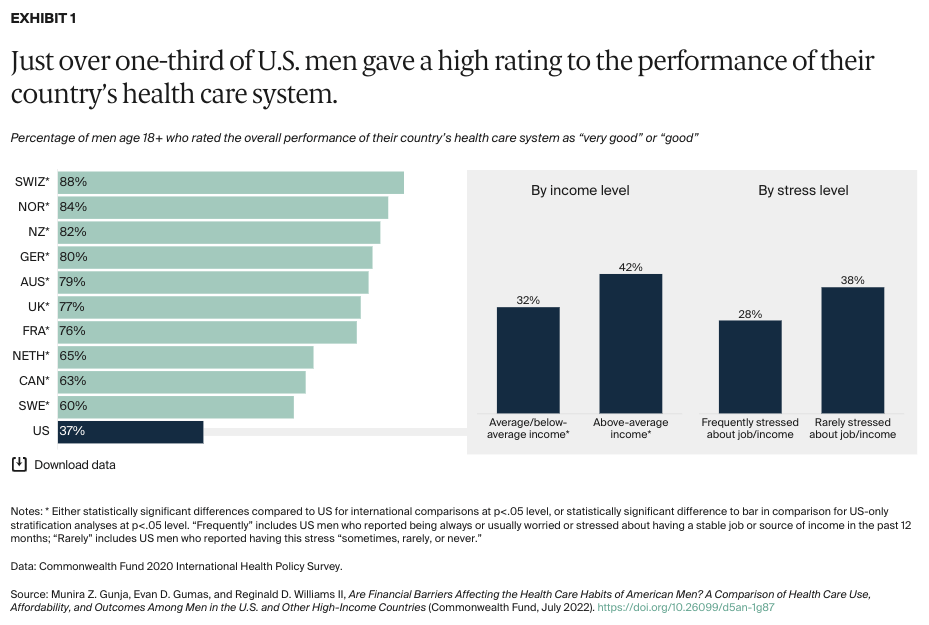
Men in the U.S. were significantly less likely to rate the health care system “good” or “very good” than men in other countries. Most men in Switzerland, Norway, New Zealand, and Germany gave high ratings to the national health care system.
The Commonwealth Fund survey asked adults in the 11 countries what their income is and how often in the past 12 months they felt worry or stress about having a stable job or source of income. Men in the U.S. who reported above-average income viewed the health care system more favorably than those with average or below-average incomes, though these ratings were still lower than those in peer nations. While these findings show that income level is a factor in how likely someone is to view the health system favorably, other factors, such as the affordability of health care, may also contribute to people’s views.3 The health system ratings of men in the U.S. who rarely experienced income-related stress were not statistically different from those of men who frequently experienced such stress.
Health status and outcomes
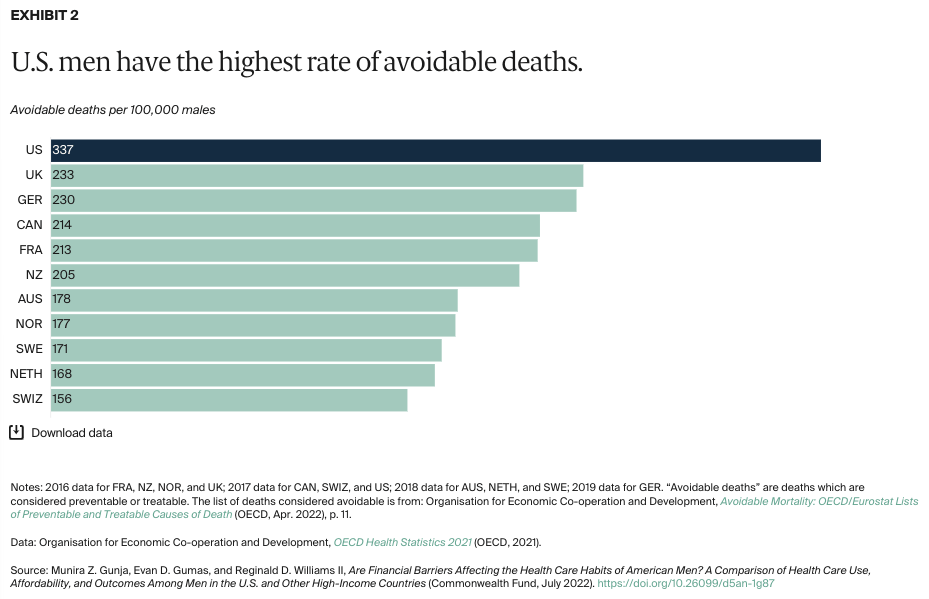
High rates of avoidable deaths, or deaths before age 75 which occur from conditions that can be prevented or treated, often indicate shortcomings in public health and care delivery systems. The United States had the highest rate of deaths from avoidable causes among men, and over 100 deaths more than the nation with the second-highest rate, the United Kingdom.
Swiss men are less than half as likely as American men to die from an avoidable cause.
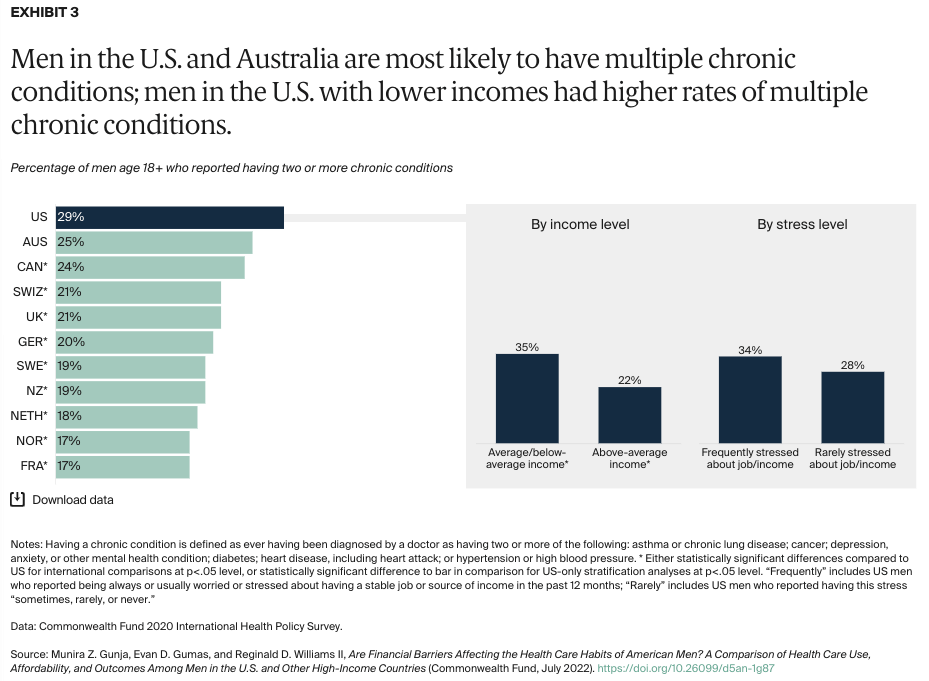
People are more likely to suffer from serious health conditions when they do not get regular screenings and other preventive services, or when they skip or delay doctor’s appointments for management and treatment of chronic conditions like cancer, diabetes, and hypertension, or mental health issues like depression and anxiety. Men in the U.S. were the most likely to report having two or more chronic conditions, with those in Australia close behind.
Lifestyle and income play a key role in health outcomes. Research has found that adults with lower income have significantly higher rates of smoking and alcohol use — behaviors that directly contribute to higher rates of obesity, diabetes, and heart disease, among other conditions. In the U.S., lower income was associated with an increased likelihood of having multiple chronic conditions as well as a four times greater likelihood of being in fair or poor health.
Countries where men have lower rates of chronic conditions, such as Norway, also have lower rates of alcohol use and smoking.
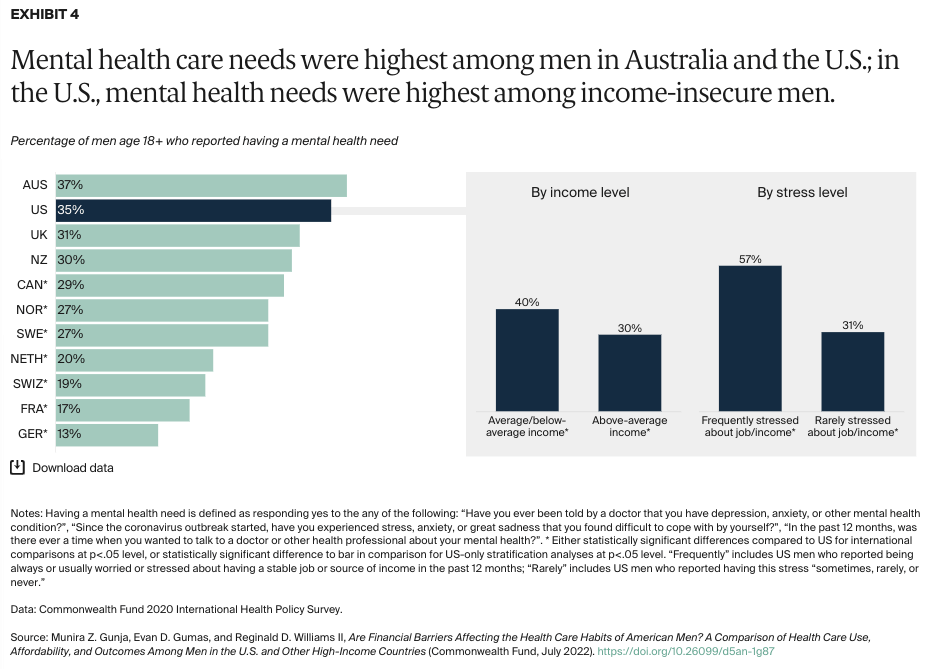
Mental health care needs were highest among men in Australia and the U.S. These needs related to a physician’s diagnosis of depression, anxiety, or other mental health conditions; stress, anxiety, or great sadness since the COVID-19 pandemic began; or a desire to talk to a mental health professional within the past 12 months.
Again, there were significant differences linked to income and stress level. In the U.S., men with income insecurity were more likely to have a mental health care need.
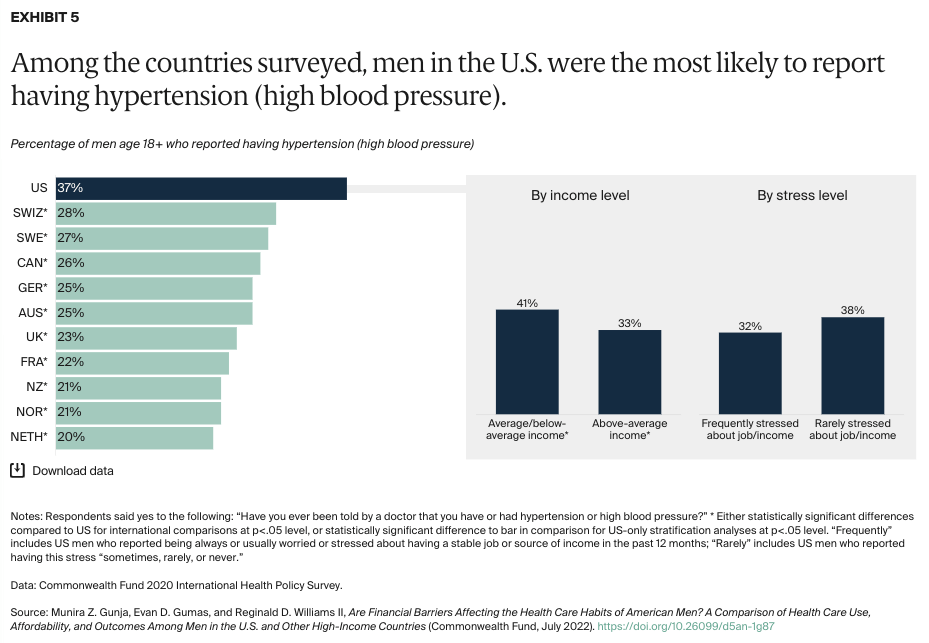
More than a third of American men reported having hypertension (high blood pressure) — a treatable and, in most cases, preventable condition. That is the highest rate among the countries surveyed. In the U.S., men with average or below-average income were more likely to say they have hypertension than those with higher income.
Surprisingly, experience of financial stress was not significantly associated with rates of hypertension.
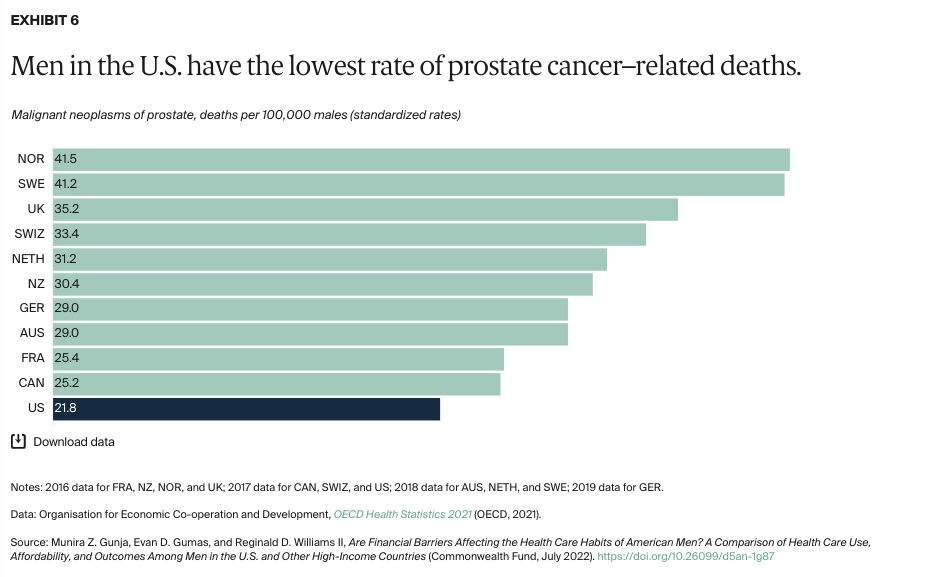
While American men are more likely to lack easy access to regular primary and preventive care, cancer care is one area where U.S. health outcomes are comparatively better than other high-income countries. In 2019, men in the U.S. had the lowest rate of prostate cancer–related deaths among the 11 countries in our study.
The relatively lower U.S. prostate cancer death rate likely reflects the quality of cancer care in the U.S., which features extensive screening as well as a variety of advanced treatments and technologies. U.S. cancer death rates have dropped significantly over the past three decades, largely a result because of better screening for the disease.
Access to care
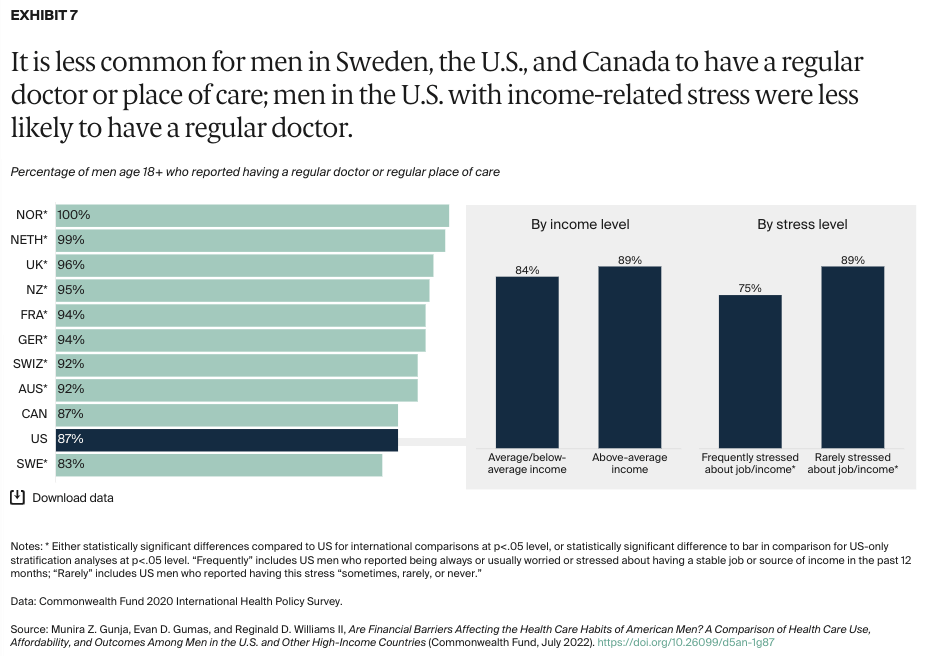

A physician’s office, clinic, or other regular place of care is an important point of health system contact for people — a key to getting timely and appropriate preventive services and treatment. Irregular contact with doctors means forgoing care for potentially life-threatening conditions.
While the majority of men in each country surveyed reported having a doctor or place of care, men in Sweden, the U.S., and Canada were the least likely to report having one. All men in Norway, where enrollment in health insurance is automatic and the health system incentivizes all residents to have a general practitioner, said they have a regular doctor or place of care. Men in the U.S. who reported frequent income-related stress were less likely to have a regular doctor than those who did not report this.
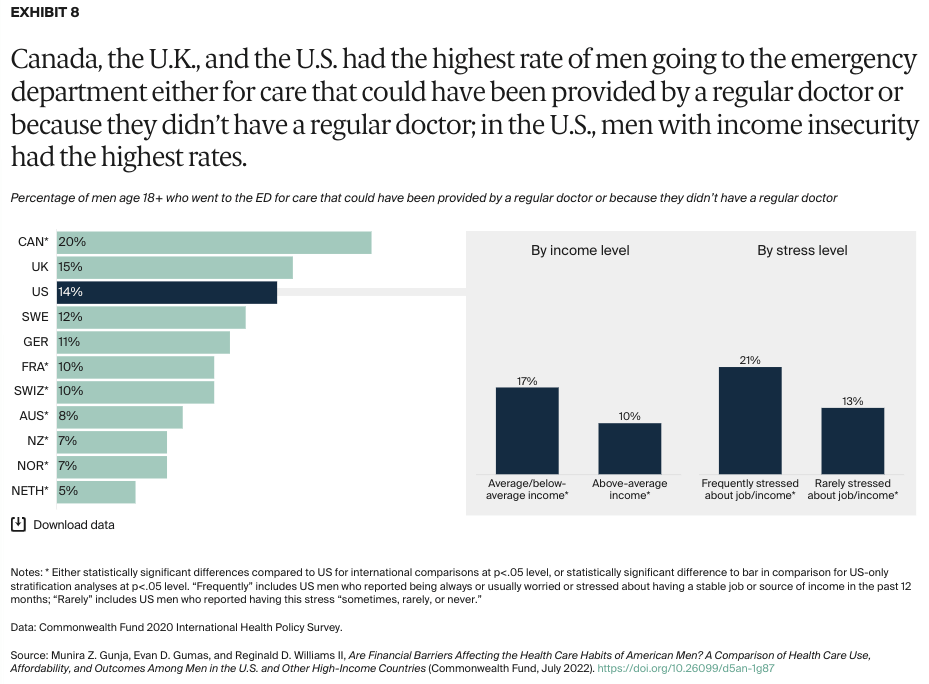
Overuse and improper use of emergency departments has been a concern in the U.S. for many years. These facilities often function at high capacity or overcapacity; the care is also expensive relative to many other healthcare settings. Among men who either did not have a regular doctor or did not use their regular doctor for routine care, those in Canada reported the highest usage of emergency departments, followed by men in the U.K. and the U.S. American men reporting income insecurity were more likely to visit emergency departments for non-emergency care.
Affordability of care
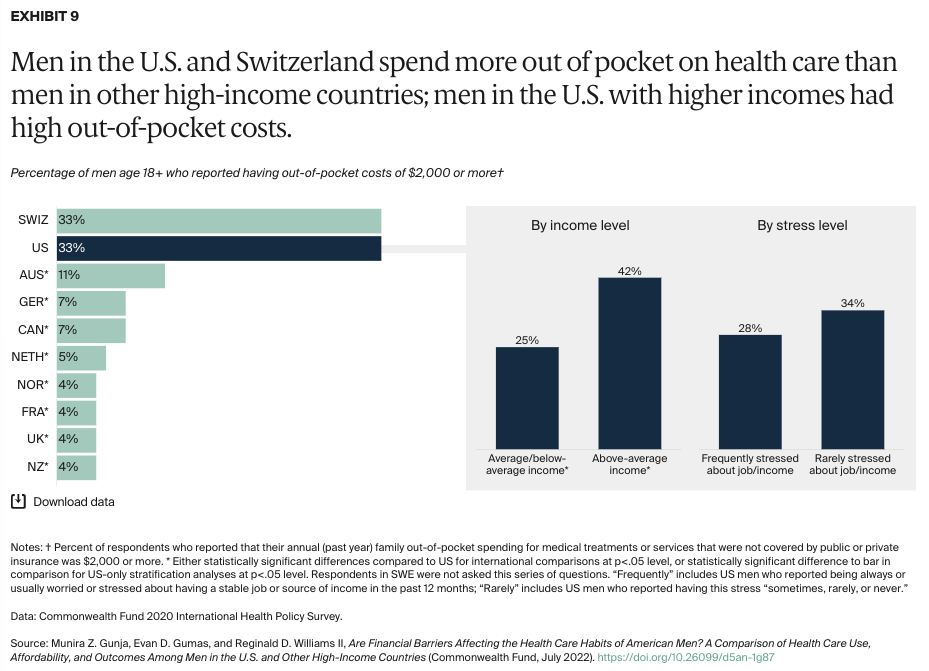
Men in the U.S. were significantly more likely to report spending $2,000 or more out of pocket on health care compared to men in the 10 other high-income countries, with the exception of Switzerland.
Higher-income men in the U.S. were more likely to have high out-of-pocket costs than lower-income men, which may be a consequence of using more health care services.
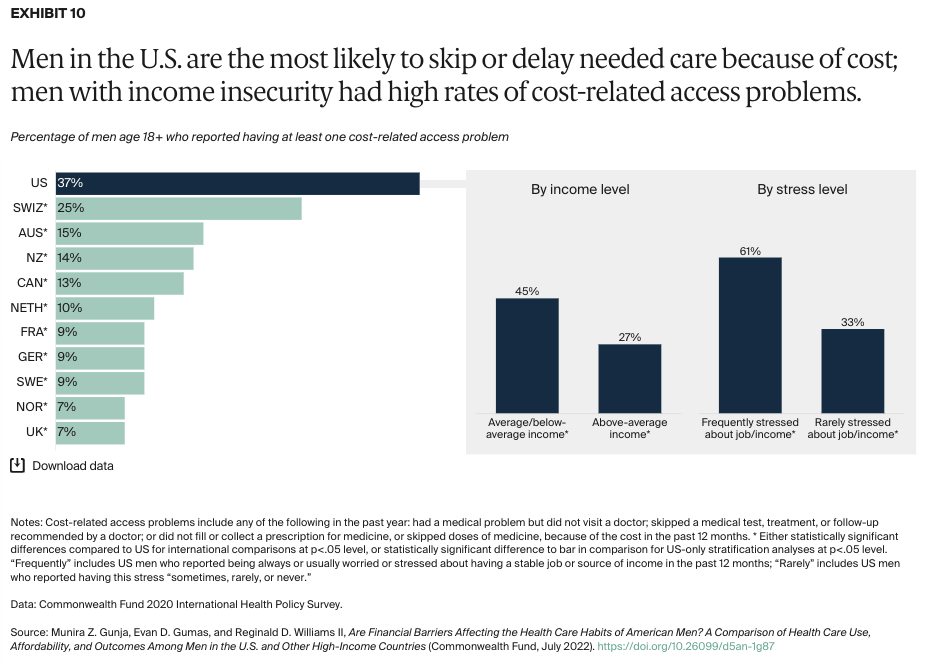
The Commonwealth Fund survey asked men about times when the cost of treatment prevented them from getting health care in the past year, including when they had a medical problem but did not visit a doctor; skipped a needed test, treatment, or follow-up visit; did not fill a prescription for medicine; or skipped medication doses. High costs associated with medical care may be a factor in why men skip needed treatment.
The findings show that men in the U.S., particularly those with income insecurity, are significantly more likely to skip or delay needed care because of costs than men in the other countries studied.
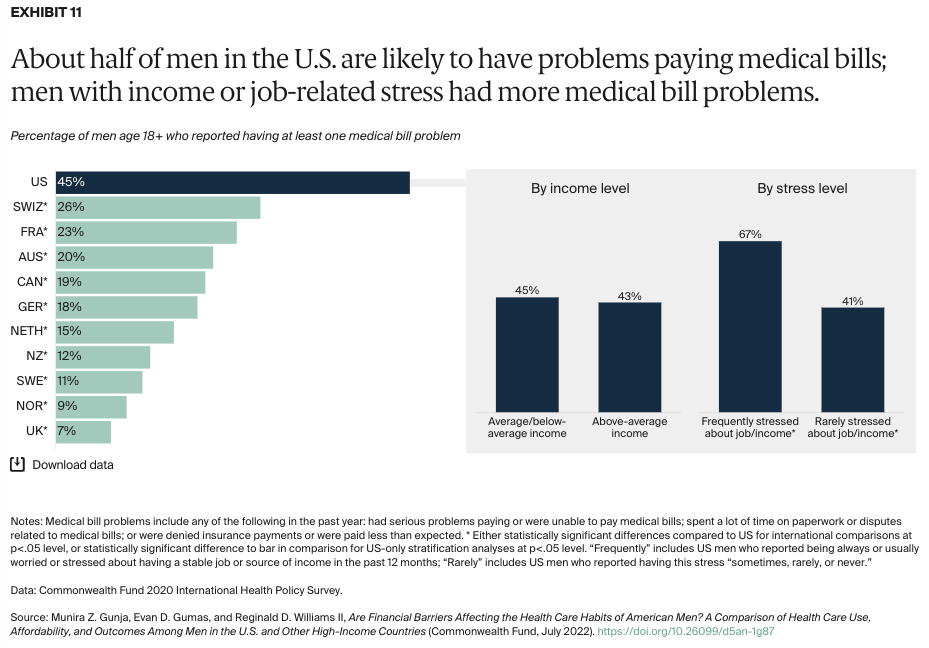
Men in the 11 countries were asked whether they’d had at least one medical bill problem in the past year, whether it was serious difficulty paying for care or being unable to pay a medical bill, spending a lot of time on paperwork or disputes related to medical bills, or having their insurer deny payment or pay less than expected for a claim.
Men in the U.S. were the most likely to report having at least one of these medical bill problems, with nearly half reporting at least one problem. By comparison, only 7 percent of men in the U.K. said they had a medical bill problem.
Men in the U.S. who had frequent income-related stress were significantly more likely to report having a medical bill problem compared to those who rarely experienced this kind of stress. There was no significant difference by income level. This may reflect the fact that lower-income men are less likely to use health care and therefore less likely to incur health costs and medical bills, while higher-income men are at risk of incurring medical debt when they seek care because of poor insurance protection.
Conclusion
Our analysis dramatizes the failings of the U.S. health care system with respect to men and complements our recent analysis of health and health care for women of reproductive age. While doing relatively well in prostate cancer care and treatment, the United States compares poorly to most other high-income nations when it comes to receipt of preventive care and affordability of care. And on nearly every health care measure we studied, men in the U.S. with income insecurity fared the worst. As a result, American men, particularly those with lower incomes and financial stress, have the poorest health outcomes.
Expanding access to affordable, comprehensive health coverage would be a first step toward reducing these disparities. Improvements also will require the combined efforts of physicians, health systems, insurers, and communities to promote preventive care and healthy behaviors, including through targeted education and outreach. For their part, American men must become more proactive about their health, and that should include establishing regular connections with a health care provider. After all, “going it alone” is rarely the path to well-being.
Reginald D. Williams II is the vice president of International Health Policy and Practice Innovations at The Commonwealth Fund.
Evan D. Gumas is a research associate in International Health Policy and Practice Innovations at The Commonwealth Fund.
Murina Z. Gunja is a senior researcher in International Program in Health Policy and Practice Innovations at The Commonwealth Fund.
A version of this article was posted at The Commonwealth Fund and is used here with permission. Check out The Common Wealth on Twitter @commonwealthfnd