Adapting plants to our needs: From rudimentary hand pollination by ancient farmers to CRISPR, humans have always been genetically modifying crops

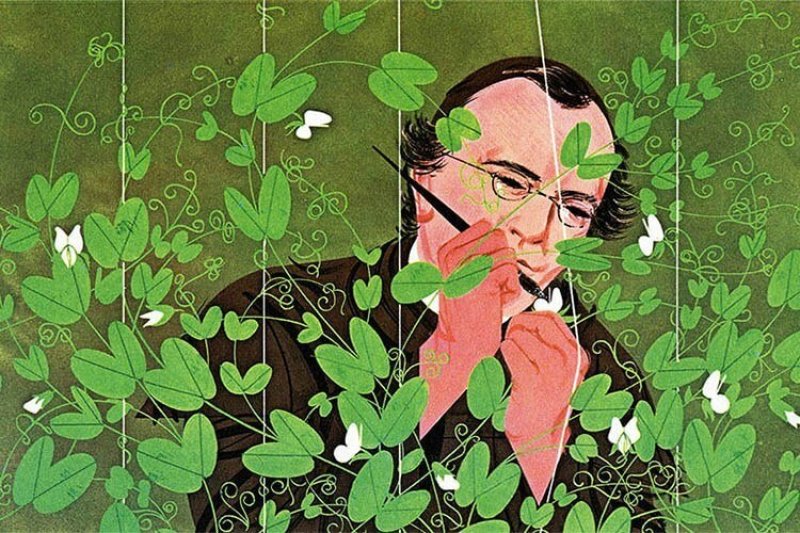
gregor mendel
Gregor Mendel, Augustinian monk and scientist, is commonly considered the founder of genetics. Image: Genoma

People have been taking plants from the wild and growing/cultivating them to both meet their needs and their pleasures for at least 10,000 years.

Initially this was accomplished by selecting plants, fruits, seeds, or other plant parts for producing new plants with desirable traits such as higher yields, and improved flavors.

A notable example of this is corn. Between 6,000 and 10,000 years ago, Meso-American farmers in Mexico and Central America cultivated teosinte, a grass species. By means of selection, the teosinte was changed from a plant with numerous stalks and cobs with 5-12 encapsulated kernels with a hard indigestible seed coats to a plant with a single stalk and a cob with dozens if not hundreds of highly digestible large seeds. Ancient farmers did not realize that they were changing the genes of the plants when selecting for these positive mutations.

With Charles Darwin’s understanding of natural selection and how organisms evolve, as well as Gregor Mendel’s development of the concept of heredity in the mid-1800s, the foundation was laid for modern genetics as well as plant breeding.

Follow the latest news and policy debates on sustainable agriculture, biomedicine, and other ‘disruptive’ innovations. Subscribe to our newsletter.

This narrative timeline shows how people went from very rudimentary methods to propagate plants to sophisticated technologies that allow us to grow crops that meet our needs today.


{{ reviewsTotal }}{{ options.labels.singularReviewCountLabel }}
{{ reviewsTotal }}{{ options.labels.pluralReviewCountLabel }}
{{ options.labels.newReviewButton }}
{{ userData.canReview.message }}

Related Articles

Infographic: Global regulatory and health research agencies on whether glyphosate causes cancer

Infographic: Global regulatory and health research agencies on whether glyphosate causes cancer

Does glyphosate—the world's most heavily-used herbicide—pose serious harm to humans? Is it carcinogenic? Those issues are of both legal and ...

Most Popular

Screenshot-2026-06-17-at-12.31.01-PM
Viewpoint: The dangerous influence of ‘woke’ post-modernism in science
Screenshot-2026-06-26-at-10.14.50-AM
Viewpoint: The facts behind the grifter-promoting wellness and anti-aging peptide craze: Don’t waste your money
ChatGPT-Image-Jun-26-2026-01_21_33-PM
How the dubious, Trump-backed, addictive drug kratom could enrich cabinet secretary Markwayne Mullin
ChatGPT-Image-Jun-25-2026-12_23_17-PM
No, Bill Gates did not secretly engineer ticks to promote veganism
Screenshot-2026-06-25-at-11.18.03-AM
Viewpoint: Appreciating a simpler past without swallowing the misleading ‘nature is healthier and safer’ myth
ChatGPT-Image-Mar-10-2026-01_39_01-PM
Viewpoint—“Miracle molecule” debunked: Why acemannan supplements don’t work
ChatGPT-Image-Jun-26-2026-12_10_16-PM
Europe’s heat wave fueled recycled climate-denial narratives and harassment of climate scientists
ChatGPT-Image-Jun-19-2026-04_11_20-PM
Daubert for Dummies—Scientific Reliability in U.S. Courts: Daubert, Rule 702, and Made-for-Litigation Evidence
ChatGPT-Image-Jun-17-2026-10_52_43-AM
Anguished parents, doctors in tears: Utah’s long measles outbreak takes a toll
Screenshot-2026-06-25-at-1.48.40-PM
Glyphosate affirmed as safe: Supreme Court rejects lawsuit claiming Roundup herbicide causes cancer, upholding EPA determination
ChatGPT-Image-Jun-26-2026-11_34_33-AM
Viewpoint: RFK, Jr.’s vaccine subterfuge campaign now flies below the media radar
ChatGPT-Image-Jun-23-2026-01_12_57-PM
After Mel Gibson’s Joe Rogan comments, grifters promoting ivermectin, without evidence, as a hantavirus preventive 
ChatGPT-Image-Jun-23-2026-03_12_23-PM
Is cellular reprogramming junk science? Nearly 20 patients are getting eye injections in the first FDA-cleared cellular trial
Screenshot-2026-06-22-at-9.04.46-PM
Kennedy's nutrition prescription for medical schools: Real problem, bad cure
glp menu logo outlined

Get news on human & agricultural genetics and biotechnology delivered to your inbox.