Bucking popular skepticism, China rolls out GMO corn as global food security pressures loom

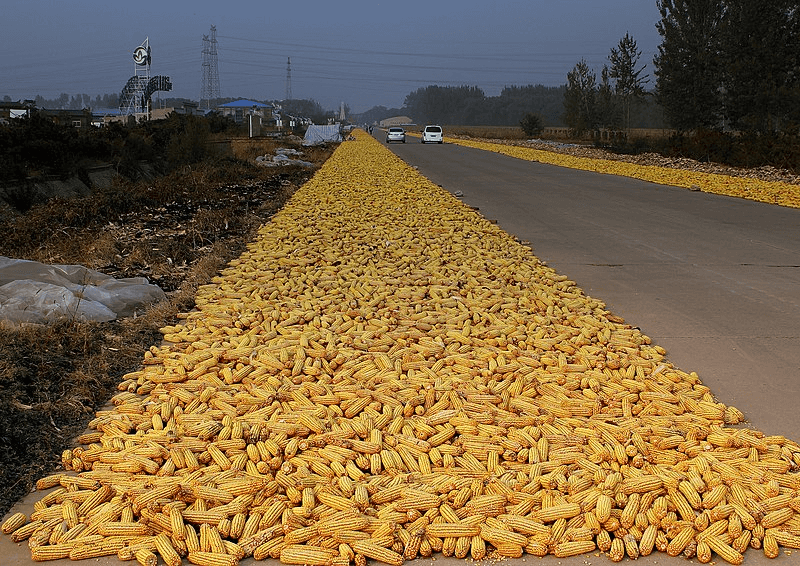
Corn along a roadway near Beijing. Credit calflier001 and Stephen Mason via CC-BY-SA-2.0

China will likely plant less than 1% of its corn fields with genetically modified varieties this year, said two people familiar with the plans, dashing hopes for a full market launch of the technology in the world’s second-largest corn market.

The agriculture ministry has designated around 4 million mu (267,000 hectares or 660,000 acres) to be planted with genetically modified or GMO corn this year, said a senior manager at a Chinese seed developer briefed on the plans.

Follow the latest news and policy debates on sustainable agriculture, biomedicine, and other ‘disruptive’ innovations. Subscribe to our newsletter.

China planted about 43 million hectares of corn last year, producing a crop of 277 million tonnes, according to official data.

Despite official wariness over GMO crops, there is huge demand for hardier, high-yield grains. In China’s breadbasket in the northeast, illegally sown GM corn makes up about 70% of the acreage, according to a state media report in 2021.

China’s corn fields yield only about 60% as much corn on average as in top producer the United States, where GMO corn makes up more than 90% of the crop.

President Xi Jinping, however, has increasingly supported use of the technology, which he says is crucial to bolstering China’s food security. Trade tensions, erratic weather and war in major corn exporter Ukraine have increased official worry over feeding the country’s 1.4 billion people.


This is an excerpt. Read the original post here

{{ reviewsTotal }}{{ options.labels.singularReviewCountLabel }}
{{ reviewsTotal }}{{ options.labels.pluralReviewCountLabel }}
{{ options.labels.noReviewsLabel }}
{{ options.labels.newReviewButton }}
{{ userData.canReview.message }}

Related Articles

Infographic: Global regulatory and health research agencies on whether glyphosate causes cancer

Infographic: Global regulatory and health research agencies on whether glyphosate causes cancer

Does glyphosate—the world's most heavily-used herbicide—pose serious harm to humans? Is it carcinogenic? Those issues are of both legal and ...

Most Popular

Picture1
Hiroshima at 81: America’s new nuclear bomb, a buried Iranian target, and a question no one wants to ask
ChatGPT-Image-Mar-10-2026-01_39_01-PM
Viewpoint—“Miracle molecule” debunked: Why acemannan supplements don’t work
ChatGPT Image Jul 29, 2026, 06_26_01 PM 2
Facts & Fallacies podcast: Organic food myths make a comeback on Instagram, with Dr. Kevin Folta
ChatGPT-Image-Jul-10-2026-12_21_03-PM
Viewpoint: Is there new evidence that the animal deworming drug ivermectin decreases the risk of Covid and cancer? Don’t waste your money.
ChatGPT-Image-Jul-10-2026-09_42_12-AM-1
Peptides, patient autonomy, and the limits of medical freedom
Screenshot-2026-07-09-at-1.09.25-PM
Anti-vaccine myths rattle health care
ChatGPT-Image-Jun-25-2026-12_23_17-PM
No, Bill Gates did not secretly engineer ticks to promote veganism
ChatGPT-Image-Jul-22-2026-09_13_07-AM
Viewpoint—The Strategic Litigation boom: Understanding the tightening coalition among NGOs, foundations, journalists, and tort lawyers
Screenshot 2026-07-22 at 1.38
Viewpoint: Are the U.S. and Europe headed towards a repudiation of agricultural biotechnology red tape?
organic scaled
Facts & Fallacies podcast: Organic food cuts pesticide exposure? A response to Dr. Rhonda Patrick
leeteam
How Kennedy and his family could pocket millions from Merck’s $50 million vaccine injury settlement that he oversaw

Sorry. No data so far.

glp menu logo outlined

Get news on human & agricultural genetics and biotechnology delivered to your inbox.