A French startup has engineered houseplants that scrub toxins from the air. Could it make a difference?

Credit: : Joydeep via Wikimedia Commons and CC-BY-SA-3.0

Nestled in a jelly-like growing medium, it looks like a canapé—or, possibly, the future.

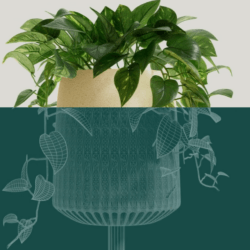
This is the Neo P1—a genetically modified houseplant that [French company Neoplants] claims could help combat indoor air pollution. P1 is a modified form of golden pothos—more commonly known as devil’s ivy—one of the world’s most ubiquitous and easy-going houseplants. Although its yellow-green hues appear familiar, P1’s DNA has been tweaked to enhance its ability to extract volatile organic compounds (VOCs) from the air, including formaldehyde, benzene, toluene, ethylbenzene, and xylene, which are prevalent in indoor spaces.
Mis- and disinformation are distorting science and public policy. Subscribe to our Daily and Weekly Digests for incisive coverage of ‘disruptive’ innovations in AI, agricultural biotechnology, food, chemicals, nuclear energy, vaccines, and other disruptive innovations.
[UC Davis Dean of Engineering Richard] Corsi says that a bedroom of approximately 200 square feet would need as many as 315 individual plants to bring formaldehyde (and other VOC) levels down by 50 percent. To get a 90 percent reduction would require more like 2,800 plants. Scale that up to a whole flat or house, and you’re nurturing a dense jungle.

So is Neoplants’ genetically modified houseplant any better? The company’s sales materials reference the 1989 study, and claim the P1 is “30 times better than top NASA plants” when it comes to removing VOCs.

This is an excerpt. Read the original post here

Related Articles

Infographic: Global regulatory and health research agencies on whether glyphosate causes cancer

Infographic: Global regulatory and health research agencies on whether glyphosate causes cancer

Does glyphosate—the world's most heavily-used herbicide—pose serious harm to humans? Is it carcinogenic? Those issues are of both legal and ...

Most Popular

ChatGPT-Image-Mar-10-2026-01_39_01-PM
Viewpoint—“Miracle molecule” debunked: Why acemannan supplements don’t work
ChatGPT-Image-Sep-2-2026-02_03_32-PM
How much of a problem is AI’s water use?
ChatGPT-Image-Sep-22-2026-10_32_46-AM
There has been a slew of recent reports of food recalls and foodborne outbreaks. Do we face an escalating problem?
ChatGPT-Image-Aug-26-2026-12_46_16-PM
Viewpoint: The fake controversy over whether combining childhood vaccines is dangerous— a debate science resolved 25 years ago
Screenshot-2026-09-17-at-1.07.08-PM
'We are dangerously addicted to antidepressants': Should we heed RFK Jr.’s sobering warning?
ChatGPT-Image-Sep-23-2026-01_52_03-PM
Viewpoint: 4 very real AI doomsday scenarios
Screenshot-2026-09-03-at-10.51.20-AM
Viewpoint: Why do online health lies outlive the evidence that debunks them? Read "Everyone Else Is Lying to You"
Screenshot-2026-09-23-at-11.55.01-AM
How can we know if social media bans actually help teens?
Screenshot-2026-09-17-at-12.00.30-PM
Investigative group ProPublica finds links between ectopic pregnancy deaths and abortion bans
Screenshot-2026-09-23-at-3.15.09-PM
Anti-GMO activists in Pakistan rev up their campaign of dire warnings
ChatGPT-Image-Sep-18-2026-01_38_09-PM
Microsoft exec: AI is a ‘doom loop’ scraping the ‘largest theft of labor in human history'
Screenshot-2026-09-22-at-11.40.28-AM
After Idaho criminalized abortion providers in 2022, one-third of obstetricians fled. Health care advocates are making rural health the case for repealing the ban
ChatGPT-Image-Sep-21-2026-03_41_02-PM
Viewpoint: Does IQ really measure intelligence? BBC gets it wrong.
glp menu logo outlined

Get news on human & agricultural genetics and biotechnology delivered to your inbox.