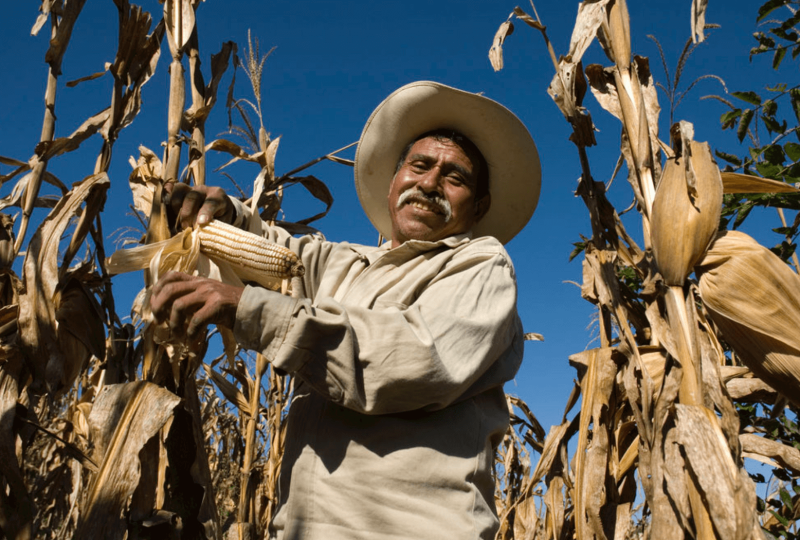

In late 2020, Mexico announced its intention to ban genetically modified corn, prompting the United States to threaten a challenge under the United States-Mexico-Canada Agreement (USMCA). Thus began a stalemate between the two countries that has lasted throughout the Biden administration. The Mexican government backs its decree with the claim that genetically modified (GM) corn poses health risks for Mexican consumers, whereas the United States insists that Mexico has no basis for such claims, and that banning corn imports will cause considerable economic losses while stifling advancements towards food security and climate goals.
However, while fears over the safety of GMOs are a real—and problematic—motivator for Mexico’s move, it is by no means the only one. Corn has been a source of contention between the United States and Mexico since the implementation of the North American Free Trade Agreement (NAFTA) in 1994, replaced with the USMCA in 2020. The source of this contention: US agricultural subsidies, and their devastating impacts on Mexico’s domestic corn industry.
…




Mexico’s most recent response seems to be somewhat wrongfully pointing the blame at GMOs, taking advantage of widespread culture skepticism of biotech. However, it has given many signals that the main objective is to increase Mexican food sovereignty by reducing the threat of US competition.