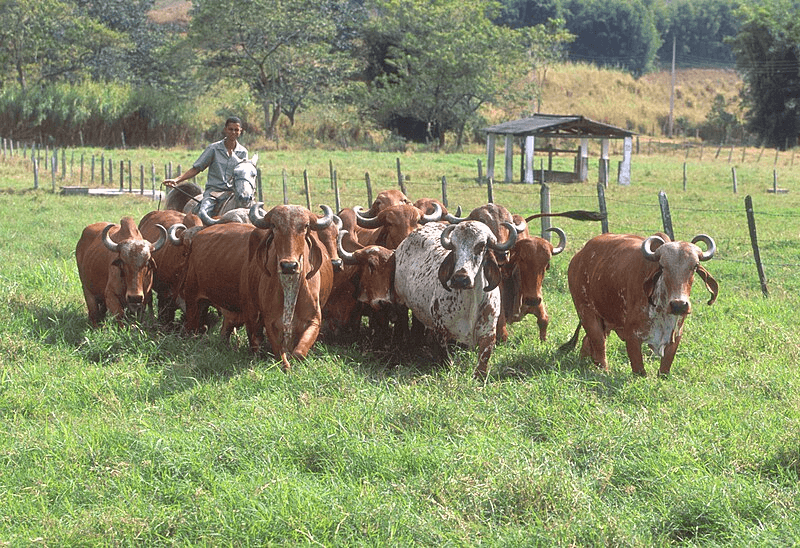

All births are special, but Ganga’s was a milestone. This Gir calf born on March 16 this year is the first clone of a cow in India. Scientists who created Ganga at the National Dairy Research Institute (NDRI) in Karnal, Haryana, hope cloning will spur the breeding of indigenous cows, whose numbers have dwindled with cross-breeding, adoption of high-yielding exotic breeds and exports.
“Indigenous animals, such as the Gir cow, are disease-resistant and well adapted to the hot and humid climate of the country. Cloning technology has the potential to meet the requirement of higher milk-producing indigenous cattle for Indian dairy farmers,” Dr Himanshu Pathak, director general of the Indian Council of Agricultural Research [explained].
Traditional Indian cow breeds like Gir, Sahiwal and Red Sindhi are primarily draught animals with relatively high milk yields. After the Green Revolution, increasing mechanisation of agriculture had made these breeds uneconomical, so farmers tried cross-breeding for higher milk output, but the hybrids turned out to be more susceptible to diseases like the lumpy skin disease.




That’s why, in 2021 NDRI Karnal collaborated with Uttarakhand Livestock Development Board (ULDB), Dehradun, to initiate improvement of indigenous cow breeds through cloning.