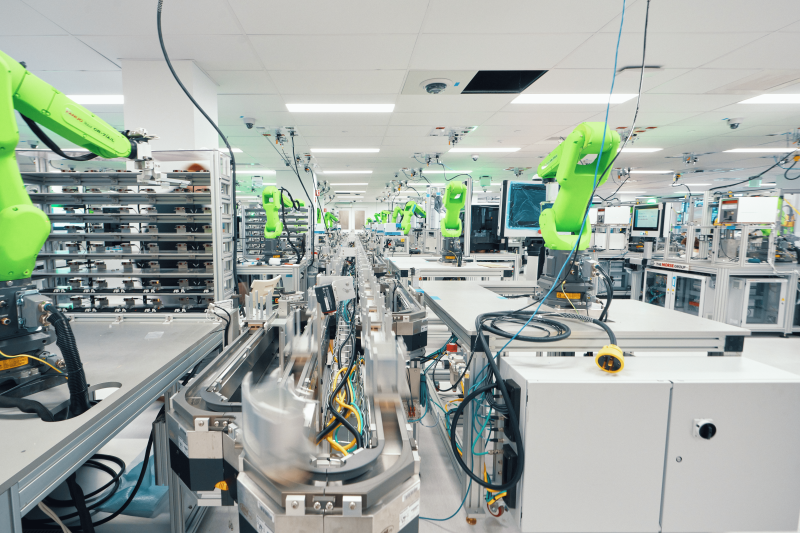
How Ginkgo Bioworks leverages synthetic biology to shape future of food

kc ginkgo bioworks fullsize
Credit: Ginkgo Bioworks
[Patrick Boyle] is currently the Head of Codebase at Ginkgo Bioworks, a Boston-based synthetic biology company that makes and sells engineered organisms. Ginkgoโ€™s Codebase includes thousands of novel strains, enzymes, genetic parts, and diverse genetic repositories, including millions of engineered DNA sequences. The bioengineering and synthetic biology tech helps food brands come up with animal-free proteins.

The company is working with food brands likeย EVO by creating animal-free eggsย through precision fermentation andย Phytolon with natural colors.

Follow the latest news and policy debates on sustainable agriculture, biomedicine, and other ‘disruptive’ innovations. Subscribe to our newsletter.

BOYLE:ย Ginkgoโ€™s mission is to make biology easier to engineer. Iโ€™ve been in the bioengineering space for about 20 years now and I think weโ€™re still very far away from โ€œeasy.โ€ Certainly the investment in software and automation that weโ€™ve made here at Ginkgoโ€”like advances in machine learning and AIโ€”are making things easier, but I think youโ€™d have a hard time saying that biology is super predictable and easy to engineer yet.

FOOD DIVE: What do you think will be the biggest change in the industry in 10 years?

BOYLE:ย I think the notion of making proteins and enzymes for the food space, hopefully should be routine. Enzymes in particular have been used in food production for decades, but being able to engineer and fine tune those capabilities and develop a totally novel enzyme for the space like weโ€™re doing for a number of our partnersโ€”thatโ€™s still relatively new. Hopefully that will be seen as routine in 10 years.

This is an excerpt. Read the original post here

{{ reviewsTotal }}{{ options.labels.singularReviewCountLabel }}
{{ reviewsTotal }}{{ options.labels.pluralReviewCountLabel }}
{{ options.labels.newReviewButton }}
{{ userData.canReview.message }}

Related Articles

Infographic: Global regulatory and health research agencies on whether glyphosate causes cancer

Infographic: Global regulatory and health research agencies on whether glyphosate causes cancer

Does glyphosateโ€”the world's most heavily-used herbicideโ€”pose serious harm to humans? Is it carcinogenic? Those issues are of both legal and ...

Most Popular

Screenshot-2026-04-13-at-3.54.04-PM
AI disinformation stress test: Challenges and response strategies
ChatGPT-Image-Feb-16-2026-01_04_32-PM
Raw milk myth wake-up call
ChatGPT-Image-Apr-23-2026-09_20_20-PM
Kennedyโ€™s CDC blocks publication of study that shows vaccines reduce hospitalizations by 50%, then misrepresents why
ChatGPT-Image-Apr-20-2026-11_17_18-AM-2
10,000 scientists gone: Trumpโ€™s cuts create an unprecedented brain drain
Screenshot-2026-04-21-at-12.05.38-PM
MAHAโ€™s special protein-focused formula for skin care: Beef tallow and salmon sperm. How could they be wrong?
Screenshot-2026-04-12-135256
Bixonimania: The fake disease scam that AI swallowed whole
Rod Curtis
In Zimbabwe, an almost-deadly collision between fake news and a real virus
Screenshot-2026-04-22-at-1.14.34-PM
Latest fevered, right-wing conspiracy: Fox, New York Post, and kooky GOP legislators push โ€˜Dead Scientistsโ€™ scare
images
The never-ending GMO debate: Pros and cons
ChatGPT-Image-Apr-23-2026-10_27_42-AM
Viewpoint: โ€˜Make America Pregnant Againโ€™ โ€” Trump guts support for birth control to placate the rightโ€™s birth obsession

Sorry. No data so far.

glp menu logo outlined

Get news on human & agricultural genetics and biotechnology delivered to your inbox.