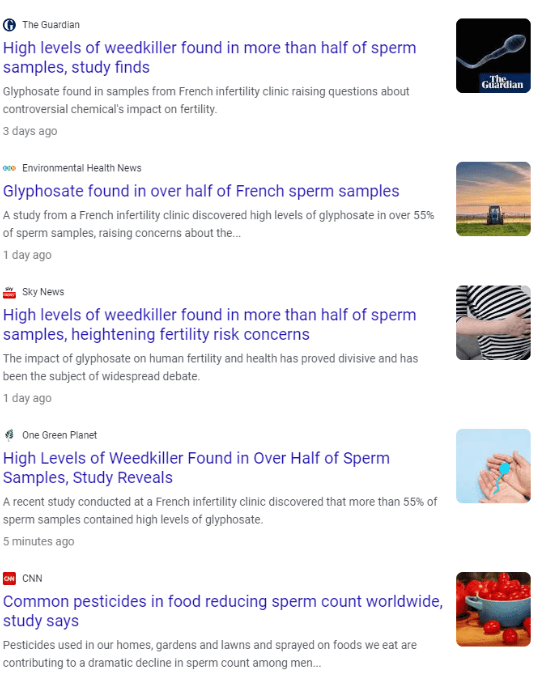
The headlines explode in horror and the anti-glyphosate mobs spring to action, screaming: Males may not be able to reproduce and it’s all the fault of farmers who are peddled dangerous and unnecessary pesticides by Big Ag in cahoots with the federal government.
Warnings about the dire health and environmental threats from commonly used farm chemicals are a familiar refrain across the internet. The source of this most recent five-alarm social media fire was a research study by a team of French scientists released earlier this month ago. Titled “Glyphosate presence in human sperm: First report and positive correlation with oxidative stress in an infertile French population”, the title seemed designed by title and content to spark a firestorm. It worked.
Almost simultaneous with the studies release, UK’s The Guardian was out with a headline story warning that the herbicide glyphosate, which has been in the crosshairs of advocacy groups and tort lawyers for a decade, had yet another perverse health effect: it’s likely leading to increased incidences of male infertility.
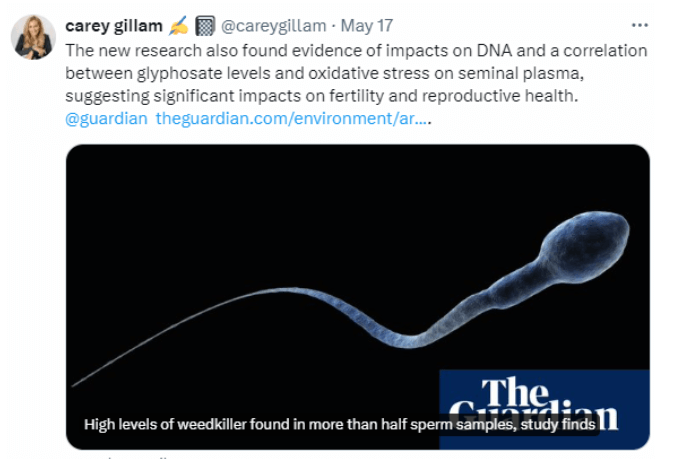
The headline claimed the study found “High levels of weedkiller’, and that certainly appears ominous. How high are those levels? The obvious question that follows: Is this conclusive evidence, as environmental advocates who reject a place for targeted synthetic chemicals in farming believe, that glyphosate not only kills weeds but sperm, and maybe people too?
Let’s review the study. Here is what it actually documented:
- There’s a decline in human fertility and sperm quality
- Environmental chemicals like pesticides are “suspected” to play a role
- Glyphosate is a frequently used chemical
- Therefore, glyphosate is causing a decline in fertility.
That claim—“glyphosate is causing the decline in fertility”— is a reasonable hypothesis to test. Sperm counts among men in developed countries have halved in the last 45 years. We know from a slew of studies that at least part of the reason is the stew of chemicals that we consume in micro-traces every day. As The Guardian itself headlined in 2022, “Cocktail of chemical pollutants linked to falling sperm quality in research.”
Chemical stew
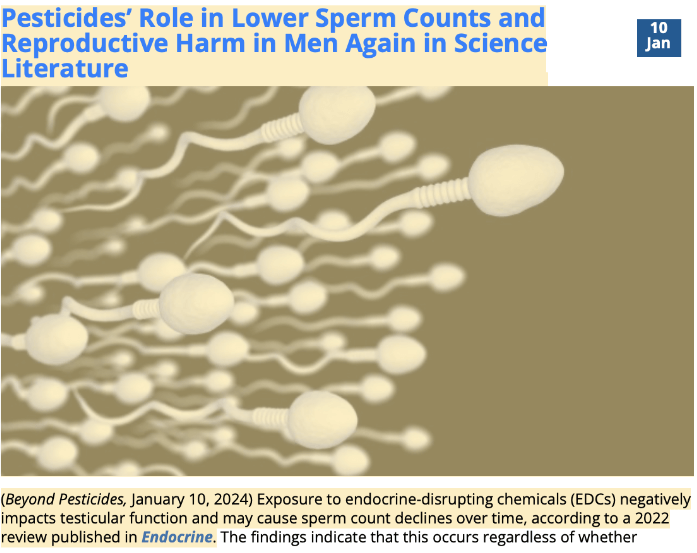
Which chemicals? Some studies have suggested that chemicals known to disrupt the human endocrine system are driving the rise in male infertility. Not one or three chemicals, but dozens, maybe hundreds. It’s a chemical stew. That’s the conclusion of much-quoted 2022 study that Beyond Pesticides, an activist group whose mission is to remove almost all synthetic chemicals from our lives, highlighted on its website just a few months ago. No mention of glyphosate by Beyond Pesticides or in the study.
According to the Environmental Protection Agency, after years of evaluating conflicting claims in myriad studies, it ran the data through its stringent Endocrine Disruptor Screening Program, concluding there is “no indication that glyphosate is an endocrine disruptor.”
If glyphosate is lowering male fertility, we’d see it in the tens of millions of farm and laboratory animals that over the years have consumed soy and corn with trace bits of this herbicide. No fertility issues have been reported there. So, what unique, new nugget of information did the French study authors find that contradicts the scientific evidence and on-the-farm experience that glyphosate is not seriously impacting the fertility of males?
The scientists performed an extremely sensitive analysis of blood and seminal plasma, testing for glyphosate. They also measured sperm quality and quantity, as well as markers for oxidative stress. The authors conclude that the results show a “negative impact on human reproductive health” and then advise applying the precautionary principle to assess whether glyphosate should be used in agriculture. The precautionary principle is a notion embraced in Europe to guide its regulations, is known simply as “better safe than sorry”. Its central tenet is that if science cannot ‘prove’ for certain that a substance might be dangerously toxic, it’s best to err on the side of precaution and ban it.
Note that these scientists did not test for any of the thousands of chemicals found in spermatozoa except for one. It recommended following the precautionary principle in regulating glyphosate, in effect recommending without using the actual words, that it should be banned. Based on that logic, every chemical found in semen—the thousands they did not test for—should be banned as well. Needless to say, they left that logical conclusion out of their commentary.
How ‘toxic’ is glyphosate?
Let’s look closer at their findings about the only chemical they studied to focus on. Are there conclusions about glyphosate’s dangerous presence in seminal fluid supported by their own data?
Spoiler alert. The data they present show that there is almost no glyphosate detected. They also found no effect of glyphosate on sperm. How could that be? The very title of the study claims “Glyphosate presence in human sperm”
The ‘evidence’ for the author’s provocative title is their claim that the glyphosate they found is due to “hemato-testicular barrier alteration,” which is also known as the blood-testes barrier. If the blood-testis barrier was breached the sperm would travel to the blood, and the autoimmune system of the body would kick in against the sperm antigens, eventually killing the sperm cells.
Major misrepresentation by the study authors: they didn’t test sperm; rather they tested seminal fluids that have no relation to hemato-testicular barriers. The escorting fluids are produced mostly in completely different glands in other locations, namely the prostate, Cowper’s glands and seminal vesicles. These tissues produce the vast majority of seminal liquids that the sperm cells require for their long journey to fertilize an egg cell.
But the title says “Glyphosate found in human sperm” even though sperm cells were never analyzed. The functional integrity of the sperm cell itself, or its valuable DNA payload, are frequently discussed as targets of environmental toxins, suggesting the authors’ intent was to seed headlines rather than communicate scientific findings.
“Minor traces of a chemical in Cowper’s glad exudates” does not make for a catchy title, however. The media and anti-glyphosate interests revel in a title that oversteps the data, especially if they can then overstep the overstepping with headlines that are even more sensational!
What does the evidence show?
One media report breathlessly indicated that 100% of men who tested positive for glyphosate had problems with fertility. That sounds frightening; it’s actually meaningless and misleading: the measurements were performed in a fertility clinic on men experiencing infertility.
A relatively small group of 128 men were tested, 47 that completely filled out the study-related survey. The results showed that glyphosate could be detected in seminal plasma of 73 of the 128. The key word is “detected”— the important questions are: how did they detect glyphosate and what level is biologically meaningful?
The researchers, it appears, are experts in detecting extraordinarily small amounts of glyphosate, levels so low they boggle the mind. They found blood glyphosate levels at 0.19 ng/ml, or 190 femtograms per gram; or stated another way, 190 parts per trillion.
How large a presence is that? Should we be concerned? Would toxicologists be concerned? One part per trillion is a second in about 31,700 years. These are amazingly small amounts. (It’s a great credit to the researchers’ detection ability!) They also report 0.73 ng/ml in seminal plasma. That’s an amazingly small amount; it’s also not a dangerous level by any measure. It is far below 1% of the acceptable daily intake limit, about 0.01% of the ADI.

Oblivious to how to interpret reports of such obscure data, the media invariably got the story wrong, grossly exaggerating the meaningfulness of what amounts to almost nothing biologically. The few that might have been able to understand the chemistry willfully distorted the meaning of this miniscule numbers. For most reporters, like lemmings, reporters claimed the study found “high levels” of glyphosate.
Scientists would say the data suggests the opposite: the levels found are extremely low, almost to the vanishing point. You’d have to concentrate 14 million liters of seminal fluid (which would fill a pool 150 feet by 60 feet, three feet deep) to get the amount of glyphosate to treat one acre of crops. (Don’t try replicating this study at home, gentlemen.)
The authors did ultimately quantify the sperm numbers, mobility and abnormal morphology. They acknowledged they observed no significant differences.
So, what data justified the researchers’ claim that their results are “worrying”, suggesting a connection to infertility even though the sperm are unaffected? They turned to an entirely different measurement, of oxidative stress markers. Oxidative stress is the by-product of normal metabolism, as cells constantly generate highly reactive free radicals that can damage everything from DNA to cell membranes. Specific targets of free radical damage are considered a proxy for oxidative stress. These signature molecules increase from any physiological stress or insult, from running a fever to running a mile. The levels of these indicators of cellular damage from oxidative stress may be easily measured through blood plasma.
Testing oxidative stress markers is relatively simple and implies that something is causing the production of free radicals. The tests use widely available kits. The cohort of infertile Frenchmen showed that those with more glyphosate in their blood and seminal fluids, had slightly higher levels of these oxidative stress markers. The differences were minor, with the majority of individuals having low levels of glyphosate detected and low levels of stress markers.
How statistically significant are these minor differences? Are they biologically significant, especially considering that there was no documented effect on sperm cells themselves? The researchers ignore asking or answering that fundamental question. They do not provide evidence or even note what levels are considered abnormal or associated with health risks; they just write they are higher in the men with detectable glyphosate levels, implying without evidence, that those barely measurable levels are meaningfully harmful.
The glyphosate-can-harm-you goose is cooked.
Taking stock
Here’s what the data actually demonstrates: determined authors with a preconceived hypothesis can use extraordinarily sensitive methods to detect a chemical (glyphosate) in men from infertile couples that is almost not discoverable. The data further shows that sperm quality parameters are the same in those in whom the tiny levels are detected and those that it is not detected. They then show that oxidative stress markers are slightly elevated in individuals in whom glyphosate is detected.
Here’s what 99% of scientists presented with the exact same data would conclude: There’s almost no glyphosate present and sperm are unaffected. Oxidative stress markers are interesting data, but until more rigorous tests of changes in DNA (like methylation patterns) are detected, and the numbers are presented in context, no firm conclusions can be made. But when it comes to glyphosate, measured analysis goes out the window. results suggest a negative impact of glyphosate on human reproductive health and possibly on progeny.”
If the researchers had honestly and accurately framed their actual results, no one would have reported on their ‘nothing’ research findings.
The authors go far, far beyond their sketchy study, concluding that “our results suggest a negative impact of glyphosate on human reproductive health and possibly on progeny.” They just made that up; they present exactly zero evidence of an effect on reproductive health or progeny. They also describe their finding as “worrying” which is a strange judgment for a scholarly paper based on questionable data, especially in light of the non-worrying levels found and zero effect on sperm. So, in the absence of confirmatory data, they wrote an inflammatory headline, and the media bought it.
Why focus on just glyphosate?
There is another twist to this story that hints that this report might be better understood as another case of ‘activist science’. The researchers drew their study subjects from an area close to Tours, which is known as a major French region for grain and wine production. As they noted, “this area reflects the common herbicide exposure in France. Indeed, it is considered as the third French district for the purchase of pesticides”.
Why is this significant? Because they only tested for one agricultural chemical—the one sure to get them headlines if they found anything, no matter how small (which is what they found; next to nothing). They could have but did not do analysis of the soup of organic or conventional crop protection compounds that rural communities may be exposed to that might contribute to male infertility. It’s almost certain that many of those chemicals that they did not study were far, far more likely to contribute to male infertility than glyphosate, which their data show had almost no effect.
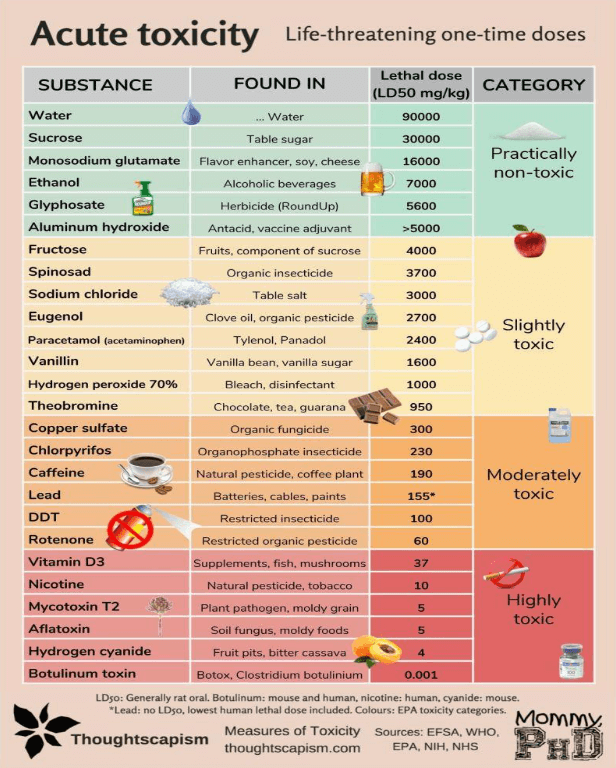
For instance, what if they had chosen to look at copper levels in seminal fluids? Natural copper sulfate is widely used as an organic-acceptable fungicide in grape-growing areas like Tours.

What would have been the results of a study if these researchers had focused on trace levels of copper, which certainly would be found at high levels in the seminal fluid subjects in this region? Their headline could have just as easily have been:
“Copper presence in human sperm in an infertile French population”
These scientists ignored exploring the likely multiple chemical contributors to infertility, focusing instead on only one: glyphosate—the controversial herbicide that many activists (including the authors, according to the abstract) hope to ban. If the researchers were genuinely interested in identifying chemicals that might be contributing to infertility (rather than concocting a study to target glyphosate but no other contributing chemical), they could have measured nicotine or other by-products of smoking or other farm chemicals or the metabolites of alcohol (as wine-grape growers enjoyed the products of their craft). Any of these chemicals would have shown markers of oxidative damage—and exposed the same flimsy correlation that these scientists claim to have found with glyphosate.
But if they truly were trying to find what substances contributed most to male infertility, what are the chances their hard work would result in the news and social media eruption that this misleading glyphosate study provoked?
Humans are awash in many more plausible agents that could affect fertility than one relatively benign chemical. Compare the very low acute toxicity of glyphosate to that of copper sulfate.
This study is a disturbing example of the politicization of science. At a time when food and farming are safer than ever, studies like the French semen research and the hysterical mass-media extrapolations that follows destroy public trust in food and farming. It is another example of what happens when a kernel of data is (deliberately) over-interpreted by (activist?) scientists to suggest risk when there is none.
We can only speculate as to intent and motivation, but it sure seems strange that skilled researchers would devote so much effort to identify amounts of a chemical at parts per trillion, and then claim the public might be endangered, yet the data showed that there is no evidence of risk.
Kevin M. Folta is a professor, keynote speaker, and podcast host. Follow Professor Folta on X @kevinfolta