Viewpoint: Seven reasons to say no to genetically modified humans

Viewpoint: Seven reasons to say no to genetically modified humans
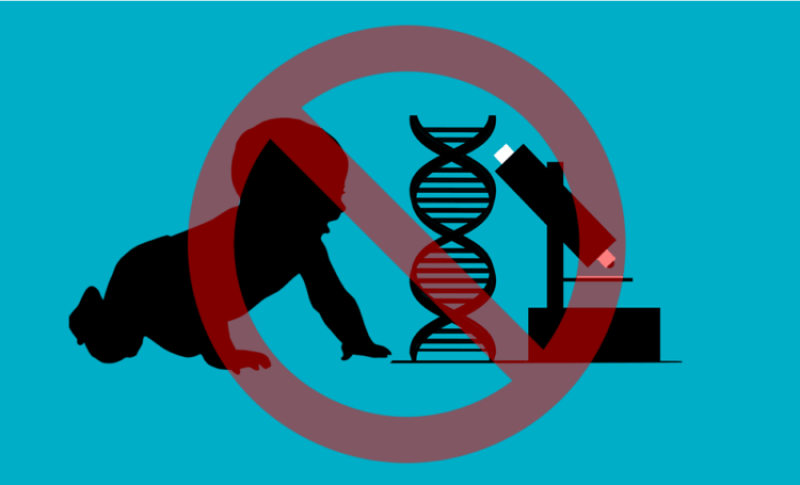
Credit: Pixabay/ Mohamed Hassan/ OpenClipart-Vectors

As gene editing tools are refined in labs around the world, they are expected to allow easier, cheaper and more accurate insertion or deletion of genes than ever before.

Follow the latest news and policy debates on sustainable agriculture, biomedicine, and other ‘disruptive’ innovations. Subscribe to our newsletter.

Crossing this threshold has long been considered dangerously unacceptable for both safety and social reasons. It is prohibited by several international human rights treaties and more than 40 countries. However, the United States does not currently have any legal prohibitions in place. Here are seven reasons why it is time for that to change:

1. Profound health risks to future children. Altering the genomes of our offspring โ€” not just the first generation but all later ones as wellโ€” means irreversibly changing every cell in their bodies, forever.

2. Thin medical justification. Human germline modification is often presented as a way to prevent the transmission of inherited diseases. But in nearly every case, people at risk of passing on genetic diseases can have healthy and genetically related children without manipulating genes by using the embryo screening technique known as preimplantation genetic diagnosis or PGD.

3. Treating human beings like engineered products. Who has the right to decide the biological future of another human being?

4. Violating the common heritage of humanity. Our shared humanity is the starting point for every struggle for equality. What happens to the movements for racial, gender, sexuality, and disability justice if we lose our shared evolutionary origin?


This is an excerpt. Read the full article here

{{ reviewsTotal }}{{ options.labels.singularReviewCountLabel }}
{{ reviewsTotal }}{{ options.labels.pluralReviewCountLabel }}
{{ options.labels.newReviewButton }}
{{ userData.canReview.message }}

Related Articles

Infographic: Global regulatory and health research agencies on whether glyphosate causes cancer

Infographic: Global regulatory and health research agencies on whether glyphosate causes cancer

Does glyphosateโ€”the world's most heavily-used herbicideโ€”pose serious harm to humans? Is it carcinogenic? Those issues are of both legal and ...

Most Popular

ChatGPT Image May 26, 2026, 08_42_17 AM (1)
Viewpoint: Greenpeace and poison: How environmental advocacy groups rely on compliant (and often ignorant) journalists to spread disinformation and spark litigation
Screenshot 2025-07-30 at 10.48
Can gene editing eliminate Down syndrome? Scientists have done it in lab-grown cells
ChatGPT-Image-May-26-2026-07_51_21-AM-2
Viewpoint: There are more than 1,000 chemicals in a cup of coffeeโ€”including many substances that can cause cancer. Why isnโ€™t it banned?
Screenshot-2026-05-28-at-1.36.28-PM
Viewpoint: Can mRNA research survive the Trump administration?
Screenshot-2026-06-02-at-11.59.11-AM
Magnifica Humanitas: Popeโ€™s encyclical broadside against AI naivete and overreach
Screenshot 2025-11-18 at 3.45
Viewpointโ€”GMOs and sustainability: Why buying organic foods is the least environmentally-sensitive food choiceโ€”without offering any health benefits
Screenshot-2026-06-01-at-1.35.32-PM
Viewpoint: Swine farmers are under attack for allegedly mistreating their animals. Here are the facts.
Screenshot-2026-05-27-at-10.51.25-AM
Viewpoint: โ€˜Monsantoโ€™ bluesโ€”Planned Netflix movie promises yet another round of anti-glyphosate disinformation
Picture1
Sounds we canโ€™t hear โ€” the hidden planetary signals behind science, fear, and misinformation
ChatGPT-Image-Jun-2-2026-11_39_58-AM
Viewpoint: Who is RFK, Jr.โ€™s newly-appointed CDC senior counselor, Sara Brenner โ€” Vaccine skeptic and self-proclaimed โ€œMAHA momโ€
ChatGPT Image May 28, 2026, 08_16_38 PM
Viewpoint: Why the EPA mismeasures cancer risk of chemicals and what should be done to fix it
downsyndrome_compilation_MID_1
CRISPR breakthrough that can remove the chromosome responsible for Down syndrome raises ethical questions
glp menu logo outlined

Get news on human & agricultural genetics and biotechnology delivered to your inbox.