


Center for Genetics and Society

Viewpoint: A skeptical view of the still far-fetched idea of human cloning
At least 25 species have now been cloned, and variants on the technology are still being developed: The recent “de-extinction” of ...
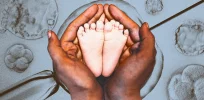
Viewpoint and book review: Egg donation is not only commodified — it is also racialized
A recent journalistic investigation of the global [human] egg trade at Bloomberg put the industry’s unregulated practices and their exploitative implications ...

Viewpoint: Sociogenomics—Challenging the ethics of IQ-based gene selection
[A] US start-up that offers eugenic embryo selection. Heliospect Genomics aims to enable wealthy couples to select the “most intelligent” ...

Viewpoint: Should we regulate or ban embryo selection based on IQ?
In mid-November 2024, the British organization Hope not Hate published its investigative research ‘Inside the Eugenics Revival’. In addition to ...

Viewpoint: Feminist social justice post-modernist professor rejects reproductive ‘technological innovations’ because they promote ‘intersectional oppressions’
Gig work in childcare, nursing, and transportation; non-invasive prenatal testing; gene editing; and space expeditions can all be attributed to ...
Uproar in South Africa where debate intensifies over legalizing gene-edited babies
What is the legal status of heritable human genome editing (HHGE)? In 2020, a comprehensive policy analysis by Baylis, Darnovsky, Hasson, ...

Viewpoint: Will the public be able to afford one-time gene therapy for hemophilia just approved by the FDA?
Science may be advancing rapidly but as Crispr therapies start heading to the clinic the funding of research seems to ...

Viewpoint: Seven reasons to say no to genetically modified humans
Ending experiments that engineer the traits of future children, who will then pass on those altered genes and traits ...

Viewpoint: Scientific community puts pressure on Germany to repeal law blocking reproductive technology and research on embryos
The scientific community is launching a renewed attack on the controversial law of the German Embryo Protection Act ...

Viewpoint: Hunting cloned sheep? What weird things might happen as our bio-engineering skills improve?
Some people — not just Montanans — pay to indulge in “captive hunting,” and large sheep make excellent targets ...

Did eugenicist Charles Lindbergh fake his disabled son’s ‘crime-of-the-century’ kidnapping to cover up experiments by Nazi-sympathizing scientists?
The kidnapping and murder of Charles Lindbergh’s son has inspired plausible theories about what really happened ...

The Olympics of the future: Transhumanist-supported Enhanced Games recognizes world records achieved with drug use, steroids and stimulants
Peter Thiel and two other venture capitalists, Christian Angermayer and Balaji Srinivasan, are now funding “the Olympics of the future.” ...

$3 million barrier to sickle cell gene therapy: How prohibitive costs could limit practical benefits of newly-approved drugs
In a much-anticipated move, the Federal Drug Administration (FDA) has approved two new gene therapies for sickle cell disease ...

Viewpoint: Center for Genetics and Society advances ‘progressive’, ‘techno-pessimist’ argument against human germline editing
AI is a hot topic that some experts deeply steeped in the AI debate are warning about the social justice ...

Applying racial and social justice principles to case of Henrietta Lacks and her immortal cell lines
Human cell lines are an instrumental part of basic biomedical research and necessary for the development of vaccines and drugs ...

Viewpoint: Breaking taboos or pioneering breakthroughs? Weighing ethics of gene editing of human embryos
The German Ethics Council has now also ruled that inheritable genome editing is fundamentally morally permissible ...
Viewpoint: Producing more intelligent humans? Transhumanist philosopher Nick Bostrom ventures into eugenics-fraught science of the future
An overlapping set of movements— effective altruism, longtermism, and transhumanism, all with strong links to eugenics—have recently made news, thanks ...

Viewpoint: ‘Hipster eugenics’ — The ethical case against using personalized genetics to choose embryos
The techno-utopian credos known as “effective altruism” and “longtermism” have recently gained wide notice, judging by Google searches, news articles, ...

Drawing a line: European Convention upholds ban on heritable human genome editing
The Council of Europe’s Convention on Human Rights and Biomedicine, better known as the Ovideo Convention, explicitly bans heritable human ...

Genetically modified babies? Turkish-based medical tourism company says they can help you make one
Heal2Go describes itself as “an innovative medical travel platform” with a mission “to make medical traveling easier… We’re working on ...

Viewpoint: Did the New York Times blunder in its analysis of non-invasive prenatal blood test (NIPT) limitations?
On January 1st, The New York Times website prominently featured a substantial piece of investigative journalism about a relatively new ...

The first child selected as an embryo on the basis of its ‘polygenic risk score’ is now 16 months old
The first child acknowledged to have been selected as an embryo on the basis of its “polygenic risk score” is ...

Viewpoint: Political left, right and sprinkling of bioethicists express concern about modifying rules on embryo research
On May 26, the International Society of Stem Cell Research (ISSCR), a non-governmental organization of scientists, released newly revised guidelines ...

Viewpoint: Debating the debate over the new stem cell research guidelines
An organization of scientists is recommending that limitations on several experimental and controversial research procedures – including heritable genome editing, ...

Viewpoint: Patenting human embryo gene editing? Two rival universities push the ethical and legal debate
Two prominent groups of scientists, and two major American universities, are trying to patent methods for editing human embryos, with ...

Quickly-advancing human embryo research raises prickly ethical questions
Nature published two peer-reviewed papers about generating in vitro, with slightly different methods, “blastoids” or “human blastocyst-like structures”... Notably, none ...

Viewpoint: Why assisted reproduction needs to be more comprehensively regulated
The United States fertility market is growing very rapidly, and is projected to reach $15.4 billion in 2023, more than ...

Viewpoint: How might the Biden Administration regulate heritable human gene editing?
The new Biden-Harris Administration faces a number of harrowing challenges in which science and technology policies will be critical. Along ...
