Seedless, thorn free blackberries? With the help of CRISPR, startup Pairwise aims to get fruit on store shelves within a few years

Credit: Jacopo Werther and Dwight Sipler via CC-BY-2.0

As demand for berries sees significant growth, a three-year-old startup aims to change the DNA of these plants to make them more enticing to both consumers and the producers who raise them.

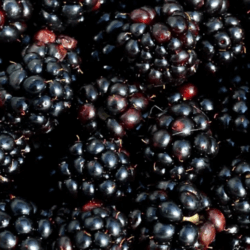
Pairwise, based in North Carolina, is using CRISPR gene-editing technology to change the DNA of blackberries and black raspberries to remove the seeds, improve the plant structure so the fruit is more easily accessible, and remove thorns from the bushes to make harvesting more efficient and safer.

Tom Adams, the co-founder and CEO of Pairwise, said executives noticed that while berry demand was on the rise, there were obstacles deterring many people from consuming and farmers from growing the produce, including the seeds, messiness, a short shelf life and a lack of consistency in flavor and texture.

Mis- and disinformation are distorting science and public policy. Subscribe to our Daily and Weekly Digests for incisive coverage of ‘disruptive’ innovations in AI, agricultural biotechnology, food, chemicals, nuclear energy, vaccines, and other disruptive innovations.

Pairwise aims to have both berries on store shelves in the middle of this decade, Adams said.

…

Pairwise uses CRISPR, a process where it can remove or change the sequence of the genome so a specific trait doesn’t appear or a desired characteristic is more pronounced. Unlike genetic modification where new DNA material is added to the plant.

…

Pairwise hopes making these changes will entice adults and children to increase their consumption of fruits and vegetables.

[Editor’s Note: See full press release from Pairwise here]

This is an excerpt. Read the original post here

Related Articles

Infographic: Global regulatory and health research agencies on whether glyphosate causes cancer

Infographic: Global regulatory and health research agencies on whether glyphosate causes cancer

Does glyphosate—the world's most heavily-used herbicide—pose serious harm to humans? Is it carcinogenic? Those issues are of both legal and ...

Most Popular

Wave Crest Over Red Cross
Viewpoint: Here are the election-inspired Trump administration healthcare policy reversals expected in the coming months
ChatGPT-Image-Mar-10-2026-01_39_01-PM
Viewpoint—“Miracle molecule” debunked: Why acemannan supplements don’t work
Aerial Sprayer Over Gradient Fields
Farming, food, and chemicals: Post-midterms, the MAHA alliance between Democrats and MAGA Republicans is bruised but not cowed. What comes next?
Microscopic IVF Egg Injection
With technical barriers to human embryo editing falling, ethical concerns escalate
Prescription Capsules Scattered on Twenty-Dollar Bills
Facts & Fallacies podcast: America's health care system is broken. A doctor explains how to fix it, Part 2
Bayer Crop Circle in Golden Wheat
Making fertilizer from thin air: Bayer’s gene-editing innovation could dramatically cut chemical fertilizer use in growing food
Picture1
Viewpoint: How badly is the U.S. food-safety net fraying? FDA’s bungled handling of the tainted lettuce crisis deepens concerns over cuts to disease tracking and response
Screenshot 2026-10-27 at 10.32
“Do your own research”: What Medicare’s annual open enrollment circus teaches us about the seductive trap of DIY health and science
glp menu logo outlined

Get news on human & agricultural genetics and biotechnology delivered to your inbox.