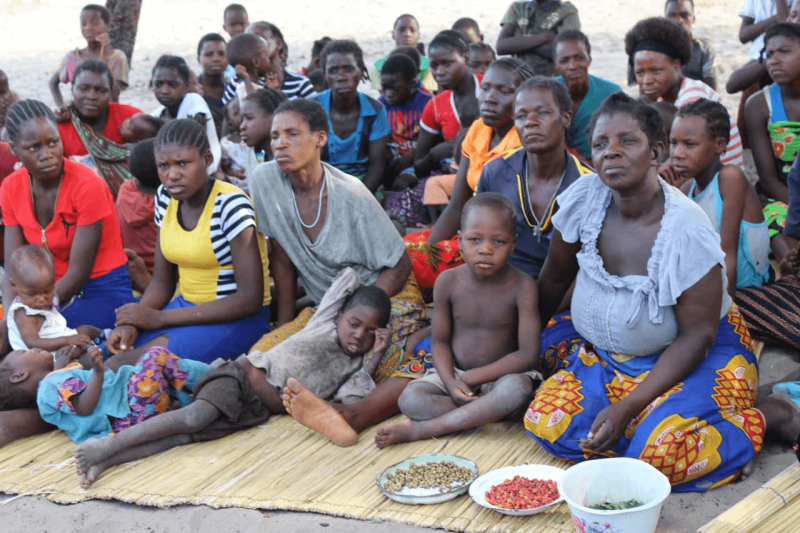

In 2002, Zambia made headlines when President Levy Mwanawasa declared a ban on the importation and distribution of genetically modified organism (GMO) maize. This decision was met with both praise and criticism, but as time has passed, the scientific consensus on GMO safety has become clearer. With the recent declaration of a drought as a national disaster in Zambia, the country faces a critical juncture where revisiting this decision is imperative for ensuring food security.
The scientific consensus on GMO safety
The safety of GMOs, including maize, has been extensively studied and confirmed by leading scientific organizations. Both the World Health Organization (WHO) and the American Medical Association (AMA) have stated that GMOs currently on the market are safe for human consumption, backed by rigorous scientific evidence [1][2].
GMO maize, like other GMO crops, undergoes a precise and highly regulated process to introduce specific traits, such as resistance to pests or drought. This process typically involves identifying desired traits in other organisms, isolating the responsible genes, and inserting them into the maize genome using biotechnological tools. Contrary to popular misconceptions, this process does not involve injecting chemicals or altering the fundamental nature of the crop [3].
Zambia’s misunderstanding of GMOs
Despite the overwhelming scientific evidence supporting the safety of GMOs, Zambia’s ban on GMO maize reflects a misunderstanding of this technology. It’s essential to recognize that GMOs have the potential to address critical challenges faced by African countries, such as Zambia, including pest resistance, drought tolerance, and increased nutritional content.
Revisiting the narrative: Addressing Zambia’s food security challenges
With Zambia’s recent declaration of a drought as a national disaster, the country faces an impending hunger crisis. Revisiting the ban on GMO maize presents an opportunity to harness the benefits of this technology in mitigating food insecurity.
GMO maize varieties engineered for drought resistance, for example, could significantly enhance Zambia’s resilience to climate change-induced droughts. These varieties have been developed and tested in various regions worldwide, demonstrating their effectiveness in maintaining yield stability under water-stressed conditions [4].


Moreover, GMO maize engineered for pest resistance could help reduce crop losses caused by insects, a common challenge faced by Zambian farmers. By adopting GMO technology, Zambia could increase agricultural productivity, improve food security, and alleviate poverty among its rural population.
Conclusion
In conclusion, Zambia’s ban on GMO maize, though made with good intentions, reflected a misunderstanding of the safety and potential benefits of this technology. As the country grapples with the challenges of climate change and food insecurity, it’s essential to revisit this decision based on scientific evidence and adopt a more informed approach towards GMOs. Embracing GMO technology could be a vital step towards ensuring food security and sustainable agricultural development in Zambia.
References:
- World Health Organization (WHO). (2022). Frequently Asked Questions on Genetically Modified Foods. Retrieved from https://www.who.int/foodsafety/areas_work/food-technology/faq-genetically-modified-food/en/
- American Medical Association(AMA). (2012). Report 2 of the Council on Science and Public Health (A-12) Labeling of Bioengineered Foods. Retrieved from https://www.ama-assn.org/sites/ama-assn.org/files/corp/media-browser/public/about-ama/councils/Council%20Reports/council-on-science-public-health/a12-csaph-report2.pdf
- ISAAA. (2022). What is Genetic Modification?. Retrieved from https://www.isaaa.org/resources/publications/briefs/49/what-is-genetic-modification/
- Wassmann, R., Hasegawa, T., & Tran, H. (2018). Advancing Drought Tolerance in Maize Using Genomics Approaches. In Genomics Assisted Breeding of Crops for Abiotic Stress Tolerance(pp. 205-227). Elsevier.
[Editor’s note: William Bento is a Quality Assurance Manager at Zambia National Milling Corporation.]