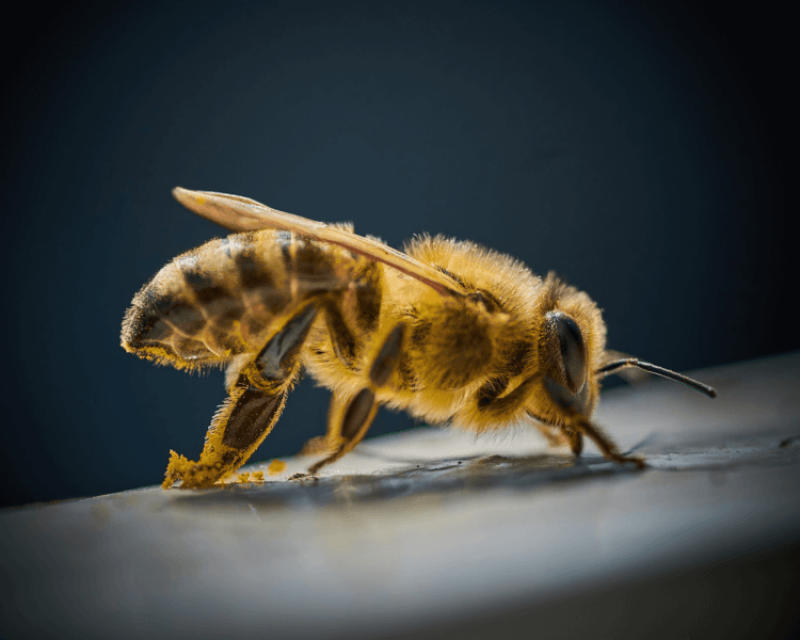
Bees can count, recognize human faces and learn how to use tools. Does that mean they’re conscious?

Bees can count, recognize human faces and learn how to use tools. Does that mean they’re conscious?
Credit: Unsplash/ Aljaz Kavcic

“There is no fundamental difference between man and animals in their ability to feel pleasure and pain, happiness, and misery,” Darwin wrote.

But his suggestion that animals think and feel was seen as scientific heresy among many, if not most animal behaviour experts.

Attributing consciousness to animals based on their responses was seen as a cardinal sin. The argument went that projecting human traits, feelings, and behaviours onto animals had no scientific basis and there was no way of testing what goes on in animals’ minds.

But if new evidence emerges of animals’ abilities to feel and process what is going on around them, could that mean they are, in fact, conscious?

We now know that bees can count, recognise human faces and learn how to use tools.

Prof Lars Chittka of Queen Mary University of London has worked on many of the major studies of bee intelligence.

Follow the latest news and policy debates on sustainable agriculture, biomedicine, and other ‘disruptive’ innovations. Subscribe to our newsletter.

“Given all the evidence that is on the table, it is quite likely that bees are conscious,” he said.

What has been discovered may not amount to conclusive proof of animal consciousness, but taken together, it is enough to suggest that there is “a realistic possibility” that animals are capable of consciousness, according to Prof Birch.

This applies not only to what are known as higher animals such as apes and dolphins who have reached a more advanced stage of development than other animals.

It also applies to simpler creatures, such as snakes, octopuses, crabs, bees and possibly even fruit flies.

This is an excerpt. Read the full article here

{{ reviewsTotal }}{{ options.labels.singularReviewCountLabel }}
{{ reviewsTotal }}{{ options.labels.pluralReviewCountLabel }}
{{ options.labels.newReviewButton }}
{{ userData.canReview.message }}

Related Articles

Infographic: Global regulatory and health research agencies on whether glyphosate causes cancer

Infographic: Global regulatory and health research agencies on whether glyphosate causes cancer

Does glyphosate—the world's most heavily-used herbicide—pose serious harm to humans? Is it carcinogenic? Those issues are of both legal and ...

Most Popular

Screenshot-2026-04-22-at-12.21.32-PM
Viewpoint: Why the retracted Monsanto glyphosate study doesn’t change the science—the world’s most popular herbicide is safe 
ChatGPT-Image-May-1-2026-11_42_59-AM-2
Viewpoint: NAD is the wellness grifters latest evidence-lite longevity fad. At least the mice are impressed.
Picture1
The FDA couldn’t find a vaccine safety crisis, so it buried its own research
ChatGPT-Image-Apr-16-2026-02_56_53-PM
Financial incentives, over diagnosis, and weak oversight: Autism claims are driving up Medicare costs
glp menu logo outlined

Get news on human & agricultural genetics and biotechnology delivered to your inbox.