Bananas that don’t turn brown? Philippines approves CRISPR-edited fruit, fighting battle to reduce food waste

Credit: Utah State University

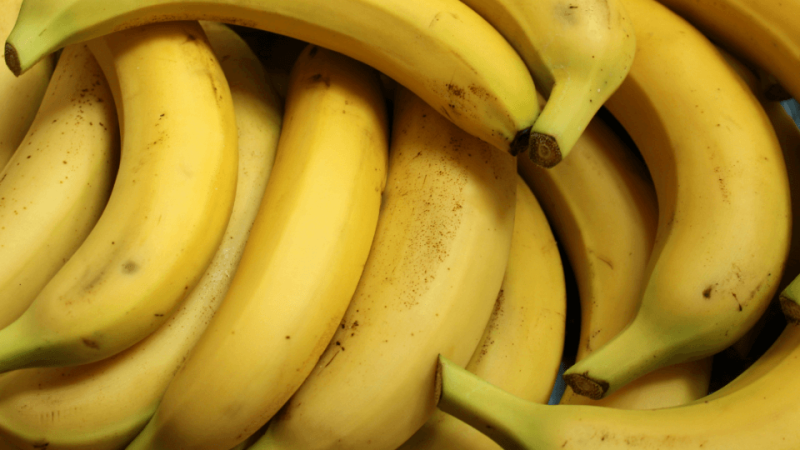
New banana varieties with improved reduced-browning characteristics have been determined as non-genetically modified organisms (GMOs) in the Philippines. The Certificates of Non-Coverage from JDC No. 01 s. 2021 was granted by the Department of Agriculture – Bureau of Plant Industry (BPI) on June 21, 2024.

The reduced browning bananas (TRB011001 and TRB011002) were developed by Tropic Biosciences using the CRISPR-Cas9 gene editing system. These bananas have the potential to reduce food waste and CO2 emissions equivalent to removing 2 million cars from the road per year.

Follow the latest news and policy debates on sustainable agriculture, biomedicine, and other ‘disruptive’ innovations. Subscribe to our newsletter.

The product developer submitted scientific evidence to BPI to obtain the non-coverage certificate. According to BPI, the decision is based on the Technical Consultation for Evaluation and Determination procedure described in DA Memorandum Circular No. 08 s. 2022 Rules and Regulation to Evaluate and Determine when Products of Plant Breeding Innovations (PBls) are Covered under the DOST-DA DENR-DOH-DILG Joint Department Circular No. 01 s. 2021.

BPI has granted the same certification to another reduced browning banana by Tropic in 2023. Sanatech Seed’s Sicilian Rouge tomato with high levels of gamma-aminobutyric acid was also cleared this year. This determination allows the said gene-edited crops to be imported and cultivated in the country.


View the Certificates of Non-Coverage from JDC No. 01 s.2021 on the Bureau of Plant Industry website.

Read the original post here

{{ reviewsTotal }}{{ options.labels.singularReviewCountLabel }}
{{ reviewsTotal }}{{ options.labels.pluralReviewCountLabel }}
{{ options.labels.noReviewsLabel }}
{{ options.labels.newReviewButton }}
{{ userData.canReview.message }}

Related Articles

Infographic: Global regulatory and health research agencies on whether glyphosate causes cancer

Infographic: Global regulatory and health research agencies on whether glyphosate causes cancer

Does glyphosate—the world's most heavily-used herbicide—pose serious harm to humans? Is it carcinogenic? Those issues are of both legal and ...

Most Popular

organic scaled
Facts & Fallacies podcast: Organic food cuts pesticide exposure? A response to Dr. Rhonda Patrick
ChatGPT-Image-Mar-10-2026-01_39_01-PM
Viewpoint—“Miracle molecule” debunked: Why acemannan supplements don’t work
ChatGPT-Image-Jun-25-2026-02_53_56-PM
Embryo gene editing is on the horizon, stirring mixed emotions
Screenshot-2026-07-01-at-2.49.48-PM
Dr. TikTok and male fertility: Viral claims tout GLP-1 drugs as fertility boosters. What does the science say?
ChatGPT-Image-Jul-6-2026-02_25_26-PM
40 million Americans take glucosamine. If you have memory loss, it could accelerate cognitive decline.
using genetics to reverse aging
Is the longevity obsession a new form of ageism?
kratom
Viewpoint: Kratom ‘supplement’ crisis: DEA sits on its hands while patient addictions to this ineffective drug  rise
a-mature-farmer-working-in-the-field-at-sunrise-harvesting-crops-generated-by-ai-photo
What’s the prospect of developing gene-altered crops that are more nutritious and resist climate disruption
Blood blockage
High cholesterol? FDA approves effective oral medication
Screenshot 2026-07-22 at 10.25
Science brain drain escalates as Trump purge extends to USDA
png-upside-food-syn-bio-cultured-meat
Regulating cultured meat around the world
YearReview Grift
Viewpoint: A practical guide to evaluating social media wellness hype
ChatGPT-Image-Jun-25-2026-12_23_17-PM
No, Bill Gates did not secretly engineer ticks to promote veganism
Screenshot-2026-07-21-at-6.22.06-PM
The Indian physician’s one-woman battle against health disinformation on Wikipedia
glp menu logo outlined

Get news on human & agricultural genetics and biotechnology delivered to your inbox.