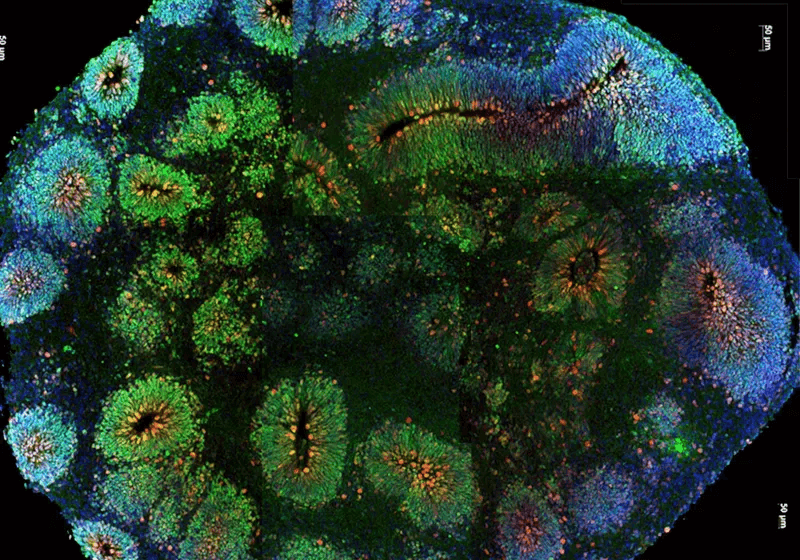
Model systems called organoids mimic the cellular make-up of organs, such as the gut and the lungs. Researchers make them by bathing stem cells from a human donor in a precisely formulated cocktail of chemicals, which encourages the stem cells to mature into all the cell types that are typically present in a given organ. The culture conditions also encourage the cells to gather into a complex 3D shape.
Brain organoids are particularly slow-growing and finicky to use, and researchers have been on the hunt for better ways to make them. One approach has been to combine cells from several donors into a single organoid. Multi-donor clumps of cells might be easier to work with, and would capture a broad diversity of human genetics in a single model. However, because the starting stem cells grow at different paces, fast-growing lines inevitably take over.
Chimeroids should enable researchers to work out whether drugs will have distinct effects on different people. As a test case, the team treated the multi-donor organoids with neurotoxic drugs. Ethanol, which causes fetal alcohol syndrome, reduced the number of cells from just one donor’s cell line. Cells from that donor grew faster when combined with valproic acid, an anti-epileptic drug linked to an increased risk of autism spectrum disorder in children who’d been exposed to it in utero.