Organic farms are always free from pesticides? Debunking 17 enduring organic food myths

organic organic food food healthy preview
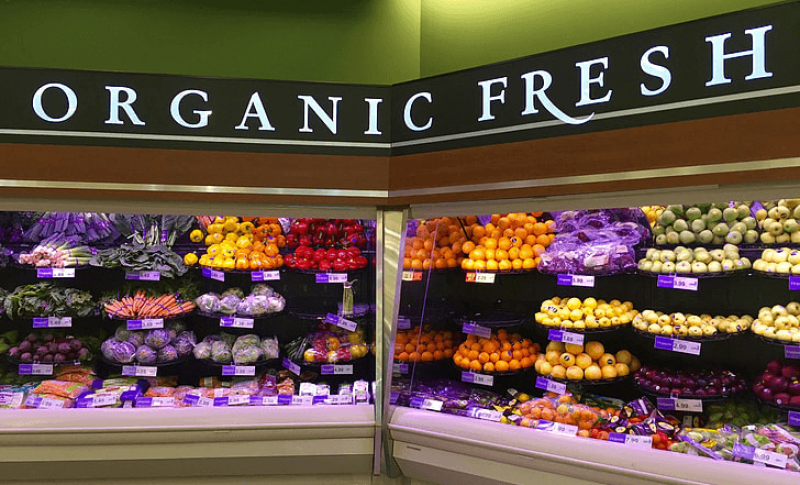
Credit: PickPik (Public Domain)

According to the U.S. Department of Agriculture, organic retail sales were estimated to be more than a staggering $52 billion in 2021, representing about 5.5 percent of all retail food sales.

But with all the buzz surrounding organic farming practices and organic foods, there’s also a lot of confusion and misconceptions about it.

That’s why I’m here today, to help clear the air and debunk some of the most common myths about organic farming and organic food.

Follow the latest news and policy debates on sustainable agriculture, biomedicine, and other ‘disruptive’ innovations. Subscribe to our newsletter.

Let’s start with a big one: the notion that organic farms are entirely free from synthetic chemicals. This is a widespread myth that needs to be debunked.

Organic farms are allowed to use certain natural pesticides and fertilizers derived from natural sources like plants, minerals, and microorganisms. While these inputs are generally considered safer than synthetic ones, they can still have negative environmental impacts.

One barrier to embracing organic is the perception it’s always pricier than conventional. But this myth needs debunking.

While some organic products carry a higher price tag due to factors like labor-intensive methods and smaller scale operations, this isn’t universally true. Organic food prices can vary widely.

An assessment of the costs and benefits of organic agriculture estimated that the costs of a fully organic diet in the United States would be only around 50% higher than a conventional one. So while there is often a premium, it may not be as substantial as some assume.


This is an excerpt. Read the original post here

{{ reviewsTotal }}{{ options.labels.singularReviewCountLabel }}
{{ reviewsTotal }}{{ options.labels.pluralReviewCountLabel }}
{{ options.labels.noReviewsLabel }}
{{ options.labels.newReviewButton }}
{{ userData.canReview.message }}

Related Articles

Infographic: Global regulatory and health research agencies on whether glyphosate causes cancer

Infographic: Global regulatory and health research agencies on whether glyphosate causes cancer

Does glyphosate—the world's most heavily-used herbicide—pose serious harm to humans? Is it carcinogenic? Those issues are of both legal and ...

Most Popular

organic scaled
Facts & Fallacies podcast: Organic food cuts pesticide exposure? A response to Dr. Rhonda Patrick
ChatGPT-Image-Mar-10-2026-01_39_01-PM
Viewpoint—“Miracle molecule” debunked: Why acemannan supplements don’t work
Screenshot 2026-07-22 at 10.25
Science brain drain escalates as Trump purge extends to USDA
kratom
Viewpoint: Kratom ‘supplement’ crisis: DEA sits on its hands while patient addictions to this ineffective drug  rise
close up arabica coffee farmer s hands picking beans plant his farm colombia
Viewpoint: Why do so many ‘mainstream’ and ‘respected’ media outlets exaggerate climate change threats?
How to Include More Strawberries in Your Diet
Strawberries are berries—and 35 other surprising food and drink myths
Screenshot-2026-07-01-at-2.49.48-PM
Dr. TikTok and male fertility: Viral claims tout GLP-1 drugs as fertility boosters. What does the science say?
using genetics to reverse aging
Is the longevity obsession a new form of ageism?
ChatGPT-Image-Jul-22-2026-09_13_07-AM
Viewpoint—The Strategic Litigation boom: Understanding the tightening coalition among NGOs, foundations, journalists, and tort lawyers
Screenshot-2026-07-07-at-12.55.44-PM
Viewpoint: Yes, we can adapt to a changing climate without devastating the environment and the economy
ChatGPT-Image-May-22-2026-10_26_09-AM
Trump-RFK, Jr. National Science Board firings: Accountability vs. partisan meddling
diversity
We are entering a new era of personalized medicine—if you’re white
ChatGPT-Image-Jun-25-2026-02_53_56-PM
Embryo gene editing is on the horizon, stirring mixed emotions
glp menu logo outlined

Get news on human & agricultural genetics and biotechnology delivered to your inbox.