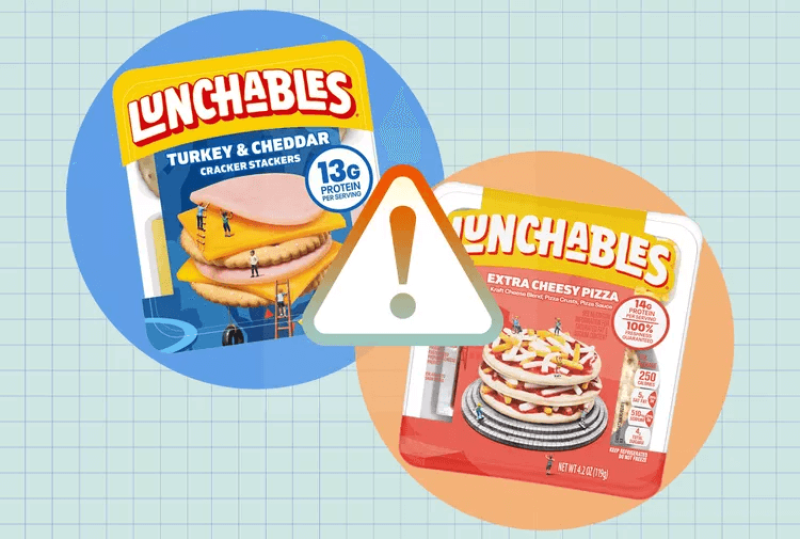
As a parent who packed Lunchables for my son for most of the ‘90s, I find this particularly concerning. According to Consumer Reports, in simplifying a lunch-packing ritual, I had unknowingly submitted my child to lead, phthalates, and sodium. Not being a nutritionist, I will defer the sodium concerns, but as a toxicologist, I will discuss lead and phthalates.
Lead
About 98% of the crust comprises eight elements: oxygen, silicon, aluminum, iron, calcium, sodium, potassium, and magnesium. The rest contains other elements, including naturally occurring lead – there is no way to eliminate lead from our diet, air, and water.
As I’ve previously written, lead is toxic, primarily affecting the nervous system. Children, whose nervous system is still
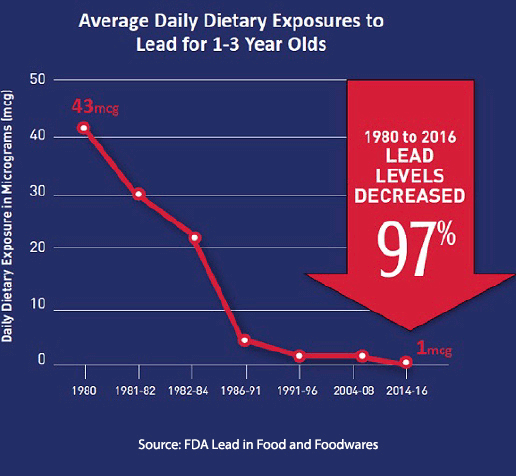
developing, are more vulnerable to lead exposure than adults. However, most of the risk to children is not from food but from ingesting chips from lead-based paint used before 1978 in U.S. housing. Lead levels in children have drastically decreased since the 1980’s.
The reason for so many new articles about lead found in food and other places is that we can now measure lead (and other chemicals) at much lower levels. Lead has always been present in food; however, we couldn’t measure those low levels, and the public never worried.
Phthalates
Phthalates are a group of compounds used to make plastics more durable and flexible. They are used in food packaging, vinyl flooring, lubricating oils, and personal-care products, such as soaps and shampoos. The FDA regulates phthalates in the wrapping that contacts food. While some animal studies have shown phthalates to affect the reproductive system and interfere with hormones, human studies have not demonstrated adverse health effects.
None of the kits we looked at exceeded any legal or regulatory limit.
– Consumer Reports
How could they conclude that Lunchables are dangerous to health?
In testing, Consumer Reports found that five of 12 store-bought lunch and snack kits would expose a child to 50% or more of California’s maximum allowable dose level (MADL) for lead.
Sound familiar? This is the same issue I identified in the Consumer Report’s finding of lead in dark chocolate exceeding California’s MADL for lead, 0.5 micrograms (mcg). A microgram is a millionth of a gram.
Consumer Reports followed the same procedure for Lunchables, using California’s MADL because there are no federal limits for lead in most foods, and California’s are “the most protective available.” Although there are no legally enforceable limits for lead in most foods, there are science-based guidance levels set by the FDA, EPA, and international organizations. California MADL is an arbitrary number.

The California MADL was based on the Occupational Safety and Health Administration’s (OSHA) permissible exposure limit (PEL) for workers of 1989. The PEL, 50 mcg per cubic meter of air, multiplied by ten cubic meters (the amount OSHA determined workers breathed over 8 hours), yields 500 mcg. When divided by 1000, an arbitrary number designed to be exceedingly protective, it generates a MADL of 0.5 mcg daily. [1]
Why did Consumer Reports use the California MADL when other, more evidence-based numbers are available? Because no other number would show a risk to human health.
For example, Consumer Reports could have used the FDA’s interim reference level of 2.2 mcg per day lead for children based on the level where the CDC recommends clinical monitoring of children, 3.5 mcg of lead per deciliter of whole blood. The FDA applied a safety factor of 10 to this level, making it ten times lower.
Using the FDA interim reference level of 2.2 mcg/day results in none of the 12 Lunchables exceeding 20% of the reference level, six kits range between 10% and 20%, and the other six less than 10%. Your child could eat Lunchables five times a day and still be below the FDA’s reference level for lead!
Consumer Reports reported that they detected at least one type of phthalate in every Lunchable tested, with levels ranging from 0 to 7,412 nanograms per serving. Consumer Reports used an old trick: reporting chemical levels in units that make the levels appear incredibly high. Would the equivalent amount, 7.412 mcg or 0.007412 milligrams (mg), seem so scary?
The European Commission has set a group tolerable daily intake of 0.05 mg per kg body weight per day for several phthalates. This translates into an allowable level of 50 mcg of phthalates per day for children, seven times greater than the highest level of 7.412 mcg found, showing no risk from phthalates from eating Lunchables.
It is disappointing that Consumer Reports used the same flawed process on Lunchables that they previously used to discredit dark chocolate, time after time, using this value to create unnecessary fear in the public.
Busy moms and dads across the U.S. spend time trying to figure out what to pack for their children’s school lunches. If you love peanut butter and jelly, you may think that this is a safer alternative than Lunchables, but peanuts grow in the soil and absorb lead, and jelly and bread contain very low levels of lead. But there is no need to worry because the lead levels are much lower than those of concern, as is true of Lunchables. Parents have a lot to worry about, but lead or phthalates in Lunchables should not be one of them.