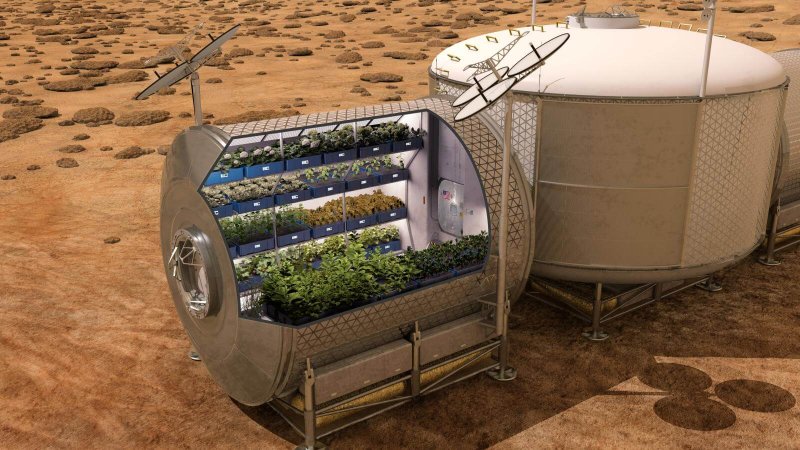
Picture a future where astronauts harvest fresh lettuce on the Moon and bake bread on Mars. It might sound like sci-fi, but space farming is quickly becoming a reality.
This innovative approach to agriculture involves cultivating crops in extraterrestrial environments, such as the International Space Station (ISS), the Moon, and Mars. The main goal is to create self-sustaining food sources for long-duration space missions, reducing the need for costly and risky shipments from Earth.
Experts like Wieger Wamelink (Wageningen University & Research) play a vital role in this field, shedding light on the potential and challenges of growing food beyond Earth. However, the insights gained from space farming are not just for space exploration; they also offer promising solutions for sustainable agriculture on Earth, especially as we confront the effects of climate change and decreasing availability of arable land.
Why Space Farming Matters
Wamelink emphasises that space farming is not just about survival; it’s about establishing a sustainable and efficient system to support life in space. He explains, “It’s much easier and safer to grow your own crops there than to constantly ship them from Earth.” Growing food on-site provides fresh produce, boosts astronaut well-being, and decreases reliance on Earth.
Wamelink also highlights another concern: “Astronauts always lose weight and one reason is that they don’t like the food.” The typical space diet consists of freeze-dried meals, which can lead to weight loss and diminished nutrition over time, posing an additional risk to astronauts’ health.
“It might sound disgusting, but on Mars, human waste products like poop and pee will be the primary sources of fertiliser.”
Challenges of Growing Food in Space
Growing food in space isn’t exactly a walk in the park. Space environments present extreme temperatures, lack of atmosphere, and harmful cosmic radiation. Additionally, resources like water and soil are limited, necessitating the use of hydroponic systems. Extraterrestrial regolith, such as lunar and Martian soil, contain toxic levels of heavy metals that pose risks to plants and humans. Ensuring a stable environment for plants, including proper light, temperature, and humidity, is also critical for successful space farming.
Breakthroughs and Promising Technologies
Recent breakthroughs in space farming technology are paving the way for successful extraterrestrial agriculture. Innovations such as radiation-shielding domes and advanced hydroponics systems are being developed to protect plants and optimise growth.
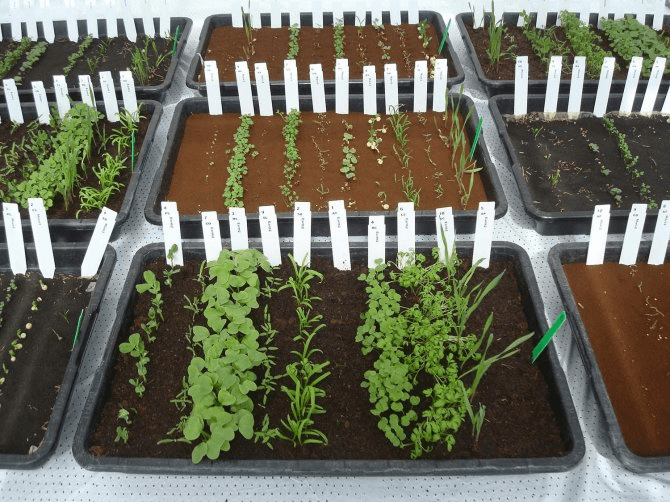
Wamelink’s research includes experimenting with crops like potatoes and tomatoes in simulated Martian and lunar soils, demonstrating promising results. These innovations not only support space missions but also offer new techniques for improving Earth-bound agriculture.

The Future of Space Farming
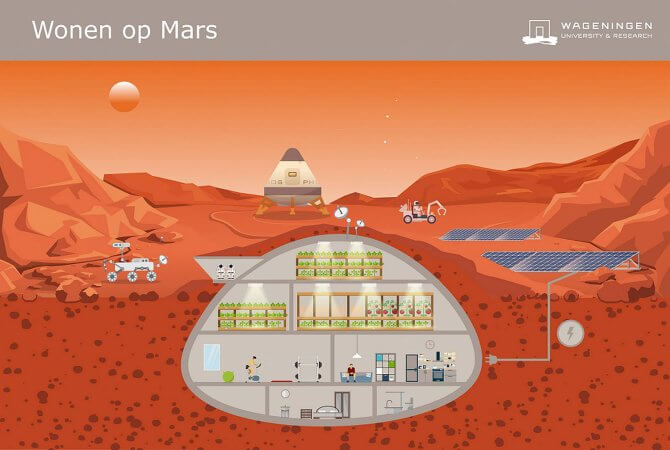
The B.A.S.E. (Bioregenerative Astrofood & Sustenance Engineering) project, led by Wieger Wamelink, is at the forefront of developing sustainable food systems for extreme conditions like those on the Moon and Mars. Creating a stable, closed-loop ecosystem that recycles waste into nutrients is vital for sustainable agriculture in those environments.
“One of the major things we are working on now is to get a circular closed agricultural ecosystem,” Wieger says, highlighting the importance of recycling plant and human waste to sustain crop growth. This initiative has achieved significant milestones, such as growing crops in lunar and Martian soil simulants and exploring the potential of mealworms as a protein source.
“The potential for establishing controlled farming environments, or domes, in extreme Earth locations could significantly boost food security.”
Revolutionizing Agriculture
Space farming research has significant implications for agriculture on Earth. The technologies and methods developed for space can help address challenges like soil degradation and water scarcity.
Wamelink believes that the lessons learned from space farming can revolutionize agricultural practices, particularly in arid and saline environments. “The potential for establishing controlled farming environments, or domes, in extreme Earth locations, could significantly boost food security,” he suggests.
Sustainability Lessons for Earth
Space farming offers valuable lessons in sustainability that can benefit Earth. The closed-loop systems designed for space agriculture highlight the critical importance of recycling and efficient resource use. These practices can inspire more sustainable agricultural methods on Earth, helping to combat climate change and secure food supplies for future generations.
Become an Expert in Space Farming
Inspired by breakthroughs in space farming and Wamelink’s research, the ReThink Food Challenge, launched by Wageningen University & Research, is calling on students worldwide to develop fresh, sustainable food cultivation ideas. This international competition is all about tackling real-world problems and pushing the boundaries of traditional farming.
Participants in the Challenge will craft business ideas that offer innovative solutions for sustainable food production. With a focus on indoor farming and alternative proteins, the Challenge promotes teamwork across disciplines and offers mentorship from industry leaders and academic experts.
Registration is now open for the ReThink Food Challenge! If you have creative ideas, this is your chance to shine. Join the challenge, submit your proposal, and help shape the future of sustainable food production!