Echolocation: How tongue clicks allow the blind to ride bikes

maxresdefault

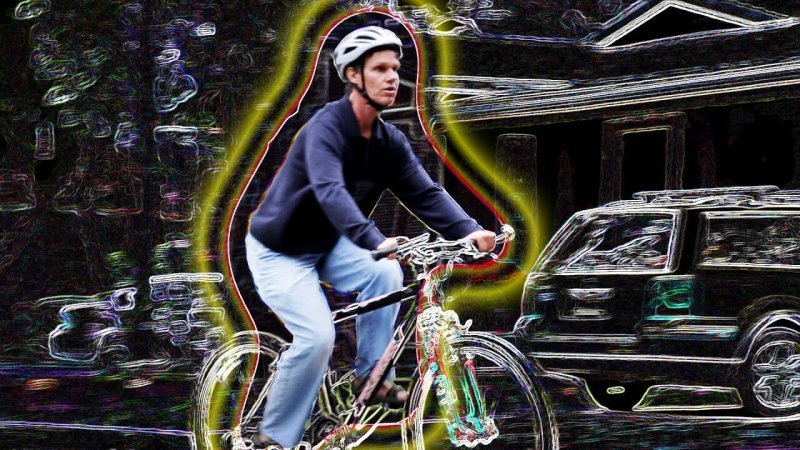
Human echolocation has at times allowed people to ride bikes or play basketball despite being completely blind from a very young age. These echolocators typically perceive their environment by clicking sharply with their tongues and listening to differences in the sounds reflected off objects.

Brain-imaging studies reveal that expert echolocators display responses to sound in their brainโ€™s primary visual region, and researchers have speculated that long-term input deprivation could lead to visual regions being repurposed. โ€œThereโ€™s been this strong tradition to think of the blind brain as different, that itโ€™s necessary to have gone through that sensory loss to have this neuroplasticity,โ€ says Lore Thaler, a neuroscientist at Durham University in England.

Follow the latest news and policy debates on sustainable agriculture, biomedicine, and other ‘disruptive’ innovations. Subscribe to our newsletter.

Thaler co-led a 2021 study showing that both blind and sighted people could learn echolocation with just 10 weeks of training. For more recent work in the journal Cerebral Cortex, she and her colleagues examined the brain changes underlying these abilities. After training, both blind and sighted people displayed responses to echoes in their visual cortex, a finding that challenges the belief that primary sensory regions are wholly sense-specific.

This is an excerpt. Read the original post here

{{ reviewsTotal }}{{ options.labels.singularReviewCountLabel }}
{{ reviewsTotal }}{{ options.labels.pluralReviewCountLabel }}
{{ options.labels.newReviewButton }}
{{ userData.canReview.message }}

Related Articles

Infographic: Global regulatory and health research agencies on whether glyphosate causes cancer

Infographic: Global regulatory and health research agencies on whether glyphosate causes cancer

Does glyphosateโ€”the world's most heavily-used herbicideโ€”pose serious harm to humans? Is it carcinogenic? Those issues are of both legal and ...

Most Popular

ChatGPT Image May 26, 2026, 08_42_17 AM (1)
Viewpoint: Greenpeace and poison: How environmental advocacy groups rely on compliant (and often ignorant) journalists to spread disinformation and spark litigation
Screenshot 2025-07-30 at 10.48
Can gene editing eliminate Down syndrome? Scientists have done it in lab-grown cells
Screenshot-2026-05-28-at-1.36.28-PM
Viewpoint: Can mRNA research survive the Trump administration?
ChatGPT-Image-May-26-2026-07_51_21-AM-2
Viewpoint: There are more than 1,000 chemicals in a cup of coffeeโ€”including many substances that can cause cancer. Why isnโ€™t it banned?
Screenshot-2026-06-02-at-11.59.11-AM
Magnifica Humanitas: Popeโ€™s encyclical broadside against AI naivete and overreach
Screenshot 2025-11-18 at 3.45
Viewpointโ€”GMOs and sustainability: Why buying organic foods is the least environmentally-sensitive food choiceโ€”without offering any health benefits
Screenshot-2026-06-01-at-1.35.32-PM
Viewpoint: Swine farmers are under attack for allegedly mistreating their animals. Here are the facts.
Screenshot-2026-05-27-at-10.51.25-AM
Viewpoint: โ€˜Monsantoโ€™ bluesโ€”Planned Netflix movie promises yet another round of anti-glyphosate disinformation
Picture1
Sounds we canโ€™t hear โ€” the hidden planetary signals behind science, fear, and misinformation
ChatGPT-Image-Jun-2-2026-11_39_58-AM
Viewpoint: Who is RFK, Jr.โ€™s newly-appointed CDC senior counselor, Sara Brenner โ€” Vaccine skeptic and self-proclaimed โ€œMAHA momโ€
ChatGPT Image May 28, 2026, 08_16_38 PM
Viewpoint: Why the EPA mismeasures cancer risk of chemicals and what should be done to fix it
ChatGPT-Image-May-28-2026-02_12_17-PM
Can โ€˜Social Stress Indicatorsโ€™ help contain social media misfluencers?
glp menu logo outlined

Get news on human & agricultural genetics and biotechnology delivered to your inbox.