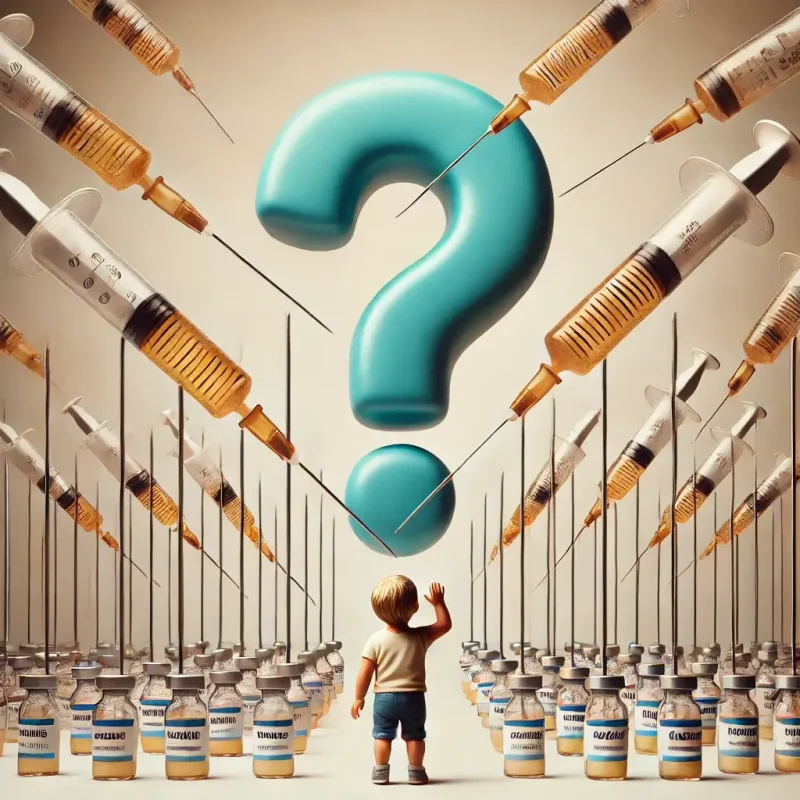
I’m sure you’ve seen a graphic like this, right?
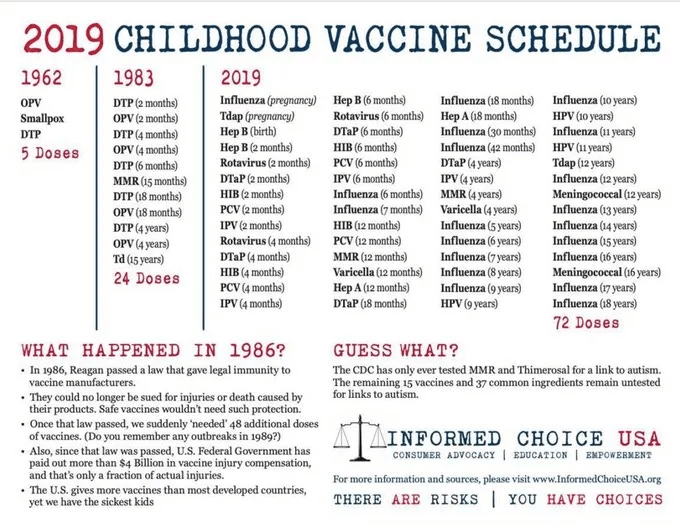
This is widely circulated among anti-vaccine groups to suggest that:
- developing vaccines to protect against additional disease-causing microorganisms is bad.
- the number of vaccines now is directly tied to increased autism diagnoses. (It isn’t, I’ve written about this here and here)
- the added vaccines haven’t been assessed for links to autism, and neither have the ingredients.
- the US gives “the most” vaccines compared to any other country, and our kids are the sickest (also not true, stay tuned for more).
- it an evil plot related to a legal provision called the National Childhood Vaccine Injury Act of 1986 (more on that in an upcoming piece).
All of this is wrong. And the goal is to undermine life-saving medicines.
Think about it. It’s a truly bizarre angle, right?
Do these people think we should have just frozen in time in 1983 and not used our cumulative scientific knowledge and advancing technology to continue to develop ways to improve health?
Hell, human toll-like receptors – key proteins in the innate immune response, weren’t identified until 1994! That discovery was critical for all immunology-related science.
The goal of biomedical science progress is to develop more health interventions that save lives.
 That would be like saying, well, we identified the virus responsible for AIDS, and we understand the biology of it and have created a compound (anti-retrovirals like AZT in 1987) that inhibits HIV which will save lives, but we are just gonna sit on it.
Or saying, well, we now understand the relationship between blood cholesterol and increased risk of cardiovascular disease, and we have created a compound (atorvastatin in 1996) which will target LDL cholesterol and reduce heart attacked and hypercholesteremia, but we are just going to sit on it.
Or saying, well, we now understand how we can harness the immune system to target and destroy cancer cells, and have developed the very first flag for that (Rituximab in 1997) for non-Hodgkin’s lymphoma, but we are just not going to use it.
And the list goes on.
And this logic can be applied to EVERYTHING that science has developed, not just medicines. How about life-saving medical interventions like surgical procedures and medical devices:
How about transcatheter aortic valve replacement (TAVR, approved in 2011), which is a groundbreaking technique to replace heart valves in patients too high-risk for open heart surgery?
Or ECMO (Extracorporeal Membrane Oxygenation, implemented in 1990s), a method to continue to oxygenate blood in individuals with cardiac and respiratory failure, often while awaiting a transplant?
Or even just laparoscopic surgical technologies on the whole – which were only starting to be implemented in the 1980s. These procedures improve outcomes, recovery times, reduce complications, and infections.
So if we take the logic of anti-vaccine activists, we just shouldn’t be using our scientific knowledge and our ability to develop new tools, techniques, and innovations with that growing knowledge. How does that make sense?
Vaccines save lives. More vaccines today means we save more lives that couldn’t be saved before.
So let’s get into the claims. The argument is, in 1983, kids received only 24 doses of various vaccines before the age of 18. These vaccines protect against 7 different diseases:
- DTP (Diphtheria, Tetanus, and Pertussis). This was a 5-dose regimen that protected against 3 bacterial diseases: diphtheria, tetanus, and whooping cough. The DTP formulation included whole-cell inactivated pertussis (Bordetella pertussis)
- Oral Polio Vaccine (OPV). This was a 4-dose regimen given orally, containing a weakened version of the poliovirus, to protect against poliomyelitis.
- Measles, Mumps, and Rubella (MMR). In the early 1980s, a single dose was the standard, to protect against 3 viral diseases: measles, mumps, and rubella.
I want to walk you through how they calculate “doses” – because obviously, you add this up and you get 10, right? Yeah, that’s right. 10 immunizations. Well, what these folks do is they add up the number of “diseases” to get their doses – even though these vaccines are combination formulations.
This is their math:
- DTP: 3 diseases + 5 doses = 15 doses
- OPV: 1 disease + 4 doses = 4 doses.
- MMR: 3 diseases + 1 dose = 3 doses.
- Oh, and then they throw in one Td (tetanus and diphtheria) at age 15: 2 diseases + 1 dose = 2 doses.
That’s how they get 24. But that isn’t how it works, first of all. A dose is a an administration of a vaccine. It doesn’t relate to the number of diseases covered in a single vaccine.
Second of all, if they REALLY wanted to nitpick, they would count up the total antigens, right? So a vaccine that contains an entire bacterial cell, with thousands of antigens, like in the DTP vaccine, that would be THOUSANDS of doses compared to the acellular pertussis component, with only 3-5 antigens that we use in the DTaP vaccine today, right? More on that in a future piece, so hang tight.
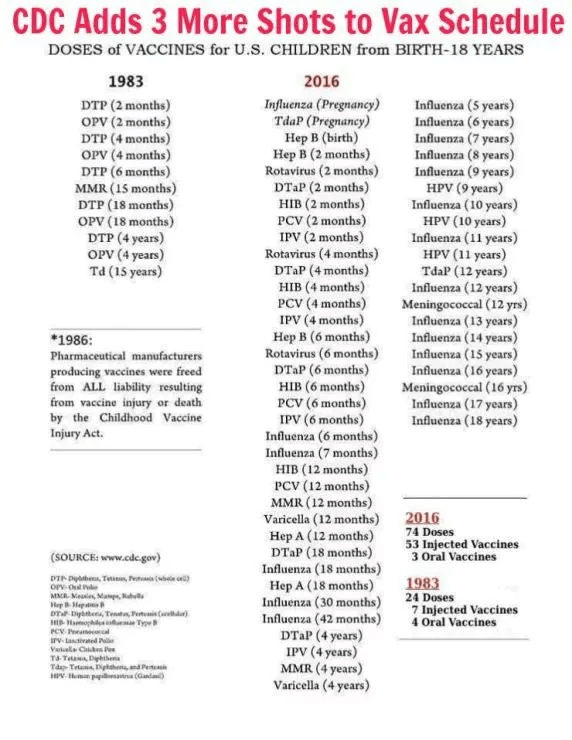
They fudge numbers to mislead people.
But then, anti-vaccine activists ignore the fact that the added vaccines protect against more diseases.
They suggest scientific progress evil, but more vaccines mean fewer deadly diseases and more lives saved—how is that bad?
So, they “jump” to 2019, or 2020, or whatever year they select, and show this much longer list to scare people. Why didn’t they display it as the accurate incremental addition of vaccines as we developed them?
Today, we have vaccines to protect kids (under 18) against:




- Diphtheria
- Tetanus
- Pertussis (Whooping Cough)
- Polio
- Measles
- Mumps
- Rubella (German Measles)
- Hepatitis B
- Haemophilus influenzae type b (Hib)
- Rotavirus
- Pneumococcal Disease
- Varicella (Chickenpox)
- Meningococcal Disease (types A, C, W, Y, and B)
- Human Papillomavirus (HPV)
- Hepatitis A

Let’s discuss.
Today, we use the DTaP instead of DTP: this protects against diphtheria, tetanus, and whooping cough (pertussis), and is still a 5-dose regimen. The aP component is acellular pertussis, which means instead of the intact but killed whole bacteria, only individual components that elicit immune responses are included. The DTaP vaccine was approved in 1991 and replaced DTP because of its improved safety profile.
I thought anti-vaccine activists said we don’t care about safety? Weird that we actually changed a formulation for an improved safety profile, right?
MMR: today we use a 2-dose regimen, updated from the single dose in 1989. (I wrote about that here, the additional dose improves protection against the most contagious virus in humans, measles virus).
We use the inactivated polio vaccine (IPV) in the US today instead of the OPV that was used in 1983. Why? Because we eliminated wild polio in the US in 1979 thanks to vaccines! While OPV provides more broad immunity because it is a live, attenuated virus (including mucosal immunity which is important for enteroviruses like polio), its use is not essential in places where polio doesn’t circulate broadly. IPV is still a 4-dose regimen like OPV. (yes, we will talk specifically about polio vaccines in an upcoming article!)
Since 1983, scientists have developed vaccines to protect against diseases we couldn’t protect against before.
These pathogens existed, we just didn’t have defenses for them. Enter: scientific research, discovery, and biotechnology tools.
Hepatitis B (first approved in 1981, current version approved in 1986): a viral disease that is spread through direct bodily fluids, including perinatally (around the time of birth), unsafe medical practices, sexual activity, and other person-to-person fluid exchange. Hepatitis B infection can cause both acute and chronic illness, because hepatitis B virus is a DNA virus that can persist in liver cells indefinitely. Children who are infected have a 90% risk of developing chronic hepatitis, which leads to: liver damage, cirrhosis, and liver cancer. 30% of liver cancers are due to hepatitis B.
We protect against this now, with a 3-dose vaccine, starting at birth, to protect a newborn against that potential perinatal transmission when they are at high risk. A vaccine that protects against illness, infection, and cancer.
Hepatitis B vaccine has reduced global prevalence of chronic hepatitis B in children under 5 from 4.7% in the 1980s to less than 1% today. Vaccination programs have reduced new infections among kids by over 95% – in areas with high vaccine uptake.
Hepatitis A (approved in 1995): a viral disease that is spread through contaminated food, water, and fecal-oral transmission. Hepatitis A does not cause chronic liver infection, but acute illness can be severe, and can cause liver failure in at-risk individuals. Today, we have a vaccine that protects against it, a 2-dose regimen. The vaccine not only prevents infection and illness, but it is effective for herd immunity, leading to less circulating virus that may cause outbreaks due to poor hygiene and sanitation.
Rotavirus (current vaccines approved in 2006): a viral illness that is a primary cause of gastrointestinal illness among children. It can lead to life-threatening diarrhea and dehydration, especially in children under 5. Rotavirus is responsible for 40% of all diarrheal-associated hospitalizations in children. Before vaccines, rotavirus caused roughly 500,000 deaths annually in children under 5 years old. Today, rotavirus deaths have been reduced to around 120,000 per year – primarily in countries with low vaccine access.
Human papillomavirus (HPV) (approved in 2006, expanded in 2011): I’ve written extensively about HPVs, HPV vaccine, and how this vaccine prevents cancer, so just head here to read that. But in a nutshell, HPVs cause 99% of cervical cancers, 90% of anal cancers, 70% of oropharyngeal cancers, 75% of vaginal cancers, 70% of vulvar cancers, and 60% of penile cancers.
The HPV vaccine not only prevents infection with these strains of HPV, it prevents CANCER. And not just cervical cancer, but ALL of these cancers.
Varicella (approved in 1996): Chickenpox is caused by the Varicella Zoster virus (VZV), which is in the Herpesvirus family. If you got chickenpox as a kid (like I did), that means after you recover from the extremely unpleasant primary infection and illness, that virus establishes latency in your body. Herpesviruses are DNA viruses that have a mechanism to integrate themselves into our DNA and hang out undetected, until they become reactivated. That reactivation is often triggered by something that causes a stressor or dampening to our immune response, which can no longer keep the virus at bay. In the case of VZV, the reactivation leads to shingles: an incredibly painful eruption of blisters that spread along the peripheral nerves that Varicella Zoster virus establishes latency in.
Depending which nerves are infected, shingles can be anything from painful to life-threatening. If the nerves are facial nerves, this can lead to meningitis, encephalitis, blindness, and death. The Varicella zoster vaccine is an attenuated version of the virus, which means that it allows your immune system to develop protection and fend off infection with live VZV, as well as reduce the likelihood of developing shingles later in life. Even in children, rates of shingles (officially called herpes zoster) declined by 78% among vaccinated kids.
Haemophilus influenzae B (Hib): a bacterial infection that is the leading cause of life-threatening illnesses in children under 5, including meningitis, pneumonia, and epiglottitis. Before the vaccine was available, Hib led to 20,000 invasive infections (severe disease progression) and 1,000 deaths in children under 5, every year.
Today? Hib incidence has been reduced by 99%, solely due to vaccinations. That is incredible.
I could go on, but I will save the rest for another day. But, suffice it to say, those memes circulated by anti-vaccine activists leave out the fact that these additions were incremental, as scientific progress… well, progressed. That’s what it does.
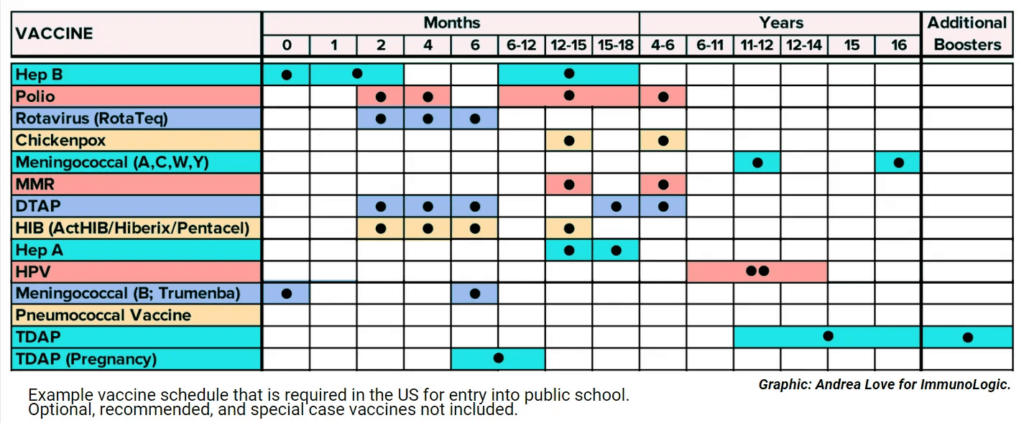
So I made an accurate version of those misleading memes:
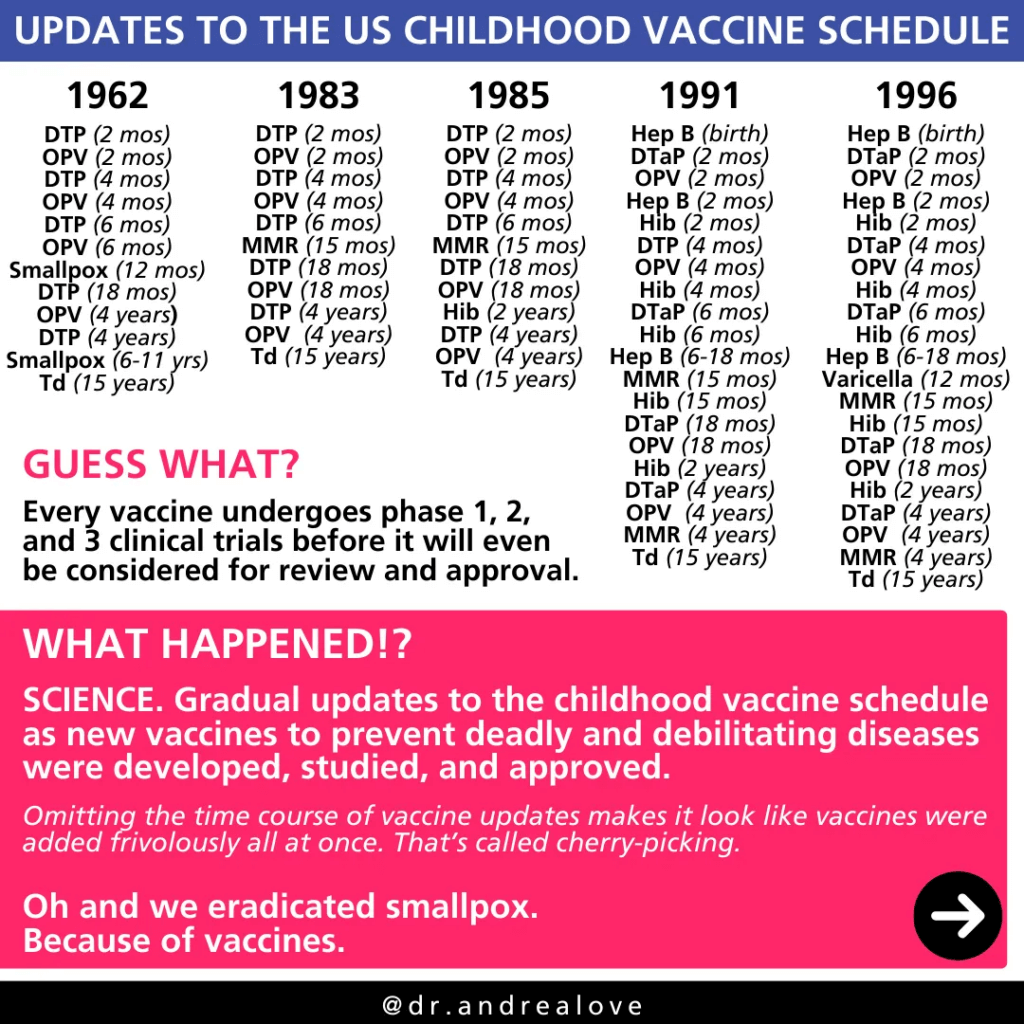
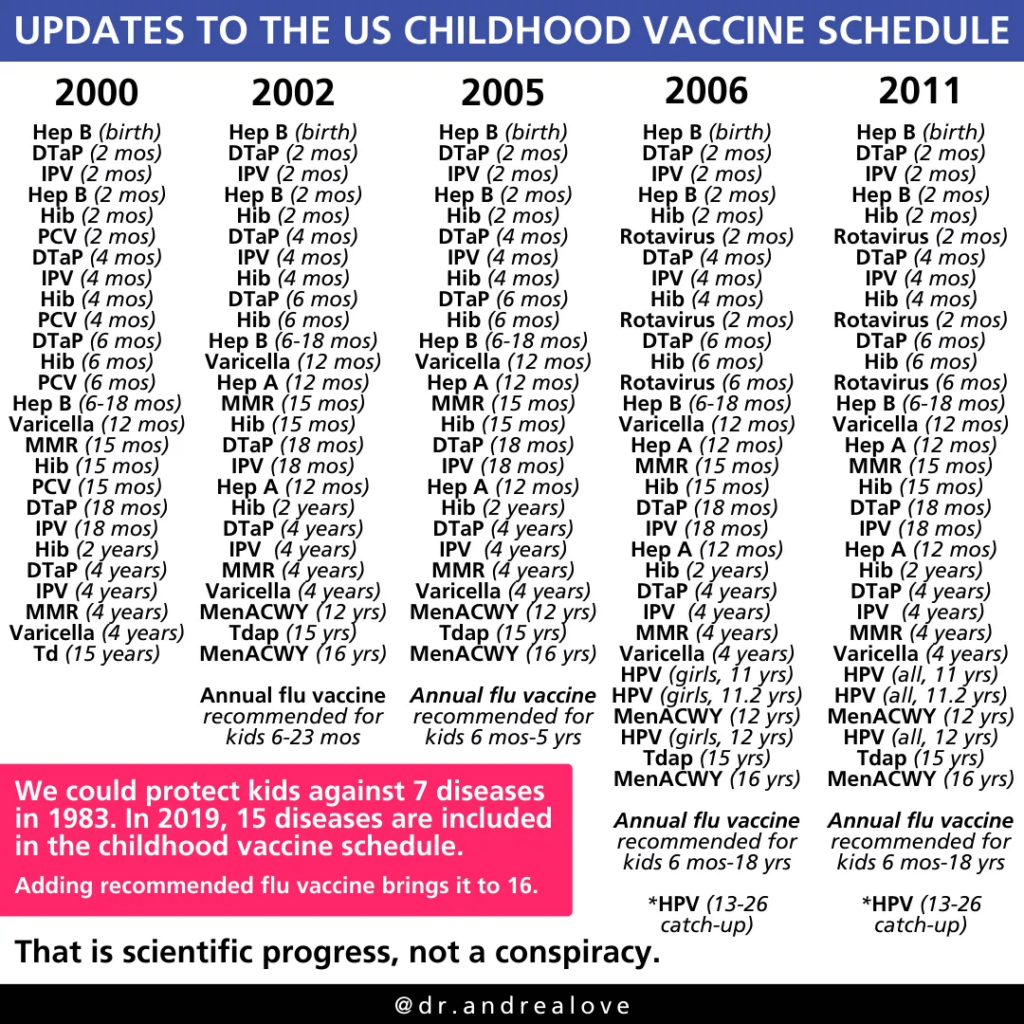
Funny how they also leave out the number of doses in 1962, and then omit that smallpox vaccines were no longer needed in the 1980s, because we eradicated smallpox – from the planet – because of vaccines.
So you can see, updates to vaccine schedules happened pretty incrementally – and in fact, the VAST majority of those updates occurred prior to 2002. Weird how that’s not mentioned, huh?
And of course, they include the annual flu vaccine in their meme to make the number of “doses” look scary – when 1) flu vaccines aren’t required for public school entry, and has limited mandates in certain states for pre-K care programs, 2) getting a flu shot every year isn’t scary, it prevents illness and death (more here), and even that recommendation was implemented gradually.
Scientists have been committed to identifying causative agents for diseases that cause significant illness and death and developing interventions to prevent poor outcomes.
Those at highest risk for the vast majority of these are children. Us biomedical scientists have committed our careers to protecting the most vulnerable against diseases that cause illness, complications, and death. Not to mention economic and medical costs.
Vaccines have been so successful that most people in our country have the privilege of not seeing the damage these illnesses have on people. On children.
And anti-vaccine activists, who do not have scientific or medical training, who do not understand even the most basic immunology, cell biology, microbiology, chemistry, or toxicology, think that it is okay to spread lies about these life-saving interventions.
And as a result, we are seeing increased emergence of diseases that are preventable.
It is unacceptable. It is long past time we stop enabling people who are substantively harming humanity. Who attack those of us who have actually been doing the work, the science, the research, to combat more illnesses every day.
Having more vaccines available on our schedule is something to applaud, not reject. Vaccines save lives, particularly children. This is a feat of science, not a conspiracy.
Dr. Andrea Love, a microbiologist and immunologist, provides the facts (and the data!) on science and health topics. Follow Andrea on X @dr_andrealove
A version of this article was originally posted at Immunologic and has been reposted here with permission. Any reposting should credit the original author and provide links to both the GLP and the original article.