Cryogenics and the promise of a second chance at life—Fast-approaching future or scam?

Screenshot 2025-02-10 at 9.55.51 PM

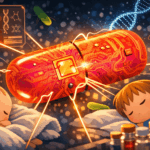
A German cryonics start-up is offering a chance at a second life for the cost of a sports car. Is cryogenics within reach, or still an empty promise?

The ambulance parked up by a green in central Berlin is small, almost toy-like; a thick orange stripe across its sides, a tangle of wires looping from the ceiling.

It is one of three retrofitted and operated by Tomorrow.Bio, Europe’s first cryonics lab, whose mission is to freeze patients after death, and one day bring them back to life, all for a cost of $200,000 (£165,000).

Follow the latest news and policy debates on sustainable agriculture, biomedicine, and other ‘disruptive’ innovations. Subscribe to our newsletter.

At the perfusion pump is Emil Kendziorra, Tomorrow.Bio’s co-founder and a former cancer researcher who switched careers after finding progress in curing the disease “way too slow”. While the world’s first cryonics lab opened in Michigan almost half a century ago – triggering an enduring split between those who believe it is the future of humanity, and others who dismiss it as a non-starter – Kendziorra says that appetite is building.

So far they have frozen (or cryopreserved) “three or four” people and five pets, with almost 700 more signed up. During 2025 they will expand their operations to cover the whole of the US.


This is an excerpt. Read the original post here

{{ reviewsTotal }}{{ options.labels.singularReviewCountLabel }}
{{ reviewsTotal }}{{ options.labels.pluralReviewCountLabel }}
{{ options.labels.newReviewButton }}
{{ userData.canReview.message }}

Related Articles

Infographic: Global regulatory and health research agencies on whether glyphosate causes cancer

Infographic: Global regulatory and health research agencies on whether glyphosate causes cancer

Does glyphosate—the world's most heavily-used herbicide—pose serious harm to humans? Is it carcinogenic? Those issues are of both legal and ...

Most Popular

ChatGPT Image May 10, 2026, 08_16_59 PM 2
Overmedicalization? RFK Jr.’s antidepressant crackdown raises conflict questions over his fee stake in Wisner Baum, the tort firm built on suing drug makers
Picture1-5
Science Disinformation Gap: The transatlantic battle over social media and censorship
Picture1-14
When superbugs threaten vulnerable children: Can AI help solve antibiotic resistance?
Screenshot-2026-05-08-at-3.40.33-PM
Seeds of power: China turns to genetic engineering to become global superpower
ChatGPT-Image-Apr-13-2026-02_20_22-PM
Viewpoint: Misinformation infodemic? Why assessing evidence is so challenging 
S
As vaccine rejectionism spreads, measles may be taking a more dangerous turn
Farmers can talk to plants
Farmers are a major source of misinformation—about farming
Screenshot 2026-05-08 at 3.01
Transforming farming and nutrition with AI and robotics? Larry Ellison’s half-billion-dollar Hawaii greenhouse dream goes bust
Screenshot-2026-04-20-at-2.26.27-PM
Viewpoint — Food-fear world: The latest activist scientists campaign: Cancer-causing additives
Screenshot-2026-05-01-at-1.29.41-PM
Viewpoint: What happens when whole grains meet modern food manufacturing? Labels don’t tell the whole story.
ChatGPT-Image-May-8-2026-01_41_33-PM-3
Viewpoint: Surge of climate misinformation traced to right wing and anti-wind activists 
Screenshot-2026-03-13-at-12.14.04-PM
The FDA wants to make many popular prescription drugs OTC—a great idea. Here’s why it’s unlikely to happen
Screenshot-2026-04-12-135256
Bixonimania: The fake disease scam that AI swallowed whole
glp menu logo outlined

Get news on human & agricultural genetics and biotechnology delivered to your inbox.