‘Biological rewind button’: Eye treatment on the horizon that some scientists believe literally turns back the clock on age-related health conditions

Version 1.0.0
Version 1.0.0

Later this year, a handful of people with a rare eye condition will receive a novel injection that is designed to quite literally turn back time.

Nonarteritic anterior ischemic optic neuropathy—known as NAION—can cause sudden blindness when blood flow to the optic nerve is blocked….Whatever its cause, there are no treatments for NAION….

Follow the latest news and policy debates on sustainable agriculture, biomedicine, and other ‘disruptive’ innovations. Subscribe to our newsletter.

Scientists hope to change that with what is potentially much more than an eye treatment. The injection will test a new gene therapy that, instead of targeting specific genetic mutations that cause NAION, attempts to return certain optic-nerve cells to their pre-NAION state. It would be the equivalent of pressing a biological rewind button that takes the affected cells back to a younger condition—one in which they haven’t yet been struck by NAION or any other disease.

To some scientists, this sounds wildly ambitious. To others, extremely unlikely. Either way, it is just the kind of big—and controversial—swing that is emblematic of the growing field of science devoted to untangling and reversing what is a central fact of life: aging.

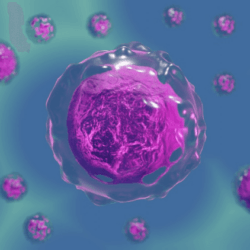
If successful, the treatment could potentially be used for more common age-related eye conditions like glaucoma—and even other chronic diseases like dementia, arthritis, and heart disease. And it is only one of a growing suite of potential treatments designed to address aging, as scientists race to reverse time at a cellular level.


This is an excerpt. Read the original post here

{{ reviewsTotal }}{{ options.labels.singularReviewCountLabel }}
{{ reviewsTotal }}{{ options.labels.pluralReviewCountLabel }}
{{ options.labels.noReviewsLabel }}
{{ options.labels.newReviewButton }}
{{ userData.canReview.message }}

Related Articles

Infographic: Global regulatory and health research agencies on whether glyphosate causes cancer

Infographic: Global regulatory and health research agencies on whether glyphosate causes cancer

Does glyphosate—the world's most heavily-used herbicide—pose serious harm to humans? Is it carcinogenic? Those issues are of both legal and ...

Most Popular

ChatGPT-Image-Mar-10-2026-01_39_01-PM
Viewpoint—“Miracle molecule” debunked: Why acemannan supplements don’t work
ChatGPT-Image-Jul-22-2026-09_13_07-AM
Viewpoint—The Strategic Litigation boom: Understanding the tightening coalition among NGOs, foundations, journalists, and tort lawyers
organic scaled
Facts & Fallacies podcast: Organic food cuts pesticide exposure? A response to Dr. Rhonda Patrick
Screenshot-2026-07-07-at-12.55.44-PM
Viewpoint: Yes, we can adapt to a changing climate without devastating the environment and the economy
ChatGPT-Image-Jul-6-2026-02_25_26-PM
40 million Americans take glucosamine. If you have memory loss, it could accelerate cognitive decline.
ChatGPT-Image-Jun-25-2026-12_23_17-PM
No, Bill Gates did not secretly engineer ticks to promote veganism
Screenshot-2026-06-26-at-10.14.50-AM
Viewpoint: The facts behind the grifter-promoting wellness and anti-aging peptide craze: Don’t waste your money
ChatGPT-Image-Jul-8-2026-12_32_48-PM
Viewpoint: SCOTUS strikes a blow against junk science in Bayer glyphosate case. Will it deter mass tort litigators?
glp menu logo outlined

Get news on human & agricultural genetics and biotechnology delivered to your inbox.