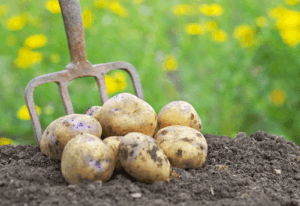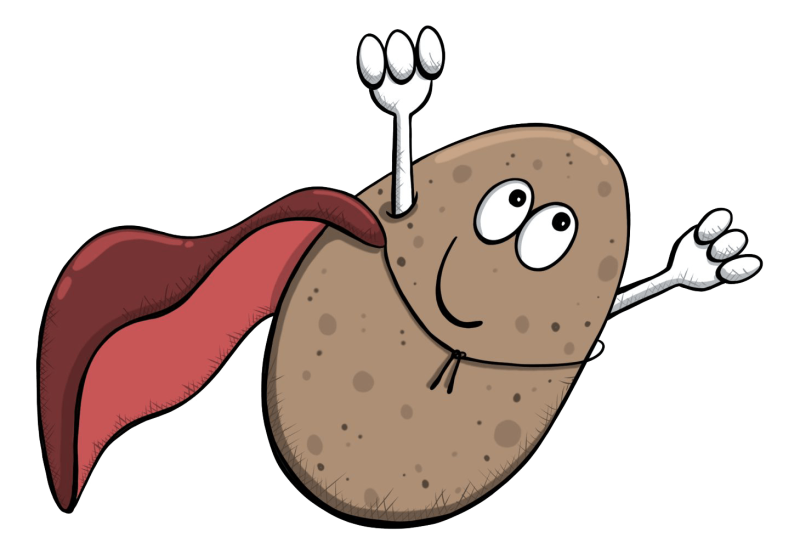
Turning the humble potato into a bruise-resistant and vitamin-enriched super spud—thanks CRISPR gene editing

superspud-cape-scaled-2

As the world searches for more efficient and hardier crops to feed our growing population, one company has been looking into turning the humble potato into a super spud. The work was carried out with the support of UK Research and Innovation.

Hello, my name is Vidyanath Gururajan. I am CEO of B-Hive Innovations Limited and we are a commercial R&D business in agriculture. … Potatoes are one of the largest growing staple crops. … [T]he key to unlocking a potato’s potential lies in its genes. We all have a recipe book in our DNA that dictates how we look and act and the potato is no different. The genes dictate how well a spud grows, how quickly it cooks, how resilient it is to hard knocks that would render it otherwise pretty inedible. So if we can tweak the genes responsibly, perhaps we can turn a puny potato into a super spud.

Follow the latest news and policy debates on sustainable agriculture, biomedicine, and other ‘disruptive’ innovations. Subscribe to our newsletter.

Hello, my name is Barbara Cujalle and I’m Principal Research Scientist here at Beehive Innovations. … [T]he potato now will be more resistant to bruising. The beauty of this is because you are targeting just a very small fraction of your organism, the remaining genome is exactly as it is, so we don’t expect any unintended consequences in this organism after doing this process.

I firmly believe gene editing will become a very important tool if it’s not already in the minds of people who are breeding crops. Our team now is working on onion crops, strawberries, a lot of brassica crops and much more. So these things tend to start with the humble spud and spread along any other crop that we can find that we can make value out of.

Editor’s Note: Excerpted from an interview by Will Tingle of Vidyanath Gururajan and Barbara Correia


This is an excerpt. Read the original post here

Related Articles

Infographic: Global regulatory and health research agencies on whether glyphosate causes cancer

Infographic: Global regulatory and health research agencies on whether glyphosate causes cancer

Does glyphosate—the world's most heavily-used herbicide—pose serious harm to humans? Is it carcinogenic? Those issues are of both legal and ...

Most Popular

ChatGPT-Image-Mar-10-2026-01_39_01-PM
Viewpoint—“Miracle molecule” debunked: Why acemannan supplements don’t work
Screenshot-2026-09-10-at-11.50.46-AM
Did COVID vaccines kill 2,500 service members? RFK Jr. hires an investigator who compares vaccine promoters to Nazi doctors
Screenshot-2026-09-11-at-2.26.23-PM
Newly approved GMO chestnut trees planted across from the White House are stirring debate
ChatGPT-Image-Sep-13-2026-10_24_17-AM
Bayer urges court to approve $7.25 billion Monsanto Roundup settlement that could limit its future liabilities
Screenshot-2026-09-10-at-12.20.19-PM
'Jet fuel didn't melt the steel': 9/11 conspiracy theories debunked
ChatGPT-Image-Sep-15-2026-05_59_18-PM
RFK Jr. spent two years distancing himself from Children’s Health Defense. Now he’s keynoting its anti-vaccine DC conference.
Screenshot 2026-09-10 at 11.28
A meaty problem: How to make cell-grown protein taste like steak, chicken, and seafood
Screenshot-2026-09-15-at-11.04.54-AM
Viewpoint: Childhood deaths in dispute: Why the CDC vs Pennsylvania conflict over measles vaccines matters
ChatGPT-Image-Aug-28-2026-03_33_46-PM
Viewpoint: Bad science—Five bogus Trump administration claims about vaccines and autism
ChatGPT-Image-Sep-15-2026-06_05_13-PM
CRISPR fine-tuning unlocks vitamin C-rich potatoes without yield loss
Screenshot-2026-09-16-at-12.07.47-PM
The heated debate over trans athletes in the WNBA
ChatGPT-Image-Aug-14-2026-11_16_47-AM
Fibermaxxing: Latest Instagram diet craze raises hope that a fiber-rich diet can improve health
glp menu logo outlined

Get news on human & agricultural genetics and biotechnology delivered to your inbox.