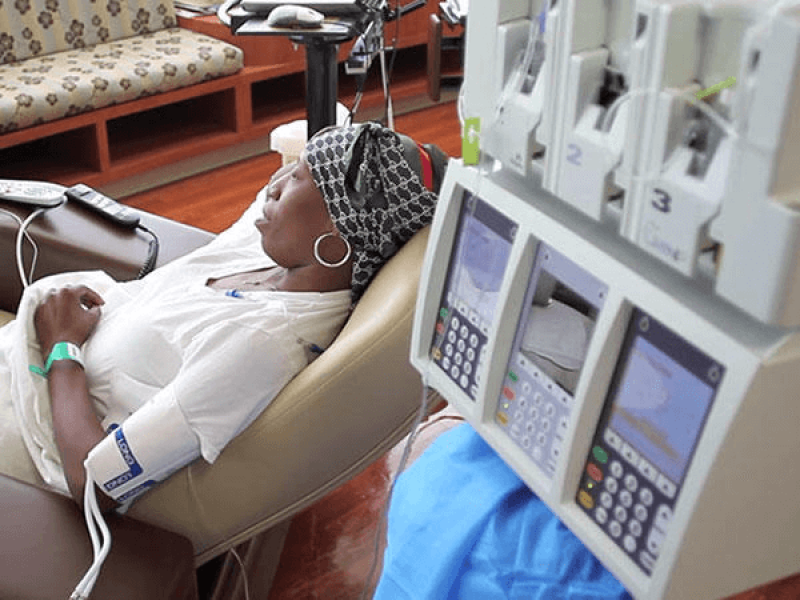
Cancer death rates continue their quarter century decline, but ethnic disparities remain

Credit: National Cancer Institute
Progress has been made in reducing overall cancer mortality, largely driven by sustained declines in lung cancer. Cancer mortality declined even through the first 2 years of the COVID-19 pandemic. Despite the overall progress, mortality declines have slowed for several cancers, including colorectal and prostate, partly because of a continued rise in incidence rates, either overall or in certain age groups. In addition, mortality has increased for cancers of the bones and joints among men since 2012 and for liver cancer among women since 2001, although the increase has slowed since 2014. Although overall cancer mortality among children continued to decline, rates among AYAs were stable from 2020 to 2022.Of interest is the increase in mortality among men with nonmelanoma skin cancer, the 16th most common cause of cancer death among men.
Follow the latest news and policy debates on sustainable agriculture, biomedicine, and other ‘disruptive’ innovations. Subscribe to our newsletter.
[T]he largest observed increase in cancer among women, stomach cancer, is likely driven primarily by a change in the WHO classification of tumors.11 Gastrointestinal stromal tumors, or GISTs, are rare tumors commonly diagnosed in the stomach; and, historically, most GISTs were classified as nonmalignant. However, based on increased understanding of these rare tumors, the WHO classification now considers all GISTs to be malignant unless specifically stated otherwise by the pathologist.

Strengths and limitations

Our study had many strengths, including the use of population-based cancer registry data that meet the NAACCR high-quality data standards. We also had the ability to review detailed, population-based, state-level incidence data for the entire United States, making this the most comprehensive analysis of the COVID-19 pandemic’s impact on the number of newly diagnosed cancer cases in the United States. Our research data sets also allowed comparison of rates by year based on primary and successive submission files rather than reported statistics. Because we compared 2020 incidence at the time of submission with previous years of incidence at the time of submission, we did not overestimate the extent of the decline. However, we were limited by our proxy measures for health care capacity (deaths from COVID-19), health care access (breast cancer screening), and the extent of social disruption (policy restrictions) during the COVID-19 pandemic. These broad, state-level measures did not account for temporal fluctuations or for location differences. Furthermore, the policy restrictions index measured only the policies enacted and did not assess the extent to which policies were implemented.

CONCLUSION

Overall, cancer incidence and death rates continue to decline, representing changes in risk factors, increases in screening utilization, and advances in treatment. However, sustained disparities by race and ethnicity emphasize the need to fully understand the factors that create these differences so that they can be mitigated. Population-based incidence and mortality data play a vital role in informing cancer control efforts to help reduce the cancer burden in the United States.


Our analysis indicates that the decline in 2020 cancer diagnoses has not carried over into 2021 incidence rates. However, additional data years are needed to correctly interpret this decline and assess whether cases went undiagnosed or underreported, because the rates in 2021 were not greater than expected. The full impact of the decline in cancer diagnoses during 2020 on stage at diagnosis and survival will become clearer with additional years of incidence data. However, our results underscore the importance of public health policy to ensure continued access to cancer-related care, even during public health emergencies such as pandemics.

Effective cancer control and infectious disease control policies are not mutually exclusive and can be applied simultaneously to protect our nation’s health. Population-based incidence and mortality data play a vital role in informing cancer control efforts to help reduce the cancer burden in the United States.


A version of this article was originally posted at American Cancer Society and has been reposted here with permission. Any reposting should credit the original authors and provide links to both the GLP and the original article. Find American Cancer Society on X @AmericanCancer
{{ reviewsTotal }}{{ options.labels.singularReviewCountLabel }}
{{ reviewsTotal }}{{ options.labels.pluralReviewCountLabel }}
{{ options.labels.noReviewsLabel }}
{{ options.labels.newReviewButton }}
{{ userData.canReview.message }}

Related Articles

Infographic: Global regulatory and health research agencies on whether glyphosate causes cancer

Infographic: Global regulatory and health research agencies on whether glyphosate causes cancer

Does glyphosate—the world's most heavily-used herbicide—pose serious harm to humans? Is it carcinogenic? Those issues are of both legal and ...

Most Popular

ChatGPT-Image-Jul-10-2026-12_21_03-PM
Viewpoint: Is there new evidence that the animal deworming drug ivermectin decreases the risk of Covid and cancer? Don’t waste your money.
ChatGPT-Image-Mar-10-2026-01_39_01-PM
Viewpoint—“Miracle molecule” debunked: Why acemannan supplements don’t work
Screenshot-2026-07-09-at-1.09.25-PM
Anti-vaccine myths rattle health care
Screenshot-2026-07-30-at-3.07.42-PM
Controversy over WNBA star Sophie Cunningham’s comment opposing trans females in women’s sports reinvigorates the culture wars
leeteam
How Kennedy and his family could pocket millions from Merck’s $50 million vaccine injury settlement that he oversaw
Picture1
Hiroshima at 81: America’s new nuclear bomb, a buried Iranian target, and a question no one wants to ask
Screenshot-2026-07-30-at-2.30.35-PM
Climate scientists claim conservative activists are promoting ‘lies’ that Europe’s summer heatwaves are far from unusual
ChatGPT-Image-Jun-25-2026-12_23_17-PM
No, Bill Gates did not secretly engineer ticks to promote veganism
ChatGPT Image Jul 29, 2026, 05_50_04 PM
Fear, science, and the law: If talc powder is unlikely to cause cancer and J&J was winning in court, why did it pay more than $5.5 billion to settle?

Sorry. No data so far.

glp menu logo outlined

Get news on human & agricultural genetics and biotechnology delivered to your inbox.